Welcome to GreenMore
Welcome to GreenMore
Service & Support
GreenMore supplies BIPV solar roof tiles, hybrid inverters and energy storage systems, and supports what it supplies. This page sets out what that support consists of: which stage of a project it covers, what documents and training come with an order, what the solar warranty actually says, and how a partner reaches an engineer when a question cannot wait for office hours in another time zone.
Support runs from the factory rather than through a regional service network, in English, by the engineers who write the installation manuals. The team has worked in photovoltaics since 2017. That model is fast on design and diagnosis and slower on anything that needs a person standing on a roof, which is why the split between what we do remotely and what we expect a partner to do on site is written down rather than left to the moment.
One note on how this page relates to the one on the failure path. This page is the offer: what is available, at which stage, on what terms. When a BIPV project fails covers the other half — what happens when a part actually goes, how long a case takes, what a spare costs once it is outside warranty and who pays for an engineer to travel. If you are assessing whether to work with us, stay here. If a system is already down, start there.

25 Years
Linear Power Warranty

24.1%
Module Efficiency

In-House
Solar Tile Manufacturing

EN 14782
Certified Tile System
Support runs on the project calendar, not on a ticket queue. What a partner needs in the month before the order is not what they need in the third year of operation, so the work is organised by stage.
| Stage | What we provide | Usually handled by |
|---|---|---|
| Design and quotation | Roof layout check, tile count, string and inverter sizing, roof interface review | EPC, installer |
| Order and documentation | Datasheets, certificates, wiring diagrams, parameter sheets, packing list | Distributor, procurement |
| Installation | Fixing sequence, flashing and ridge details, drainage continuity, protocol setup | Installation crew |
| Commissioning | Checklist review, parameter confirmation, first-power checks against the expected curve | Commissioning engineer |
| Operation and service | Fault diagnosis, firmware support, parameter changes, warranty handling | O&M team, distributor |
On a tiled roof the array is the roof, so the design review covers roof geometry as well as electricals: pitch and orientation, the number of whole tiles per course, where cuts fall at valleys, ridges and penetrations, and whether the drainage path survives them. We return the layout marked up with the string design attached, so the electrician and the roofer are working from the same drawing. It is cheaper to move a tile on paper than on a scaffold.
For a partner's first project, or any project with an unfamiliar roof type, we join by video during the first day of fixing and again at commissioning. Fixing order, hook and flashing placement, earthing, then the electrical handover: communication addressing, meter and CT orientation, EMS parameters and the first-power reading against what the array should be producing at that hour. Watching it once is faster than diagnosing it in month four.
Remote diagnosis means reading the log rather than asking the customer what they see: alarm history, string-level data, firmware versions across inverter, battery and EMS, and the last parameter change. Where the platform allows it we change parameters directly; where it does not, we send the exact setting and confirm it afterwards. Every case closes with a written conclusion of what failed and what has to be replaced, repaired or corrected on site.
A fair share of those conclusions name the installation rather than the product. The five causes behind most of the tickets we receive are set out in the failure-path page.
Training is how a partner stops needing us for the routine cases. Three formats, all in English, scheduled around projects rather than a calendar.
Product features, fixing practice, safety requirements and the applications each tile type suits, delivered online or on site. Aimed at crews who will install without us on the phone.
For EPC companies and system integrators: system design, communication integration, EMS logic and control strategy, worked through on a live configuration rather than slides.
Manuals, commissioning checklists, parameter tables and the typical fault cases we see most often, kept in the same folder our engineers use.
Terms differ by product group. The summary below matches the Warranty field on each product page and the contract that comes with the order.
| Product group | Term | Covers |
|---|---|---|
| Solar roof tiles and shingles | 25 years power 10 years product |
Output below the warranted curve for 25 years; materials and workmanship on the tile itself for 10 years |
| Hybrid inverters | 3 years | Defects in materials or workmanship |
| Battery modules | 3 years | Defects in materials or workmanship |
| ESS cabinets, PCS and EMS | 3 years | Defects in materials or workmanship |
Two separate promises on a tile, because the glass and the output age at different rates. Materials and workmanship on the tile itself are covered for 10 years. Power output is covered for 25 years, against the curve stated in the datasheet and measured under the datasheet's conditions. Inverters, batteries and ESS cabinets carry 3 years.
Transport damage after delivery, installation that does not follow the manual, work carried out by third parties on the product, and damage from grid events, lightning, flooding or other causes outside normal operating conditions. Normal output decline that stays inside the warranted curve is not a defect. Where a case sits on the line, we say which side of it we think it falls and why, in writing, before anything is shipped.
A claim starts with a written description, the model and serial number, the installation date, photographs and the relevant logs. We check eligibility against the terms above and the operating history, then confirm one of three outcomes: repair, replacement, or credit. The commercial side of a case — what a part costs once it is outside warranty, and how travel is handled — is covered in the failure-path page rather than repeated here.
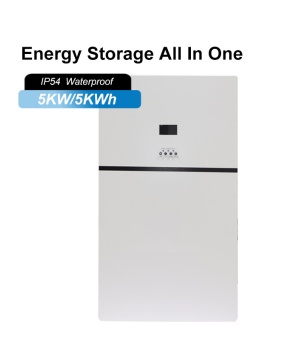
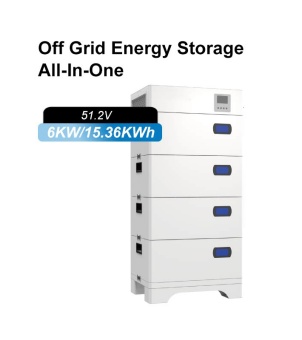
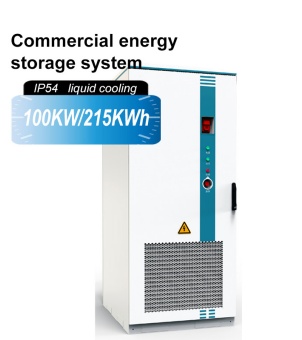
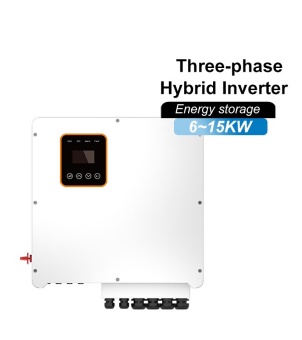
Support covers the eight product groups below. A product that is not on this list is not covered by GreenMore support, whichever channel it was bought through.
Most exchanges that drag on for a week are missing one of three things. Include them in the first message and the answer usually comes back once, complete.
Project details
Application, country, roof or site type, and system size in kW or kWh.
Product information
Model and serial number from the label, plus the order or invoice number if you have it.
Issue description
Fault code or alarm text, screenshots or logs, and a photograph of the installation where relevant.
Design review before the order, the documentation set that ships with it, guidance during installation and commissioning, remote diagnosis afterwards, warranty handling, and training for partner teams. It covers the eight product groups listed above and nothing outside them.
Datasheets, installation and user manuals, wiring diagrams and parameter sheets, and the certificates that apply: EN 14782, EN 1090-1, ISO 9001, ISO 14001 and CE for solar roof tiles; CE, IEC, MSDS and UN38.3 for energy storage. Test reports for grid connection are supplied on request.
Solar roof tiles carry a 25-year linear power warranty on output, plus a 10-year warranty on the tile product covering materials and workmanship. Hybrid inverters, battery modules, and ESS cabinets with PCS and EMS carry a 3-year warranty covering manufacturing defects.
Transport damage after delivery, installation that departs from the manual, work on the product by third parties, and damage from grid events, lightning, flooding or other causes outside normal operating conditions. Output decline that stays within the warranted curve is expected behaviour, not a defect.
Send the model and serial number, installation date, photographs and logs. We check eligibility against the terms and the operating history, then confirm repair, replacement or credit in writing. Nothing is shipped until the outcome is agreed with you.
Yes, in the three formats described above, online or on site. Sessions are usually scheduled before a first installation rather than after it, when the crew can still change how they work.
Larger projects get design review at tender stage, commissioning support on site or by video, a document set the client can keep at handover, and periodic performance reviews afterwards. The earlier we see the layout, the fewer of those reviews turn into corrections.
Whether you need support on a project already in progress or want to look at a partnership, the same team answers both.
Updated on November 14, 2026
Stay up to date with GreenMore. We share new BIPV solar tile releases, product and certification updates, and field notes from our projects — no fluff, just the things that matter to installers, distributors, and system integrators. If there's something you'd like to see covered, drop us a line — we read every reply.




Copyright @ 2026 GreenMore All Rights Reserved.  Network Supported
Sitemap / Blog / Xml / Privacy Policy