Are home energy storage batteries safe?
Oct 25, 2024
P
Peter Lu
Energy Storage Product Manager, GreenMore
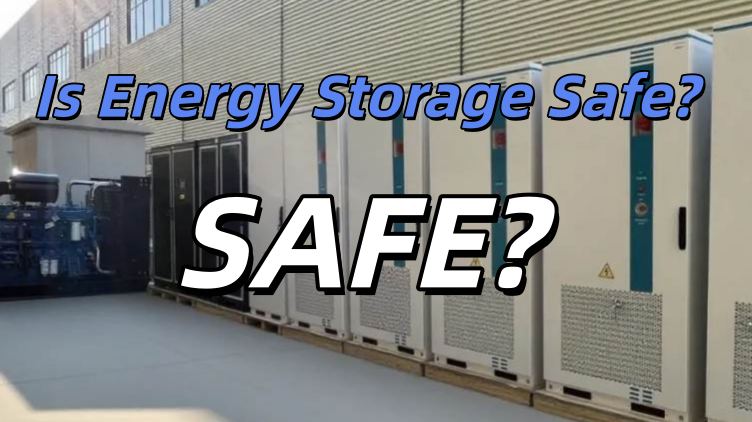
A home energy storage battery is not a fireproof box, but a well-designed LiFePO4 system installed correctly is safe enough to live alongside a refrigerator or a boiler. The risks are real and well understood — overcharge, over-discharge, short circuit and thermal runaway under abuse — and the industry has standard ways to manage them. This page explains what those protections are, which claims are marketing and what to ask for before buying.
Why LiFePO4 is the chemistry most often recommended
Lithium iron phosphate (LiFePO4) cells use a more stable cathode than nickel-manganese-cobalt (NMC) or lithium cobalt oxide (LCO). That stability shows up in how the cell behaves under abuse: it takes more energy and higher temperature to trigger thermal runaway, and when a cell does fail it tends to vent rather than propagate aggressively to its neighbors. "Safer than other lithium chemistries" is a fair shorthand; "zero risk" is not. A damaged cell, a faulty BMS or improper installation can still lead to a failure, so the chemistry is the first layer, not the only layer.
What the BMS actually does
The battery management system is the electronic layer between the cells and the inverter. A real BMS enforces hard limits, it does not only report them. The protections you want to see on a spec sheet are: overcharge and over-discharge cutoff (voltage), short-circuit trip (current), over-current during charge and discharge, temperature monitoring with cutoff on over-temperature and under-temperature, and cell-level balancing so the pack does not drift. These are not optional extras; a LiFePO4 pack sold without a functioning BMS should not be installed in a home.
Intelligent BMS Battery Management System
Enclosure, ventilation and placement
The enclosure is the physical layer. A metal or flame-retardant plastic housing keeps dust and accidental contact out and contains a cell failure long enough for the BMS to open the contactors. Indoor wall-mounted and stacked systems are typically rated for sheltered environments, while outdoor cabinets need a higher ingress protection rating and often passive or active cooling. The exact IP rating and operating temperature range depend on the specific model — check the datasheet rather than assuming every home battery is equally rated for outdoors.
Ventilation matters even for LiFePO4. A failure can release gas, and a sealed cupboard with no airflow traps heat and raises the ambient temperature the battery actually sees. Follow the manufacturer's clearance distances and do not stack items against the unit.
Certifications that matter
A certification is only useful if you can see the document. The ones commonly relevant for residential storage are: IEC 62619 for secondary lithium cell safety, IEC 63056 for stationary storage system safety, UN 38.3 and MSDS for transport, and regional marks such as CE for the EU. UL 9540 / 9540A is common in North America for system-level fire safety. Ask for the certificate and check the model number on it matches the product you are being quoted. A brand logo without a supporting certificate is not evidence.
GreenMore non-tile storage components carry a 3-year warranty. The certificates applicable to a specific shipment depend on the destination country and are provided on request.
Installation and use: where most failures actually come from
A battery that passes every test in the factory can still fail because of bad installation. The common causes are wiring errors, undersized breakers, missing or incorrect grounding, mixing incompatible inverters and batteries, and installing in a location that exceeds the stated temperature or humidity range. Use a qualified installer, follow the manufacturer's guide and keep the inverter and battery in a matched pair where possible — a mismatched combination is a frequent source of communication and protection faults.
Day to day, there is little to maintain. Check that the unit is clean, dry and not obstructed, that cables and connectors are intact and that any status indicator on the front panel looks normal. If the battery is not used for an extended period, store it at a partial state of charge as specified by the manufacturer; shipping or storing a pack fully discharged can damage the cells.
Home battery vs other household energy devices
Device
Fuel on site
Combustion gases
Noise
LiFePO4 home battery
No
No
Silent
Petrol or diesel generator
Yes
Yes
Loud
Gas water heater or boiler
Yes
Yes
Low
This is not a claim that batteries are risk-free. It is a reminder that homes already accept and manage combustion risks every day. A properly specified and installed home battery replaces a set of risks with a different, generally lower, set.
If you want to check a specific product or installation, see the home energy storage system product page and the home energy storage category page. For project-specific questions, use the contact page.
FAQ
Can a home battery catch fire?
Any device storing significant energy can fail under the right combination of fault and abuse. LiFePO4 chemistry, a functioning BMS, a proper enclosure and correct installation together make a home battery failure unlikely, and far less likely than a failure involving fuel on site. "Zero risk" is not a realistic claim for any energy device.
Where should a home battery be installed?
A clean, dry, well-ventilated space within the temperature and humidity range stated in the datasheet. A garage, utility room or dedicated equipment closet usually works. Avoid direct sunlight, sealed cupboards with no airflow and locations where the unit could be struck by vehicles or stored items.
Do I need special insurance for a home battery?
Some insurers treat home energy storage like any other fixed electrical equipment; some require a declaration or a certificate of installation. Check your policy. Keeping the installation certificate and product certifications available makes the conversation easier.
How do I know the certifications are real?
Ask to see the certificate and confirm the model number on it matches the product being quoted. For UL, you can check the online directory; for CE and IEC, the test report from an accredited lab should be available. A supplier that cannot produce a certificate on request is a red flag.
P
Written by Peter Lu — Energy Storage Product Manager, GreenMore
Peter works with distributors, installers and system integrators to size residential and commercial storage around real load profiles. He focuses on LiFePO4 systems that match the inverter, grid rules and backup needs of each destination market.





 Network Supported


