Customized Microgrid Solutions for Small to Large Loads
Sep 08, 2025
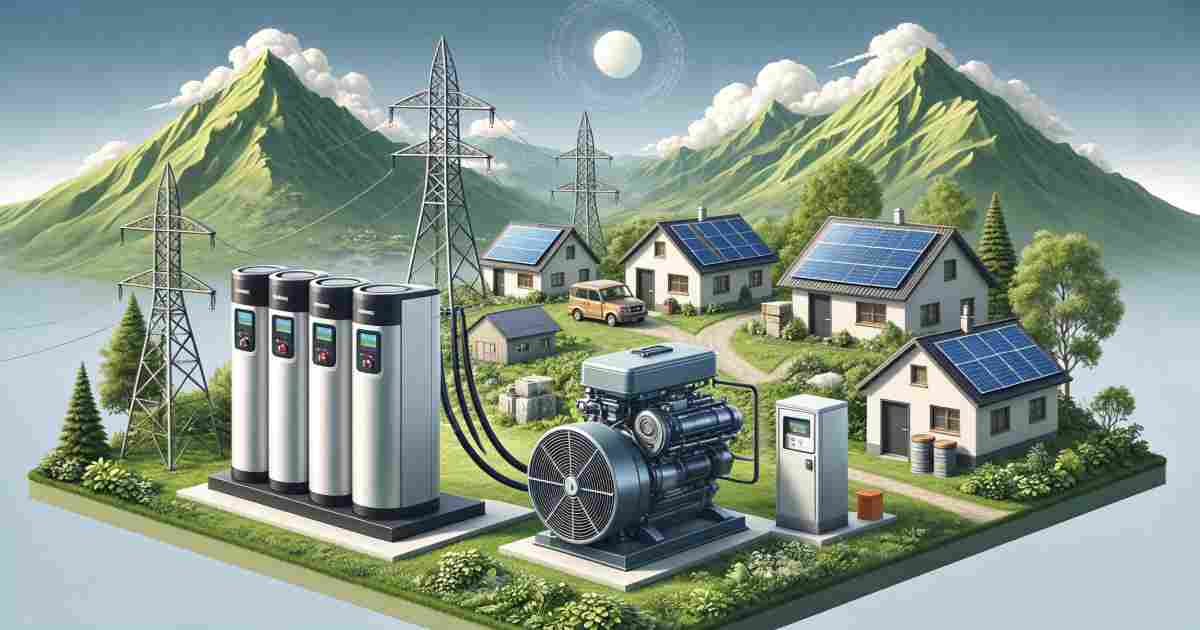
A microgrid is local generation, storage and control that can run connected to the utility or cut loose from it. What varies is the site: a villa wants a roof that still looks like one, a hotel wants the lights not to flicker, a camp wants to stop paying for trucked diesel, a data center wants the load never to see a gap.
That range is why there is no standard microgrid product. A 30 kW villa system and a 5 MW industrial park share a control philosophy and almost nothing else. This note covers the three bands, what separates them, which standards govern the controller, and how to size one.
Two things we will not do here: claim project references we do not have, and quote a payback without showing the fuel cost it is measured against.
What a Microgrid Actually Is
The defining feature is not the solar array or the battery. It is the ability to disconnect. A site with PV and storage that shuts down when the grid fails is a distributed generator with storage. A site that keeps running, balances generation against its own load, and reconnects cleanly is a microgrid.
Grid-tied, off-grid and hybrid
Grid-tied microgrids import and export and use storage for demand charges, peak shaving and power quality. Off-grid microgrids have no utility to lean on, so every kWh comes from on-site generation and every gap is covered by storage or a generator. Most new projects are hybrid: grid-connected normally, islanding during an outage, reconnecting when the utility returns.
How it differs from a generator
A standby generator is sized for the peak and runs at whatever load is on it. A controller decides which source runs, at what output, and when the battery carries the load. That difference is where the fuel saving comes from, and a microgrid without a working controller is just a pile of equipment.
Controllers are specified and tested separately from the hardware. IEEE 2030.7 defines what a controller has to do; IEEE 2030.8 defines how to test it. A system meeting neither is a set of inverters with a transfer switch.
The Three Configurations, With Numbers
The bands below are the ranges we design within. They are typical for each class of site rather than the limits of any single product, and a project lands wherever its load curve puts it.
Band
Power
Storage
Duration
Typical sites
Connection
Small
10 to 100 kW
20 to 200 kWh
2 to 8 hours
Villas, small hotels, offices, scenic facilities
Grid-tied, some islanding
Medium
100 kW to 1 MW
200 kWh to 2 MWh
2 to 6 hours
Construction camps, mines, malls, remote projects
Hybrid, generator-backed
Large
1 to 20 MW
2 to 40 MWh
2 to 4 hours
Industrial parks, hospitals, data centers
Grid-tied with island mode
Duration decides cost, and the site decides duration. A villa riding through an evening outage needs two to four hours. A camp cutting diesel to a quarter needs enough to carry the night, which is why the band is wider at the small end. Large systems buy most energy from the grid, so their storage is sized for power quality.
Small Systems
Small systems serve a single low-voltage connection, usually behind the meter. The load is domestic or light commercial, and the constraint is often physical rather than electrical: where the equipment goes and how loud it is.
Three-phase imbalance
A villa or small hotel rarely loads its three phases evenly. One phase carries a charger, an air-conditioning compressor or a kitchen circuit, and the converter has to hold output rather than trip. This is a topology and firmware question more than a capacity one, so ask how the unit behaves at full imbalance.
Where small stops
The band ends where the economics change. Below about 10 kW a hybrid inverter and a wall battery is cheaper and simpler than a controller. Above about 100 kW the number of parallel units needed justifies one, and the site usually has three-phase service and a switchroom.
Medium Systems
This is where microgrids earn their place commercially. A camp, a mine or a remote site runs diesel continuously because there is no grid, and the delivered cost of that power is the largest controllable line in its budget.
The fuel case
A diesel generator at 75% load burns roughly 0.24 to 0.27 litres per kWh. Getting that litre to a remote site, storing it and servicing the machine adds more than the fuel itself, which is why delivered diesel power lands at USD 0.42 to 0.72 per kWh rather than the 0.28 to 0.40 the fuel suggests.
A hybrid system attacks that number three ways: solar runs the daytime load, the battery carries the evening peak so the generator does not idle, and the controller starts the generator only when state of charge falls below a threshold. Fewer run hours cut fuel, maintenance intervals and logistics at once.
Container delivery
Medium systems ship in a standard container and are lifted into place. Compared with building a plant room, that removes most civil works, shortens commissioning, and makes the system relocatable when a camp moves, which matters when the site has a defined life.
Large Systems
Large systems sit at medium voltage, serve concentrated loads, and are judged on continuity rather than fuel. A hospital or data center does not want to island for eight hours; it wants never to notice the grid went away.
Grid-forming and redundancy
At this scale the converter has to behave like a synchronous machine: hold voltage and frequency, supply fault current, and ride through motor starting without collapsing. Grid-forming control lets a system run with no utility reference, and it separates a system that can island from one that can restart a dead network.
Redundancy is designed in rather than added. N+1 on the conversion units, dual control paths and a defined black-start sequence are standard at this level, and they change the layout, the switchgear and the price.
Fire protection
Storage at this scale is a fire risk that has to be engineered rather than declared. What matters is whether the cells have been tested for propagation at module, unit and installation level under UL 9540A, whether the installation meets NFPA 855 separation and detection requirements, and whether gas detection sits at module level. A suppression system that discharges after the container fills with gas is arriving late.
The Controller Is the Microgrid
Every band above depends on the same thing: a controller that knows the state of every source and load and acts in milliseconds. That is the part buyers underestimate, and the part that decides whether a system delivers its calculated saving.
What IEEE 2030.7 defines
IEEE 2030.7 sets out the functional requirements: dispatch of distributed energy resources, load management, islanding detection and transition, resynchronisation, and the interfaces it must expose. IEEE 2030.8 covers testing those functions against defined scenarios. Asking which functions of 2030.7 a controller implements, and how they were tested under 2030.8, gets a more useful answer than asking whether the system is certified.
Standards that apply
Standard
What it governs
Where it applies
IEEE 1547
Interconnection and interoperability of distributed energy resources
Grid-tied microgrids, widely referenced
IEEE 2030.7
Functional specification for microgrid controllers
Controller design
IEEE 2030.8
Testing of microgrid controller functions
Controller acceptance
IEC 62898-1
Microgrid planning and design guidelines
Global
IEC 62898-2
Microgrid operation and control
Global
UL 1741 SB
Inverters and converters for grid connection
North America
NFPA 855
Installation of stationary energy storage systems
North America
UL 9540A
Cell-to-cell fire propagation testing
System design
The IEC documents can be checked by number in the IEC webstore, and the UL standards through UL Solutions. Neither list is a substitute for the grid code of the country the site is in, which in most markets adds its own interconnection requirements on top.
Sizing a Microgrid
Start from the load curve
A monthly consumption figure is not enough, because it hides the shape. The design needs a year of interval data, or a measured week scaled to the year, showing peak, daily energy, night share and the largest motor start.
Step
What you need
What it produces
1
Twelve months of interval load data
Peak kW, daily kWh, night share, load factor
2
Longest credible period without sun or grid
Storage energy in kWh
3
Roof or ground area available for PV
Upper limit on daily generation
4
Critical load list, circuit by circuit
Backup capacity, often 30 to 40% of peak
5
Fuel price and acceptable generator hours
Remaining diesel spend, and the saving
A worked example
A construction camp drawing a continuous 50 kW uses 438,000 kWh a year. On diesel at USD 0.50 per kWh delivered, that is about USD 219,000 a year before any logistics contingency.
A hybrid covering 75% of that energy needs roughly 300 kWp of PV, 500 kWh of storage and a controller. At USD 0.50 per watt for the array, USD 300 per kWh for the battery and USD 50,000 for integration, it lands near USD 350,000. Diesel falls to about 110,000 kWh, or USD 55,000 a year, so the saving is roughly USD 164,000 a year and simple payback is a little over two years. Spread over ten years the capital adds about USD 35,000 a year, so the hybrid still runs at under half the diesel bill.
Every input there is a range, and the result moves with all of them. What does not move is the structure: the case for a hybrid is the gap between delivered diesel cost and the cost of what displaces it, times the share of load it carries.
One controller, four sources, one decision at a time: which source carries the load right now.
Diesel Against Solar and Storage
Diesel looks cheap per litre and expensive per kWh. The gap between the two is everything that happens between the refinery and the generator terminal.
Cost component
USD per kWh
Note
Fuel
0.28 to 0.40
At 0.24 to 0.27 litres per kWh generated
Logistics to a remote site
0.08 to 0.18
Truck or barge; seasonal road access pushes the upper end
Generator maintenance
0.04 to 0.09
Oil and filters every 250 to 500 running hours
On-site fuel storage and security
0.02 to 0.05
Tanks, bunding, monitoring, guarding
Delivered cost
0.42 to 0.72
Remote mines and islands sit at the top of the range
Two consequences follow. The fuel price a customer quotes is rarely the cost they pay, so a comparison built on the pump price overstates the solar saving. And because logistics is a large share, the case improves with distance from a refinery, which is why islands adopt first.
The comparison also has a floor. Solar and storage carry capital cost and a finite life; a generator carries fuel and maintenance. Below a certain fuel price and above a certain grid reliability the hybrid never pays back, and a supplier who does not say so is selling rather than designing.
What GreenMore Supplies
Microgrid work at GreenMore runs through our storage line. What we put on a site:
Storage cabinets in the 215 to 372 kWh range, liquid-cooled, IP54, with power conversion and control integrated.
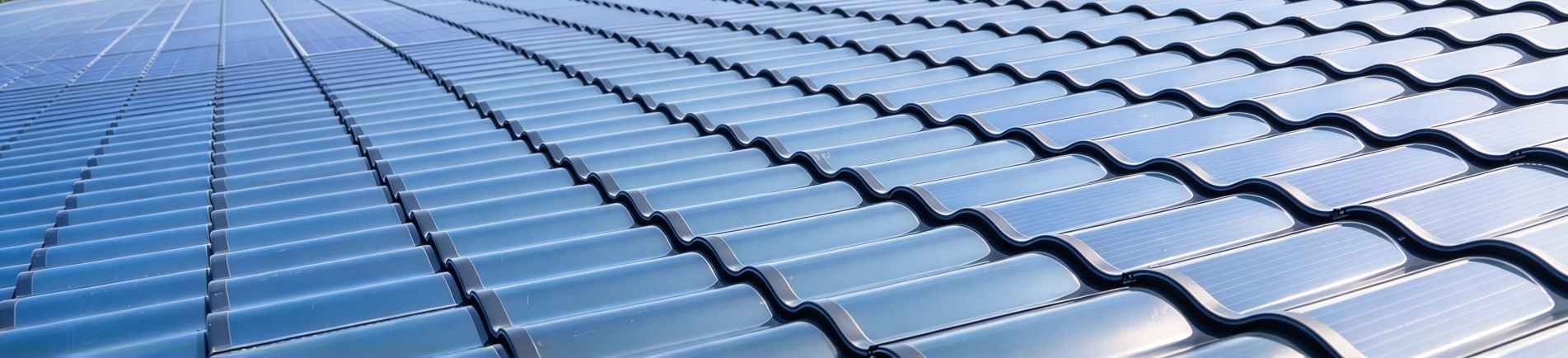
Solar tiles and mounting for sites where the generation goes on a building envelope.
Design support on load data, duration and C-rate sizing.
Partner structure, with the integrator or EPC holding the controls scope.
Containerised storage, outdoor cabinet and PCS: the three pieces we ship for this work.
What we do not do is pretend to a portfolio of microgrid references we cannot show. Where the microgrid is the whole point rather than a component, that partner structure is the honest description.
On warranty, the storage and power conversion equipment carries 3 years, in line with our standard terms for non-tile components. Solar tiles, where part of the roof, carry 25 years on power output. The two are specified separately.
Frequently Asked Questions
What is the difference between a grid-tied and an off-grid microgrid?
A grid-tied microgrid works with the utility and can import or export; an off-grid one has no utility to fall back on and must balance its own generation, storage and load at every moment. Most new projects are hybrid: grid-connected normally, islanding during an outage, reconnecting when the utility returns.
Does a microgrid still need a diesel generator?
Often yes, but smaller and running far fewer hours. Solar and storage carry most of the annual energy, while a generator covers long cloudy periods, extended outages and the rare peak the battery cannot serve. Designing it out entirely is possible on good sites and expensive on poor ones.
How is microgrid capacity chosen?
From the load curve, not monthly consumption. Peak demand sets the power rating, the longest period without sun or grid sets the storage energy, and the critical load list sets how much has to be backed up. A year of interval data or a measured week scaled to the year is enough.
Can a diesel-only site be converted to a hybrid microgrid?
Usually yes, and it is the most common starting point. Existing generators stay as backup, solar and storage are added alongside, and a controller sequences the sources. It works best when the generators are in reasonable condition, because they run at lower load factors afterwards.
What standards should a microgrid controller meet?
IEEE 2030.7 for function and 2030.8 for testing are the reference documents. Add IEEE 1547 for interconnection, IEC 62898 for planning and operation outside North America, and UL 1741 SB with NFPA 855 for sites in the United States or Canada.
What does a microgrid cost?
Storage runs about USD 300 to 500 per kWh installed at container scale, ground-mount PV USD 0.40 to 0.60 per watt, and control and integration adds a project-specific figure. What matters is not the capital cost but the diesel cost it replaces, which is why payback ranges from two years on a remote mine to never on a site with cheap reliable grid power.
PL
Peter Lu, Energy Storage Product Manager
GreenMore · Microgrid and storage systems
Peter works on storage and microgrid configurations at GreenMore, sizing duration, C-rate and control strategy against the load a site actually has rather than the load its owner assumes.
Updated on November 17, 2026





 Network Supported


