What Class C Fire Rating Means for Your Solar Roof Tiles
Sep 16, 2026
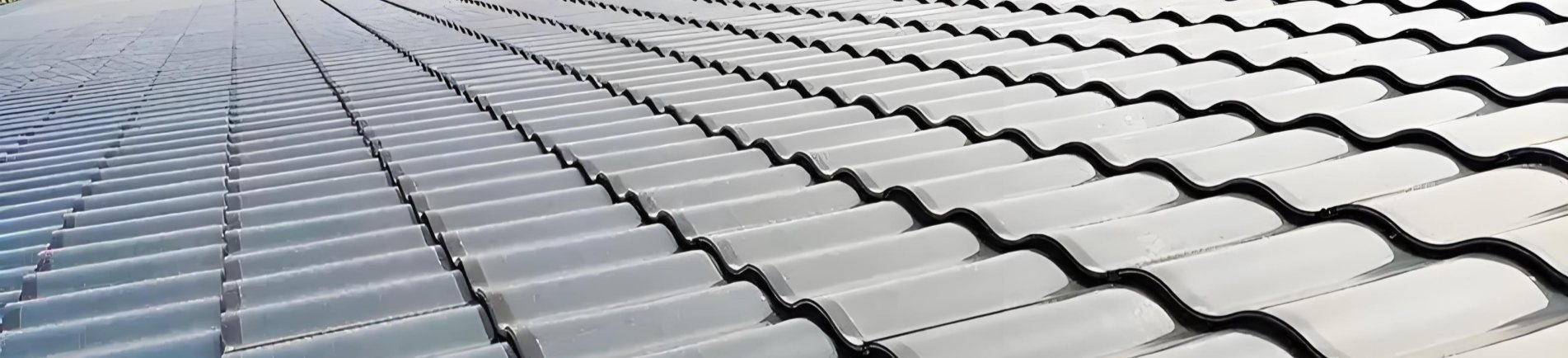
GreenMore's tiled type photovoltaic tiles carry a Class C fire rating, tested in accordance with UL 790 (standard for fire tests of roof coverings) and classified under EN 13501-5 (European fire classification for external roof exposure). The Class C rating means the tile assembly has passed tests for light fire exposure — it resists flame spread across the roof surface, prevents fire penetration through the roof deck, and does not produce flying brands that could carry fire to adjacent structures.
For building owners, architects, and code officials, this rating is more than a specification line item. It's the difference between a solar roof that meets building code requirements and one that creates liability exposure.
GreenMore Solar Roof Fire Resistance Rating Comparison Chart
Fire Classification Levels: Where Class C Fits
Roof fire ratings follow a tiered system. Under UL 790, the three classes are defined by the severity of fire exposure the roof assembly can withstand:
Class
Test Severity
Typical Application
Class A
Severe fire exposure
High wildfire risk zones, steep-slope commercial roofs
Class B
Moderate fire exposure
General commercial and multi-family construction
Class C
Light fire exposure
Residential roofing, low-to-moderate risk areas
Each class requires the roof assembly to pass three evaluations:
Spread of flame — how far flames travel across the surface
Burning brand resistance — whether the roof prevents ignition from burning embers
Intermittent flame — resistance to repeated flame exposure
Class C doesn't mean "low quality." It means the product has been tested and verified to perform under light external fire exposure conditions. Most residential building codes in Europe and North America require at minimum a Class C or equivalent rating for roof coverings, and many jurisdictions accept Class C for single-family homes and low-rise commercial buildings.
Why Solar Roof Tiles Need Fire Certification Specifically
Rooftop solar panels mounted above an existing roof inherit the fire rating of the roof assembly below them. BIPV tiles are different — they are the roof covering. This dual role as both photovoltaic generator and building envelope component means the tiles themselves must carry an independent fire classification.
According to UL's BIPV testing program, BIPV roofing systems are evaluated against UL 7103, which consolidates electrical safety, fire performance, wind resistance, weather protection, and impact resistance into a single certification framework. The 2021 International Building Code (IBC) and International Residential Code (IRC) editions require BIPV roofing systems to be listed and labeled to UL 7103.
In the European framework, EN 13501-5 classifies roof coverings based on external fire exposure tests defined in CEN/TS 1187. The standard uses four test methods (T1–T4), each simulating different hazard scenarios involving burning brands, wind, and radiant heat. For BIPV tiles installed as roof coverings, this classification is essential for obtaining building permits across EU member states.
How Double-Glass Frameless Construction Achieves Class C
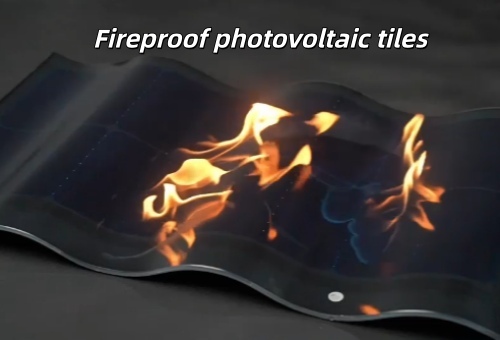
The fire performance of a roof tile comes down to what it's made of and how it's put together. GreenMore's tiled type photovoltaic tiles use two layers of tempered glass — front and back — with solar cells encapsulated between them. No polymer backsheet, no aluminum frame.
Glass is non-combustible. It does not ignite, does not contribute fuel to a fire, and does not produce flaming droplets. This is fundamentally different from polymer-backsheet modules, where the rear surface contains EVA, Tedlar, or other organic materials that can burn or melt under direct flame exposure.
The frameless design eliminates another potential fire pathway. Aluminum frames, while not combustible themselves, create gaps between the module edge and the roof surface where embers can lodge and smolder. A flush-mounted, frameless glass tile presents a continuous, non-combustible surface with no gaps for ember accumulation.
Schematic diagram of the fireproof principle of double-glass photovoltaic tiles
What This Means for Building Compliance
Fire safety requirements for roof coverings vary by jurisdiction, but the underlying principle is consistent: the roof assembly must resist external fire spread. Here's how Class C rating maps to common compliance scenarios:
Jurisdiction
Standard
Requirement
GreenMore Compliance
European Union
EN 13501-5
Roof covering fire classification required
Class C (T1–T4 applicable)
United States
UL 790 / IBC §1505
PV panels must match roof fire classification
Class C rated
United Kingdom
BS EN 13501-5
B Roof(t4) typically required for high-risk areas
Class C for residential/low-risk
For residential roofing projects in most markets, Class C satisfies the minimum code requirement. Projects in high wildfire risk zones (such as California's WUI zones or Australian bushfire-prone areas) may require Class A — a different product category altogether.
The fire rating also affects insurance. Many property insurance policies reference roof covering fire classifications when determining premiums. A certified Class C rated BIPV roof demonstrates compliance and may help avoid premium surcharges that uninspected or uncertified solar roofing installations can trigger.
The Statistics Behind Roof Fire Risk
The urgency of roof fire classification becomes clear when you look at the numbers. According to the National Fire Protection Association (NFPA), structure fires in the United States caused an estimated $15.3 billion in direct property damage in 2024. Nonresidential building fires alone accounted for approximately $3.16 billion in property loss in 2023, per the U.S. Fire Administration.
Roof-related fires — whether originating from external embers, electrical faults, or construction activities — represent a significant portion of these losses. The NFPA reports that where sprinklers are present, fire stays confined to the room of origin 94% of the time, compared with just 70% without sprinklers. For roofs without suppression systems, the fire rating of the roof covering itself becomes the primary defense against external fire spread.
Fire Safety as Part of the Full Certification Package
GreenMore's approach to fire safety sits within a broader certification framework. The company's tiled type products carry EN 14782 (profiled sheeting for roofing), EN 1090-1 (structural steel/aluminum components), ISO 9001 (quality management), ISO 14001 (environmental management), and CE marking. The Class C fire rating is one component of a comprehensive compliance package that addresses structural integrity, environmental performance, and manufacturing quality.
For contractors and building owners navigating the permitting process, having all certifications in order from the start avoids delays and keeps inspections on track. GreenMore has been manufacturing BIPV products since 2017, building a portfolio of 20+ patents and a production capacity exceeding 1MW to support projects of varying scale.
Class C fire rating isn't the highest possible classification — but for the majority of residential and commercial roofing applications, it's the right one. It confirms that the double-glass frameless structure performs as a non-combustible roof covering under standardized test conditions, meeting the regulatory requirements that building inspectors and insurance assessors need to see.





 Network Supported

