How long does a 10 kWh battery last for a family?
May 25, 2025
A 10 kWh home battery lasts between 4.5 hours and 29 hours. Both figures are correct, and neither has anything to do with the battery.
The 4.5-hour number is a family of four in an all-electric house running the air conditioning through a summer outage. The 29-hour number is a couple in a flat with gas heating, keeping the fridge, the router and a few lamps alive. Same box on the wall, a 6-fold spread in the answer.
Which is why the useful question is not how long a 10 kWh battery lasts, but how much of your house you are asking it to carry.
Nameplate is not what you can use
A 10 kWh battery holds 10 kWh the way a 750 ml bottle holds 750 ml. You do not drink the last of it, and the battery does not go to zero either. Repeated full discharges wear the cells, so manufacturers set a depth of discharge limit, usually 90 to 95 percent on a LiFePO4 pack.
Usable capacity = nameplate × depth of discharge × inverter efficiency
Ten kilowatt-hours at 90 percent depth and 94 percent conversion gives 8.46 kWh at the socket. That is the number to work from. The rest is reserved for the cells, or lost as heat in the inverter.
Sellers quote whichever figure looks better. Two batteries both labelled 10 kWh can differ by a kilowatt-hour of usable energy if one allows 95 percent depth and the other 85. Ask for the depth of discharge and the round-trip efficiency before comparing prices.
One appliance at a time
Divide the usable energy by the load and you have hours. The trouble is that a load list is not a single number, and one column is missing from every datasheet.
Load
Runs at
Surges to
Hours on 8.46 kWh
LED lighting, four rooms
100–200 W
same
42–85
Router, TV, laptop
100–200 W
same
42–85
Refrigerator
150–250 W
2–3×
34–56
Furnace blower
300–800 W
3–4×
11–28
Microwave
1,000 W
same
8.5
Window air conditioner
1,000–1,500 W
5–6×
5.6–8.5
Central air, 3 ton
2,800–3,000 W
5–6×
2.8–3
The surge column is the one that stops installations. A 3-ton condenser with a locked rotor rating of 85 A pulls 85 × 240 = 20,400 W for a second or two. A 10 kWh battery with a 5 kW inverter cannot start it, no matter how much energy is stored. A soft-start kit cuts the inrush by 50 to 70 percent and makes the difference.
Fridges and furnace blowers cycle, so their real consumption is a fraction of the running figure. Lighting and networking do not. Add up what runs simultaneously, not what exists in the house.
A family, not an appliance
Household consumption varies by a factor of six across the same battery, and the driver is heating and cooling, not the number of people. The US average is about 29 kWh a day, according to the EIA, with roughly 24 kWh of that outside space heating.
Household
Daily use
A 10 kWh battery covers
Couple, flat, gas heating
6–8 kWh
25–34 hours
Family of four, gas heating
10–13 kWh
16–20 hours
Family of four, all-electric
25–30 kWh
7–8 hours
Family of four, all-electric, air conditioning
40–50 kWh
4–5 hours
That last row is why a 10 kWh battery is almost never connected to a whole house. It is connected to a subpanel holding the circuits that matter, and the runtime jumps back to 12 hours or more because the load drops from 3,000 W to 700.
The same arithmetic explains a question that arrives by email most weeks: why does my app show 100 percent in the morning and 30 percent by nine at night? Nothing is broken. The house is drawing 2 to 3 kW in the evening, and 8.46 kWh does not go far at that rate.
Usable capacity fixed at 8.46 kWh. The only variable is what the house is drawing.
Cold weather takes another bite
Every figure so far assumes a cell temperature near 25°C, which is where manufacturers measure the datasheet. Below freezing, the electrolyte thickens, internal resistance rises, and some of the stored energy becomes hard to extract.
Cell temperature
Usable capacity
Hours at 700 W
25°C
100% — 8.46 kWh
12.1
10°C
95–98%
11.7
0°C
85–90%
10.6
−10°C
70–80%
9.1
−20°C
60–70%
7.9
Two things get lost in that table. First, it describes cell temperature, not air temperature. A wall-mounted unit weighs 100 kg and takes 12 to 24 hours of sustained cold before the cells catch up with the weather, so a garage installation rarely sees the outdoor low. Second, the capacity is not gone. Warm the pack back to 15°C and it returns. Cold storage is gentle on lithium cells; cold charging is what causes damage, which is why every quality BMS blocks charge below zero.
Heat is the opposite problem and the more expensive one. A pack held at 25°C reaches 6,000 cycles before dropping to 80 percent capacity. The same pack at 45°C reaches about 3,500. That is 42 percent of its life spent on a hot wall.
Solar changes the answer
All of the above assumes no recharge. With an array on the roof, the outage is measured in weather rather than stored hours, and 10 kWh becomes a buffer rather than a tank. A family drawing 700 W overnight needs about 5 kWh to reach sunrise, which a modest array replaces by mid-morning on a clear day.
The condition is that the inverter accepts PV input while islanded. Plenty of storage systems charge from the grid only, and a sunny outage then turns into a countdown. Ask before buying.
In ordinary operation the battery is rarely emptied. The pattern is one shallow cycle a day: charge from solar or off-peak grid, discharge across the evening, repeat. Which brings up the second meaning of the question.
How many years, not how many hours
LiFePO4 home batteries are commonly warranted for ten years or a stated cycle count, whichever comes first, with a capacity retention floor around 70 to 80 percent. Three things move the real number:
Cycle depth. Shallow daily cycles wear less than regular full discharges. A pack run between 30 and 80 percent will outlast one run between 5 and 100.
Temperature. Cool and stable beats warm. The 25°C against 45°C gap above is worth more than any other single choice.
Charge and discharge rate. Staying inside the rated C-rate avoids the heat that drives the fade.
Cycle-life claims need their test conditions attached. Six thousand cycles at 60 percent depth and six thousand at 90 percent are different products with the same headline. Ask for the depth and the temperature the figure was measured at, and for the capacity the warranty still guarantees in year ten.
Is 10 kWh the right size
For a household focused on evening self-consumption and short outages, 10 kWh is a sensible middle. A 3,000 kWh-a-year house cycling 250 times puts about 2,500 kWh through the pack annually, which a 10 kWh unit handles at roughly one cycle a day.
Installed cost runs $12,000 to $18,000 in the United States, or $1,200 to $1,800 per kilowatt-hour, and the Australian price index tracks the same band. A portable station costs $300 to $500 per kilowatt-hour, so the premium for automatic switchover, a permit and a system warranty is three to five times. Spread over 6,000 cycles the storage itself works out at 2 to 3 cents per kilowatt-hour moved, which is where the economics either work or do not.
If outages are long, or the house is all-electric, go to 15 or 20 kWh, or buy a modular system and add packs later. Size from your own load list, not from an average-household table. In Australia, the Clean Energy Council battery list names every model that qualifies for a rebate, which is a faster filter than any review site.
One thing changed in 2026 that belongs in the arithmetic. The residential clean energy credit under section 25D ended for property placed in service after 31 December 2025, so a US buyer this year has no federal credit to subtract. Any quote still showing 30 percent is working from last year.
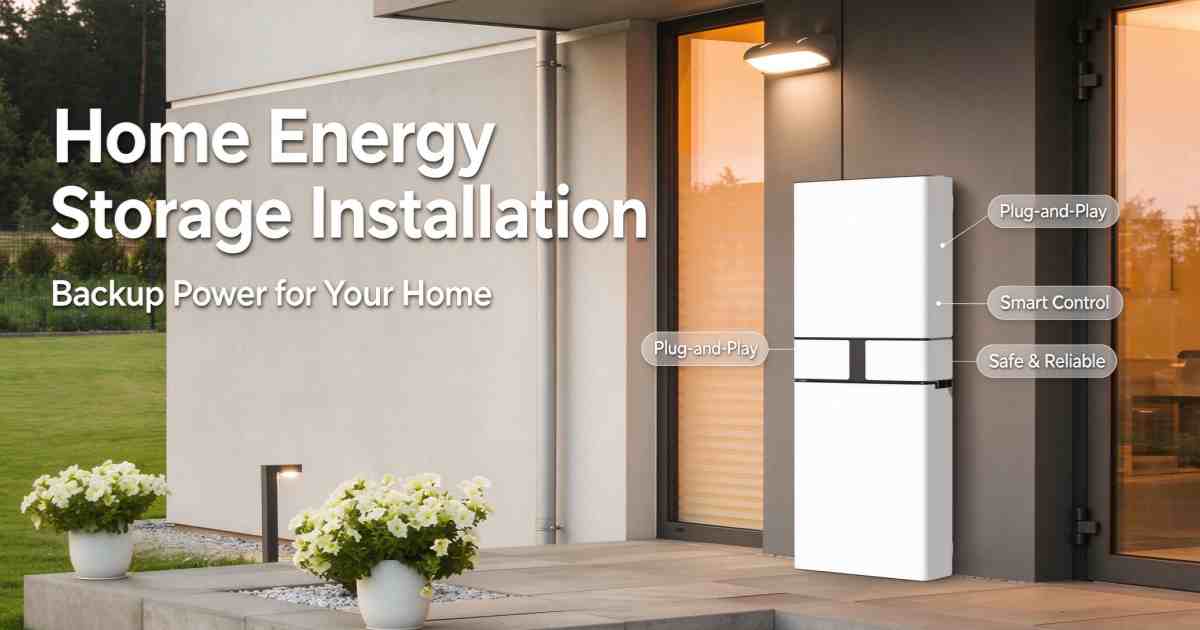
The wall-mounted 10 kWh unit and the stacked modular range cover both approaches, with the full list on the home energy storage page. For choosing what to back up, see choosing a home backup power system. If panels are already on the roof, adding storage to an existing system covers the coupling question, and the 20 kWh cost breakdown covers the next size up. Send a load list through the contact page and we will size it against your numbers.
Frequently Asked Questions
How long will a 10 kWh battery run a house?
Between 4.5 hours and 29 hours, depending on the load. A family of four all-electric with air conditioning draws 40 to 50 kWh a day and empties 8.46 kWh of usable capacity in about five hours. A couple keeping the fridge, lights and internet alive at 300 W gets 28 hours. Most installed systems sit in the 10 to 20 hour range because they serve a critical loads subpanel, not the whole house.
Why does a 10 kWh battery only show 9 kWh available?
Depth of discharge and conversion loss. The pack reserves 5 to 10 percent to avoid wearing the cells, and the inverter consumes a few percent converting DC to AC. Ten kilowatt-hours at 90 percent depth and 94 percent efficiency leaves 8.46 kWh at the socket. Some systems report usable capacity in the app, some report state of charge against nameplate, which is why two apps can disagree.
How long will a 10 kWh battery run a refrigerator?
About 34 to 56 hours on its own. A modern fridge draws 150 to 250 W while the compressor runs but cycles on and off, so it averages well under 100 W. Add lights, internet and heating controls and the combined load climbs to 500 or 700 W, which drops coverage to 12 to 17 hours.
Does cold weather shorten battery runtime?
Yes, temporarily. At 0°C a LiFePO4 pack delivers 85 to 90 percent of its rated capacity, at minus 10°C about 75 percent, at minus 20°C around 65 percent. The energy is still there and returns as the cells warm. Note that this describes cell temperature, and a sheltered indoor unit stays far warmer than the outdoor air.
How many years does a 10 kWh battery last?
Ten years or the stated cycle count, whichever comes first, is the standard warranty. Real service life depends on depth of discharge, temperature and C-rate. A pack kept near 25°C, cycled shallow and inside its rated current will reach its warranted retention. One held at 45°C will lose roughly 40 percent of its cycle life.
Is 10 kWh enough for a whole house?
Rarely. A US household averages about 29 kWh a day, so 8.46 kWh of usable capacity covers roughly seven hours at normal consumption. Whole-home backup needs 25 to 55 kWh, and in the United States section 702.4 of the electrical code may require the source to carry the full service rating, which for a 200 A panel means 48 kW. A 10 kWh battery belongs on a critical loads subpanel.
PL
Peter Lu
Energy Storage Product Manager, GreenMore
Sizes residential storage systems against real load lists, and writes about the parts of the quote that installers leave out.
Updated on November 17, 2026





 Network Supported


