48V or 51.2V? Detailed Explanation of LiFePO4 Energy Storage Battery Voltage
Dec 25, 2025
P
Peter Lu
Energy Storage Product Manager, GreenMore · Energy storage systems
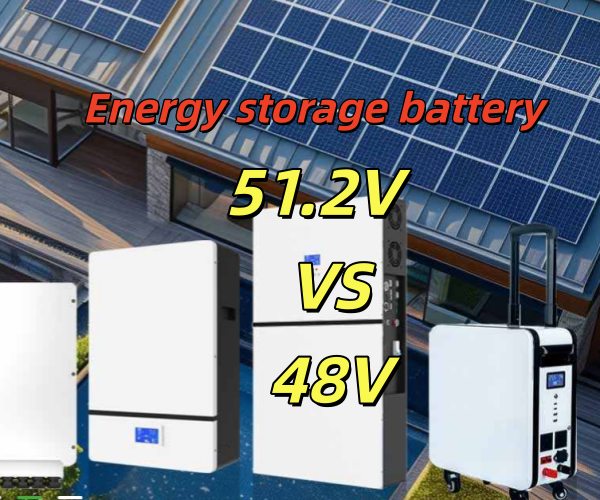
They are the same battery. "48V" is the conventional name for a battery whose real nominal voltage is 51.2V; 51.2V is the voltage of 16 LiFePO4 cells in series (16 × 3.2V). A standard 48V inverter is designed to work with it. Here is the detail and how it affects compatibility and efficiency.
Why Both 48V and 51.2V Exist
The distinction is between a naming convention and an electrical value.
48V is a nominal name. It is an industry-standard label, not the exact voltage of the pack. 51.2V is the calculated value. A LiFePO4 cell is 3.2V nominal, so a 16-series pack is:
16 × 3.2V = 51.2V
This is the voltage platform used in most modern LiFePO4 storage systems, including GreenMore's 5–30 kWh home storage range. In short, "48V" is the name and "51.2V" is the real nominal voltage; they describe the same 16S system from two angles.
Technical Comparison: 48V Name vs 51.2V Pack
Item
48V (name)
51.2V (16S pack)
Cell configuration
16S
16S
Cell nominal voltage
3.2V
3.2V
Pack nominal voltage
48V label
51.2V
Full charge voltage
~58.4V
~58.4V
Discharge cutoff
~40V
~40V
Inverter input
48V class, typically 40–60V — the same window
Most "48V inverters" accept roughly 40–60V, which covers a 51.2V LiFePO4 pack across its charge range. That is why GreenMore labels these systems 48V even though the actual nominal voltage is 51.2V; this is standard industry practice.
Why the 16S, 51.2V Architecture Works Well
Efficiency
For the same power, a higher pack voltage means a lower current, which reduces resistive loss in the cables and helps overall efficiency, particularly on 5 kW and larger systems.
Inverter compatibility
Mainstream hybrid inverters are optimized for 48V/51.2V LiFePO4 systems. GreenMore batteries communicate with them over CAN or RS485 for battery recognition and charging control.
Expansion and safety
The 5–30 kWh home storage systems support modular expansion, and the BMS protects against overcharge, over-discharge, over-temperature and short-circuit. LiFePO4 is rated for several thousand cycles under typical use; the exact cycle figure depends on the model and operating conditions, so refer to the specific datasheet.
How to Choose
Using a mainstream 48V hybrid inverter? A 51.2V LiFePO4 battery (sold as 48V) is the correct match.
Building a new solar-plus-storage system? The 51.2V platform gives a good balance of efficiency, cost and scalability.
Replacing an old 48V battery? Do not assume lead-acid and LiFePO4 are interchangeable. A 48V lead-acid pack reaches about 57.6V fully charged against about 58.4V for LiFePO4, and the discharge curves and charging profiles differ. Check that the inverter supports LiFePO4 and can be set to the correct charge parameters.
GreenMore Storage Options
GreenMore's home storage batteries (5 / 10 / 15 / 30 kWh) are built on the 51.2V LiFePO4 platform with CAN/RS485 integration. For larger projects, GreenMore also offers high-voltage battery platforms, air- and liquid-cooled ESS cabinets, containerized systems and complete solar-plus-storage solutions. As a LiFePO4 energy storage manufacturer, GreenMore can help match a battery to a chosen inverter and a specific load. The all-in-one 6 kW off-grid system is one example of the 51.2V architecture.
Frequently Asked Questions
Are 48V and 51.2V different battery types?
No. They describe the same 16S LiFePO4 battery; 48V is the common name and 51.2V is the actual nominal voltage.
Will a 51.2V battery work with my 48V inverter?
Yes, provided the inverter's DC input window covers the pack's range, typically about 40–60V, and it supports a LiFePO4 charge profile.
What is the full charge voltage?
About 58.4V for a 16S LiFePO4 pack, based on 3.65V per cell.
Can I replace a 48V lead-acid battery with LiFePO4?
Only if the inverter supports LiFePO4 charging and its voltage window is compatible. Confirm the charge settings before switching. If you tell us your inverter model and load, we can confirm compatibility and recommend a battery size. Contact the GreenMore team or email export@gmsolarkit.com.
P
Peter Lu
Energy Storage Product Manager, GreenMore
Peter helps customers and installers match batteries to inverters and loads, including 48V/51.2V low-voltage home systems and high-voltage commercial platforms. He checks the inverter's DC input window and communication protocol before recommending a battery and makes sure charge parameters, expansion plans and safety features are correct for each installation.






 Network Supported


