Maximizing Solar Efficiency with Energy Storage Systems
Jul 17, 2025
P
Peter Lu
Energy Storage Product Manager
A grid-connected solar system without a battery sends most of its daytime output either into your home or straight to the grid. Adding a battery changes that balance: the energy your panels make at midday can be stored and used in the evening, when most households actually need it. That shift — from exporting surplus to using it yourself — is the main way storage makes a solar system more efficient, and it is also what keeps the lights on during an outage.
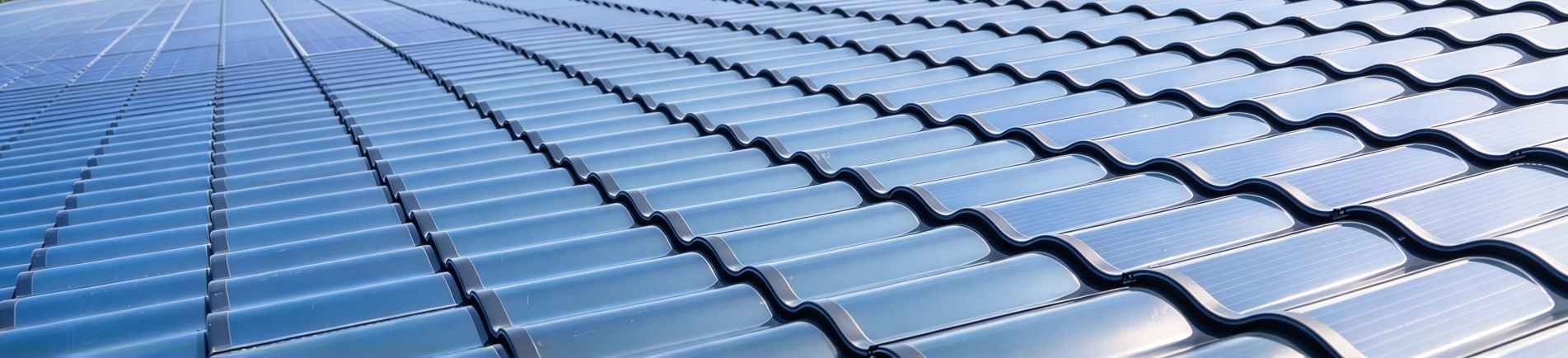
Integrated rooftop solar energy storage
Why solar and storage work better together
Solar output and household demand rarely line up. Panels produce the most around noon, while consumption peaks in the morning and after work. With solar power systems with battery storage, surplus generation charges the battery instead of being exported at a low rate, and that stored energy is dispatched later when grid electricity is more expensive. Three things happen as a result:
Higher self-consumption. A larger share of your solar energy runs your own loads rather than flowing to the grid.
Peak shaving. The battery discharges during high-tariff hours, cutting the amount of power bought at the top of the price curve.
Backup power. On systems configured for it, the battery can supply critical loads when the grid goes down.
What drives the cost of a solar battery
The solar storage battery cost depends mainly on usable capacity (kWh), chemistry, the inverter setup and whether backup or grid-export features are included. Lithium iron phosphate (LiFePO4) batteries now dominate new installations because they tolerate more cycles and are more thermally stable than older chemistries. Battery prices have generally trended downward as production has scaled, so the case for storage increasingly depends less on the sticker price and more on the local tariff structure and how often the battery cycles.
Factor
How it affects price and value
Usable capacity
More kWh costs more but covers more evening and backup loads.
Battery chemistry
LiFePO4 usually carries a higher upfront price with longer cycle life and better safety.
Inverter type
A hybrid inverter integrates solar and storage in one unit; a separate storage inverter may be needed to retrofit an existing system.
Backup certification
Whole-home backup and grid-forming capability add cost versus backup for a few critical circuits.
Sizing storage for real savings
A battery that is too small runs out before the evening peak; one that is too large rarely fills and may never pay back. The practical approach is to look at your load profile, the gap between your buy and sell tariffs, and the backup loads you care about. As a starting point, many homes find that storing a portion of daytime surplus to cover the evening peak delivers more value than trying to go off-grid entirely.
GreenMore supplies residential and commercial battery systems built around LiFePO4 cells, with a battery management system to monitor and balance cells, and compatible hybrid or storage inverters. We help size the battery against your solar array and tariff plan rather than selling a fixed package, and we provide the documentation and support needed for installation in your market. You can review the options in our home solar battery range, or contact our team with your recent electricity bill for a sizing recommendation.
Frequently asked questions
Does adding a battery make my solar panels more efficient?
It does not change how much sunlight the panels convert, but it raises the share of that energy you actually use at home. Panels produce the same number of kilowatt-hours; storage simply routes more of them to your own loads instead of the grid.
How long can a home battery run the house?
That depends on capacity and what you keep running. A typical residential battery can carry essentials such as lights, a fridge and communications for several hours, and it recharges the next day from solar. Whole-home backup for air conditioning and heating usually needs a larger system.
Is a battery worth it without time-of-use tariffs?
Savings are largest where there is a clear gap between cheap daytime and expensive evening electricity, or where export rates are low. Backup resilience can still justify storage where outages are frequent, even without time-of-use pricing.
Can a battery be added to an existing solar system?
Usually, yes. Retrofitting is commonly done with a storage inverter or a hybrid inverter replacement, depending on the existing equipment. An installer can confirm whether your current inverter is compatible or needs to be upgraded.
P
Peter Lu
Peter is GreenMore's Energy Storage Product Manager. He works with homeowners, installers and distributors to size solar-plus-storage systems around real load profiles and local tariffs, and he focuses on LiFePO4 batteries and compatible inverter setups that deliver self-consumption and backup value without overselling capacity. Reach him through the contact page or at export@gmsolarkit.com.






 Network Supported


