Maximizing Solar Efficiency with Energy Storage Systems
Jul 17, 2025
A solar roof and a battery get sold as one package, which hides the fact that they do two different jobs. The roof makes kilowatt-hours. The battery moves them from the hour they were made to the hour somebody wants them. Every efficiency gain a storage system delivers comes out of that second job, and it comes with a cost attached.
The confusion starts with the word. Buyers ask how much more efficient a battery makes their panels, expecting one percentage. There isn't one. Four numbers move when storage is added, they move in different directions, and only one is large enough to pay for the hardware.
What Efficiency Actually Means Here
Four numbers, not one
The first is self-consumption, the share of generation used on site rather than exported. A roof without a heat pump or an EV typically uses 30% of what it makes. With 8 kWh of storage that share reaches roughly 65%. The panels have not changed; the timing has.
The second is round-trip efficiency, the fraction of each kilowatt-hour put into the battery that comes back out. This is where storage loses ground, and no amount of good sizing recovers it.
The third is system efficiency: inverter, battery, standby draw, cabling. A unit held at full charge waiting for an outage burns 10 to 30 W doing nothing, which over a year eats 2 to 4% of throughput.
The fourth is degradation. A battery at 80% of capacity in year ten delivers fewer usable kilowatt-hours than in year one, so the saving declines with it. This one rarely appears in a quote.
Only the first produces a gain larger than its own cost. The other three are taxes on it, and good design keeps them small.
Self-Consumption Is Where the Gain Sits
Germany in 2026 is a clean case to work with, because both ends of the arbitrage are published. Average household electricity was 37.3 cents per kWh over the year to October, per the BDEW price analysis, down from 2025 but still among the highest in the EU. A kilowatt-hour drawn from the roof instead of the grid saves that full amount.
An exported kilowatt-hour earns 7.70 cents up to 10 kWp and 6.66 cents in the 10 to 40 kWp band, for systems commissioned from August 2026, according to the Federal Network Agency. The spread between the two, about 30 cents, is the entire economic case for a battery.
Figure, Germany 2026
Value
What it decides
Household electricity, average
37.3 ct/kWh
What a self-consumed kWh is worth
Feed-in tariff, up to 10 kWp
7.70 ct/kWh
What an exported kWh is worth
Feed-in tariff, 10 to 40 kWp
6.66 ct/kWh
Same, one band up
Spread between the two
about 30 ct/kWh
The value a battery can capture
Home storage, installed
300 to 700 EUR/kWh
The cost of capturing it
Mid-size systems, 8 to 12 kWh
390 to 410 EUR/kWh
70 real offers, averaged
New roofs fitted with storage
about 50%
How ordinary the decision is
Why the export tariff stopped carrying the case
It has fallen for a decade and is still falling. Rates drop 1% every February and August, and the EEG 2027 draft tabled in July 2026 would end the fixed tariff for new small systems, replacing it with 5.2 cents for at most 36 months. Sizing a roof on twenty years of export revenue means sizing on a rule being withdrawn.
The second change gets less attention. Since the Solar Peak Act of February 2025, systems above 2 kW earn nothing during quarter-hours with negative exchange prices, which on a sunny Sunday in May is when a roof produces most. Storage does not just capture the spread; it rescues generation from hours that now pay zero.
Round-Trip Efficiency
AC-coupled against DC-coupled
There are two ways to put a battery on a roof, and the choice fixes the round-trip figure before a product is picked.
In a DC-coupled system the battery sits on the same DC bus as the array, behind one hybrid inverter. Solar charges it without a second conversion, so the loss is one inverter pass plus the cells, and round-trip lands at 95 to 97%.
In an AC-coupled system the battery has its own inverter and connects on the AC side, usually because the PV inverter went in years earlier. Power crosses an inverter twice, once to AC for the house and again to DC for the cells. Round-trip is 88 to 92%. That five to seven point gap is permanent and applies to every stored kilowatt-hour for the life of the system.
DC-coupled
AC-coupled
Round-trip efficiency
95 to 97%
88 to 92%
Conversion steps per stored kWh
One inverter pass
Two inverter passes
Best fit
New roof, single supplier
Retrofit onto an existing PV inverter
Backup capability
Built in on hybrid units
Needs a backup gateway
Expansion
Battery and inverter sized together
Battery added without touching PV
Failure surface
One unit
Two units, two warranties
What the test labs measure
Datasheet round-trip is taken at a fixed load and a comfortable temperature, so it flatters. The HTW Berlin storage inspection runs systems through a modelled household year instead, standby draw and part-load behavior included. Its 2026 ranking put the best 10 kW system at 97%, which shows what good engineering reaches and how far a mediocre product sits below its own datasheet.
That gap is the number worth arguing about in a tender. A system rated 96% that scores 88 on the index is worse in a house than one rated 94% that scores 93.
Sizing Against the Evening Peak
A spring day on a 4 kWp German roof: generation peaks at midday, load peaks after dark.
A roof produces on a bell curve centered on noon. A household consumes on a curve that peaks between six and nine in the evening, when the roof makes nothing. The mismatch is the whole problem, and it is a shape problem before a capacity one.
A worked example, German roof
Take 4 kWp facing south near Munich at 950 kWh per kWp, so about 3,800 kWh a year, against a household using 3,500 kWh. Electricity at 37.3 cents, export at 7.70.
Without a battery, 30% of generation is used as produced, 1,140 kWh, and 2,660 kWh is exported. That is 425 euros saved on the bill plus 205 in export income, so 630 euros a year.
Add 8 kWh at 92% round-trip. Self-consumption rises to 65%, so 1,330 kWh more is used at home. Because each stored kilowatt-hour costs 8% of itself, 1,446 kWh has to enter the battery to deliver that 1,330, and export falls to 1,214 kWh. The bill saving becomes 921 euros, export income 94, total 1,015.
The gain is 385 euros a year. At 400 euros per kWh installed the battery costs 3,200, so payback is a little over eight years. Throughput is 181 equivalent cycles a year, well inside a 6,000-cycle rating.
Line
No battery
With 8 kWh battery
Generation
3,800 kWh
3,800 kWh
Self-consumed
1,140 kWh, 30%
2,470 kWh, 65%
Exported
2,660 kWh
1,214 kWh
Bill saving at 37.3 ct
425 EUR
921 EUR
Export income at 7.70 ct
205 EUR
94 EUR
Total annual benefit
630 EUR
1,015 EUR
Capital at 400 EUR/kWh
none
3,200 EUR
Simple payback
not applicable
8.3 years
Where the assumptions break
Every input above is local. A household with a heat pump and an EV reaches 45 to 50% self-consumption without any battery, and the same battery then adds much less. Northern roofs at 800 kWh per kWp produce a fifth less than the Munich case and need a smaller battery, not a bigger one.
Oversizing is the common failure. A 15 kWh battery on a 4 kWp roof never fills in winter and sits part-charged all summer, so capital goes on capacity that never cycles. The useful rule is 1 to 1.5 kWh of storage per kWp for a normal household, with the evening load deciding where in that band to sit.
Degradation and Service Life
Lithium iron phosphate loses capacity two ways: with each cycle, and with time. Cycle life runs 6,000 to 8,000 full cycles to 80% of original capacity. Calendar loss is 1 to 2% a year at moderate temperature and worse above 30 degrees, which is why a battery in a south-facing garage ages faster than the datasheet suggests.
At 181 cycles a year the cycle budget never binds. Time does. A 10 kWh battery in a temperate cellar reaches 80% around year twelve to fifteen; the same battery in a hot plant room may get there in eight.
Reading a cycle warranty
Three things matter in a warranty: energy throughput guaranteed, years covered, and whether the two are linked. A 6,000-cycle or ten-year term on a system cycling 181 times a year means ten years binds and the cycle figure is decoration. Ask for retained capacity at end of term as a percentage.
Standards and Documentation
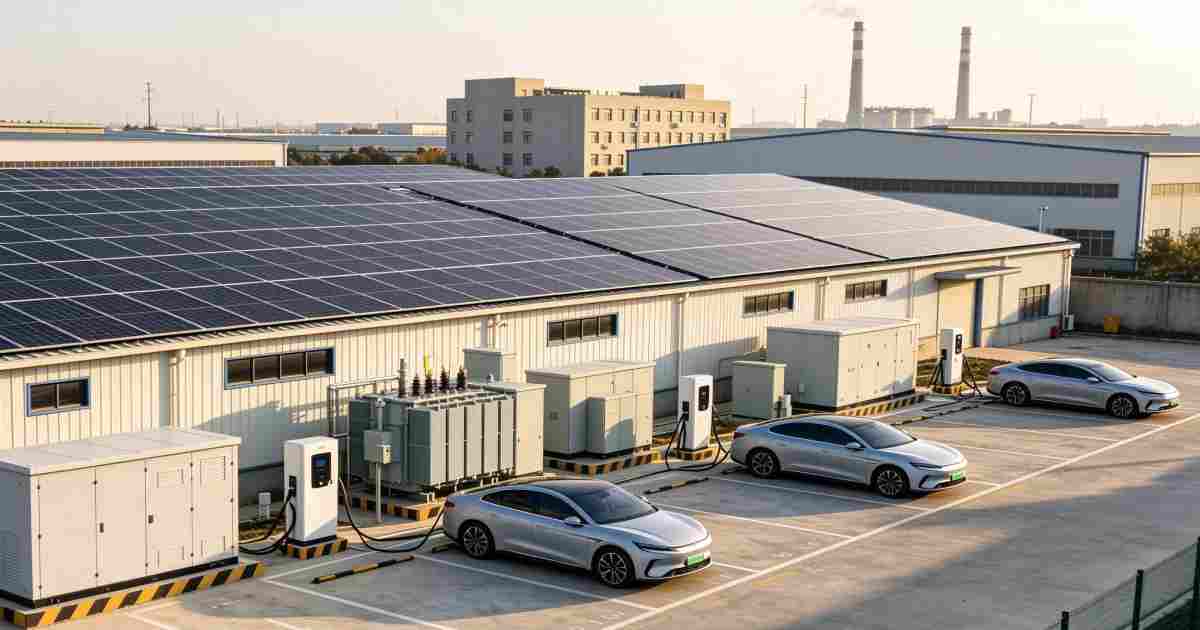
Storage sits between the grid and the house, so it inherits obligations from both. These are the documents a European installer should produce without asking.
Standard
Covers
Why it matters to a buyer
IEC 62619
Safety of industrial lithium cells
Cell-level abuse testing
IEC 62933-5-2
Grid-integrated storage safety
System-level hazard analysis
UL 9540
Complete energy storage system
Certifies the system, not a component
UL 9540A
Thermal runaway propagation
What happens when one cell fails
UN 38.3
Transport of lithium cells
Legal to ship at all
VDE-AR-N 4105
Grid connection below 135 kW
Required to export in Germany
IEC 62109-1 and -2
Inverter safety
Applies to the hybrid unit
EN 61439
Low-voltage assemblies
Applies to the cabinet
What to ask a supplier
Which certificate number, from which body, for the complete system rather than the cells.
Whether the UL 9540A test ran at cell, module, unit or installation level, since only the last two say anything about a fire in a house.
Retained capacity guaranteed at end of term, in percent.
Standby consumption in watts, measured rather than estimated.
Where Storage Still Does Not Pay
Some roofs never close the arithmetic, and saying so is cheaper than a callback in year three.
A roof already fully self-consumed needs no battery. A household with a heat pump and daytime charging that uses 70% of generation directly has little surplus left to shift, so the capital buys almost nothing. A small roof in a low-price market fails from the other side: at 20 cents a kilowatt-hour the spread over the export tariff is too thin to service hardware.
A site with a reliable grid and no time-of-use tariff is the third case. Storage there buys outage cover, not efficiency, and should be judged on hours of backup.
In all three the honest answer is a smaller battery, or none.
What GreenMore Supplies
For residential work we supply lithium iron phosphate systems from 5 to 30 kWh, paired with the hybrid inverter that matches the roof and sized against a load curve rather than a rule of thumb. Enclosures suit indoor or sheltered outdoor mounting, with liquid-cooled cabinets where ambient temperature makes air cooling marginal.
For commercial sites the same blocks scale to 215 to 372 kWh cabinets, where demand-charge reduction starts to matter more than self-consumption. Both lines carry a 3-year warranty, and we will quote against a customer-supplied load profile instead of an assumed one.
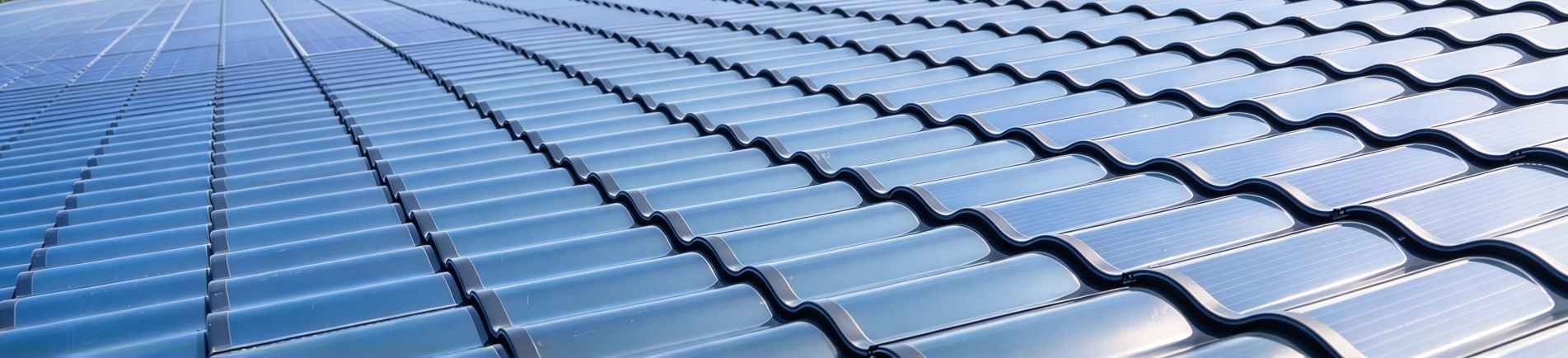
A pitched roof like this makes the kilowatt-hours. The battery decides which hours they land in.
Frequently Asked Questions
Does adding a battery make my solar panels more efficient?
No. Panel efficiency is fixed at manufacture. What changes is the share of generation used on site, from 30% to about 65%, displacing grid electricity at 37 cents with solar that would otherwise sell at 7.70.
What round-trip efficiency should I expect?
95 to 97% for a DC-coupled system with a hybrid inverter, 88 to 92% for AC-coupled. Datasheets are measured at optimum load, so the HTW Berlin index is the figure worth checking before a purchase.
How big a battery does a 4 kWp roof need?
Around 6 to 8 kWh for a normal household. The limit is the evening load rather than the roof: capacity beyond what the house absorbs after dark never cycles and never earns.
Is a battery worth it without a time-of-use tariff?
In Germany, yes, because the spread between 37.3 cents retail and 7.70 cents export carries it alone. Where the two are close, storage usually only pays on demand charges or outage cover.
Can a battery be added to an existing solar system?
Yes, with an AC-coupled unit, which avoids replacing a working PV inverter at the cost of five to seven points of round-trip efficiency for the life of the system.
Does the planned end of the fixed feed-in tariff change the decision?
It strengthens the case for storage. The EEG 2027 draft would replace the fixed tariff with 5.2 cents for at most 36 months, making export less attractive and self-consumption more so.
PL
Peter Lu
Energy Storage Product Manager, GreenMore
Works on residential and commercial storage sizing, inverter selection and grid compliance for European installations.
Updated on November 17, 2026





 Network Supported


