What is an outdoor energy storage cabinet?
Apr 10, 2025
P
Peter Lu
Energy Storage Product Manager, GreenMore
An outdoor energy storage cabinet is a self-contained battery system built to sit outside without a dedicated equipment room. Batteries, battery management, cooling and safety devices are packaged in a weatherproof steel enclosure, so the unit can be placed next to a factory, shop or substation and connected with minimal civil work. It is the most common format for commercial and industrial sites whose needs fall between residential batteries and full MWh containers.
What is inside a cabinet
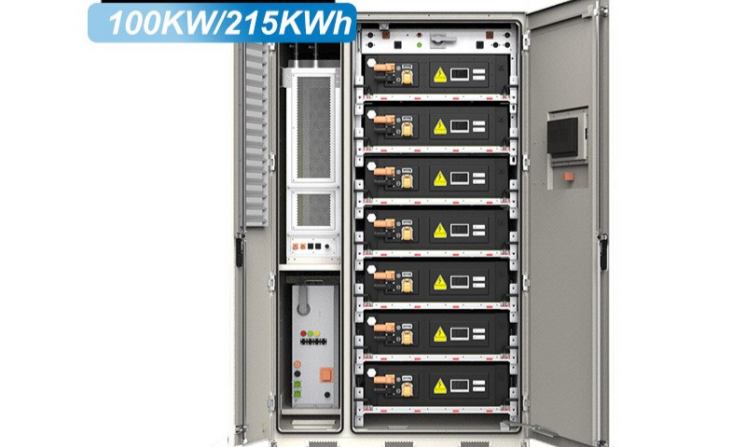
Although it looks like a single box from the outside, an outdoor cabinet is a complete integrated system:
Component
Function
Battery modules
Store the energy; LiFePO4 is the standard chemistry for stationary commercial use
BMS
Monitors cell voltage and temperature, balances cells, and protects against abnormal conditions
Power conversion (PCS or integrated inverter)
Converts battery DC to AC for the site and grid; may be inside the cabinet or installed separately
Thermal management
Fans and ducted air, or an integrated cooling unit, keep the batteries in their operating range
Fire detection and suppression
Smoke and heat detection with aerosol or gaseous suppression and controlled shutdown
Electrical protection and controls
Breakers, isolation points, surge protection and communication interfaces to the site control system
Commercial and industrial outdoor energy storage cabinets
What "outdoor rated" really means
Outdoor deployment is not just a sealed box. Three ratings determine whether a cabinet suits a site:
Ingress protection (IP rating). The IP code states resistance to dust and water. Outdoor cabinets commonly carry ratings such as IP54 or IP55; coastal or very dusty sites may require higher sealing and corrosion-resistant finishes. Check the actual tested rating rather than assuming "outdoor" covers everything.
Operating temperature range. The cooling system must keep cells within their rated range at the site's summer extremes. Temperature is the main factor affecting battery life, so climates with sustained high heat demand stronger cooling and shade consideration.
Humidity and corrosion resistance. Humid or salt-air environments need coated hardware, sealed cable entries and corrosion-resistant fasteners.
An IP rating does not mean the cabinet is immune to flooding. Cabinets should sit on a raised plinth or pad above expected flood levels and local drainage lines.
Cabinet vs container
The distinction is scale and installation style.
Attribute
Outdoor cabinet
Container system
Typical capacity
Roughly 50–300 kWh per unit
Roughly 0.5–5 MWh per unit
Placement
Forklift or small lift onto a pad; several units can be added over time
Crane placement on a structural foundation
Typical buyer
Factories, warehouses, commercial buildings, community storage
Large C&I, utilities, renewables plants, microgrid developers
Ranges vary by product generation and manufacturer; they are a planning guide, not a specification.
Typical applications
Peak-valley arbitrage. Charge during low-tariff hours and discharge during peak windows where the spread supports the cycle.
Demand charge management. Discharge to cap short load peaks that drive monthly demand charges.
Solar self-consumption. Store midday surplus from rooftop or carport PV for evening operations.
Backup and microgrid support. Carry critical loads through outages or stabilize weak-grid sites, often paired with solar and sometimes a generator.
Safety considerations
Safety is designed at three levels — the cells, the cabinet and the site — and all three matter.
Inside the cabinet: the BMS prevents overcharge and over-temperature; detection and suppression handle an internal fault; venting or pressure relief directs gases away from occupied areas.
At the site: keep required clearance from buildings, property lines and combustibles; maintain access for emergency services; and follow local fire codes such as NFPA 855 and IEC 62933 where they apply.
Operationally: alarms and fault signals should reach whoever is responsible for the site, with a defined response procedure.
How to select one
Start from interval load data. Use at least 12 months of 15- or 30-minute data to see real peaks and daily shape rather than monthly totals.
Specify power and capacity separately. kW for the peaks to be managed, usable kWh for the required duration.
Match environmental ratings to the site. IP rating, temperature range and corrosion protection for the actual climate and location.
Compare cycle and warranty terms with conditions stated. Cycle life and warranty only mean something when DoD and test conditions are given.
Confirm certification for the destination market. Storage equipment commonly ships with CE, IEC, MSDS and UN38.3 documentation; grid-code and local safety approvals vary by country and should be confirmed before order.
A practical option for smaller sites is the air-cooled outdoor storage cabinet, with the full lineup on the commercial energy storage category page. Before ordering, work through the C&I pre-installation checklist, and for understanding the converter side, see the article on power conversion systems. For project-specific advice, use the contact page.
FAQ
Can an outdoor storage cabinet be installed without a building?
Yes — that is the point of the outdoor design. It sits on a suitable concrete pad or plinth with cable routes and service clearance. It still needs proper siting for drainage, flood level and fire setbacks, and connection work by qualified personnel.
What is the difference between IP54, IP55 and IP65 cabinets?
The first digit covers dust protection and the second water. IP54 is dust-protected and splash-resistant; IP55 adds protection against water jets; IP65 is fully dust-tight and protected against jets. Higher sealing affects ventilation and cooling design, so the rating must be matched to how the cabinet breathes and cools, not chosen in isolation.
How long does an outdoor cabinet last in a hot climate?
LiFePO4 systems are designed for years of daily cycling, but sustained high temperature accelerates degradation. In hot climates, adequate cooling, shade or a north-facing orientation, and avoiding high charge rates help the battery reach its warranted life. The cooling specification deserves more attention than the headline capacity.
Can I start with one cabinet and add more later?
Usually, yes — many sites start with a single cabinet sized to the clearest savings and parallel additional units later. Plan for it up front: confirm the control system, buswork and switchgear have headroom, and that later cabinets will be compatible with the models and communication protocols already installed.
P
Written by Peter Lu — Energy Storage Product Manager, GreenMore
Peter helps commercial buyers and installers select outdoor cabinets from interval load data and site conditions, with particular attention to environmental ratings, cooling and safety-code compliance.





 Network Supported

