Large-area BIPV curved solar tile roof array for commercial buildings by GreenMore
Home

Energy storage system integration

Energy storage system integration

  • What is an outdoor energy storage cabinet?
    What is an outdoor energy storage cabinet? Apr 10, 2025
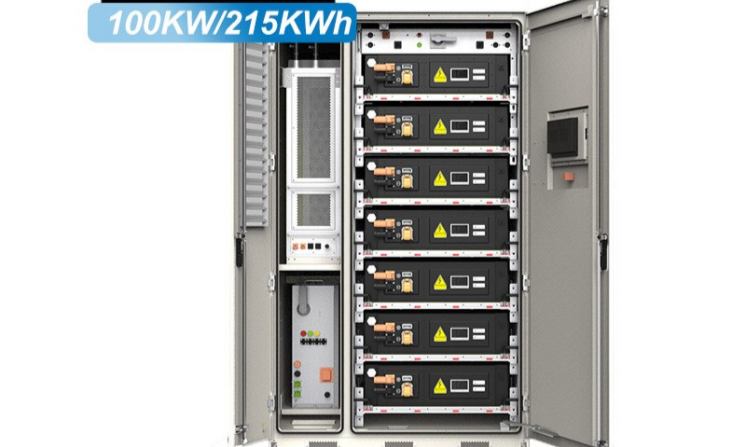
    P Peter Lu Energy Storage Product Manager, GreenMore An outdoor energy storage cabinet is a self-contained battery system built to sit outside without a dedicated equipment room. Batteries, battery management, cooling and safety devices are packaged in a weatherproof steel enclosure, so the unit can be placed next to a factory, shop or substation and connected with minimal civil work. It is the most common format for commercial and industrial sites whose needs fall between residential batteries and full MWh containers. What is inside a cabinet Although it looks like a single box from the outside, an outdoor cabinet is a complete integrated system: Component Function Battery modules Store the energy; LiFePO4 is the standard chemistry for stationary commercial use BMS Monitors cell voltage and temperature, balances cells, and protects against abnormal conditions Power conversion (PCS or integrated inverter) Converts battery DC to AC for the site and grid; may be inside the cabinet or installed separately Thermal management Fans and ducted air, or an integrated cooling unit, keep the batteries in their operating range Fire detection and suppression Smoke and heat detection with aerosol or gaseous suppression and controlled shutdown Electrical protection and controls Breakers, isolation points, surge protection and communication interfaces to the site control system Commercial and industrial outdoor energy storage cabinets What "outdoor rated" really means Outdoor deployment is not just a sealed box. Three ratings determine whether a cabinet suits a site: Ingress protection (IP rating). The IP code states resistance to dust and water. Outdoor cabinets commonly carry ratings such as IP54 or IP55; coastal or very dusty sites may require higher sealing and corrosion-resistant finishes. Check the actual tested rating rather than assuming "outdoor" covers everything. Operating temperature range. The cooling system must keep cells within their rated range at the site's summer extremes. Temperature is the main factor affecting battery life, so climates with sustained high heat demand stronger cooling and shade consideration. Humidity and corrosion resistance. Humid or salt-air environments need coated hardware, sealed cable entries and corrosion-resistant fasteners. An IP rating does not mean the cabinet is immune to flooding. Cabinets should sit on a raised plinth or pad above expected flood levels and local drainage lines. Cabinet vs container The distinction is scale and installation style. Attribute Outdoor cabinet Container system Typical capacity Roughly 50–300 kWh per unit Roughly 0.5–5 MWh per unit Placement Forklift or small lift onto a pad; several units can be added over time Crane placement on a structural foundation Typical buyer Factories, warehouses, commercial buildings, community storage Large C&I, utilities, renewables plants, microgrid developers Ranges vary by product generation and manufacturer; they are a planning guide, not a specification. Typical applications Peak-valley arbitrage. Charge during low-tariff hours and discharge during peak windows where the spread supports the cycle. Demand charge management. Discharge to cap short load peaks that drive monthly demand charges. Solar self-consumption. Store midday surplus from rooftop or carport PV for evening operations. Backup and microgrid support. Carry critical loads through outages or stabilize weak-grid sites, often paired with solar and sometimes a generator. Safety considerations Safety is designed at three levels — the cells, the cabinet and the site — and all three matter. Inside the cabinet: the BMS prevents overcharge and over-temperature; detection and suppression handle an internal fault; venting or pressure relief directs gases away from occupied areas. At the site: keep required clearance from buildings, property lines and combustibles; maintain access for emergency services; and follow local fire codes such as NFPA 855 and IEC 62933 where they apply. Operationally: alarms and fault signals should reach whoever is responsible for the site, with a defined response procedure. How to select one Start from interval load data. Use at least 12 months of 15- or 30-minute data to see real peaks and daily shape rather than monthly totals. Specify power and capacity separately. kW for the peaks to be managed, usable kWh for the required duration. Match environmental ratings to the site. IP rating, temperature range and corrosion protection for the actual climate and location. Compare cycle and warranty terms with conditions stated. Cycle life and warranty only mean something when DoD and test conditions are given. Confirm certification for the destination market. Storage equipment commonly ships with CE, IEC, MSDS and UN38.3 documentation; grid-code and local safety approvals vary by country and should be confirmed before order. A practical option for smaller sites is the air-cooled outdoor storage cabinet, with the full lineup on the commercial energy storage category page. Before ordering, work through the C&I pre-installation checklist, and for understanding the converter side, see the article on power conversion systems. For project-specific advice, use the contact page. FAQ Can an outdoor storage cabinet be installed without a building? Yes — that is the point of the outdoor design. It sits on a suitable concrete pad or plinth with cable routes and service clearance. It still needs proper siting for drainage, flood level and fire setbacks, and connection work by qualified personnel. What is the difference between IP54, IP55 and IP65 cabinets? The first digit covers dust protection and the second water. IP54 is dust-protected and splash-resistant; IP55 adds protection against water jets; IP65 is fully dust-tight and protected against jets. Higher sealing affects ventilation and cooling design, so the rating must be matched to how the cabinet breathes and cools, not chosen in isolation. How long does an outdoor cabinet last in a hot climate? LiFePO4 systems are designed for years of daily cycling, but sustained high temperature accelerates degradation. In hot climates, adequate cooling, shade or a north-facing orientation, and avoiding high charge rates help the battery reach its warranted life. The cooling specification deserves more attention than the headline capacity. Can I start with one cabinet and add more later? Usually, yes — many sites start with a single cabinet sized to the clearest savings and parallel additional units later. Plan for it up front: confirm the control system, buswork and switchgear have headroom, and that later cabinets will be compatible with the models and communication protocols already installed. P Written by Peter Lu — Energy Storage Product Manager, GreenMore Peter helps commercial buyers and installers select outdoor cabinets from interval load data and site conditions, with particular attention to environmental ratings, cooling and safety-code compliance.

  • What is Power Conversion System(PCS)?
    What is Power Conversion System(PCS)? Mar 12, 2025
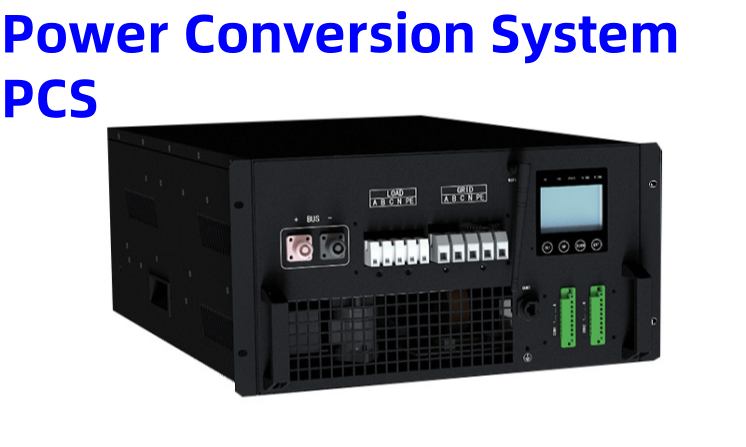
    P Peter Lu Energy Storage Product Manager, GreenMore A Power Conversion System (PCS) is the bidirectional converter that sits between a battery and the grid or loads. Batteries work in DC, while the grid and most equipment work in AC, so the PCS converts in both directions: AC to DC to charge the battery, and DC back to AC when the stored energy is needed. Along with the battery and the BMS, it is one of the three core parts of any grid-scale storage system. How a PCS works At the hardware level, a PCS is built around power semiconductor modules (typically IGBTs) that switch rapidly to shape voltage and current, plus a digital controller and output filtering. The same bridge runs in two directions: Charging (rectifier direction). Grid AC is converted to controlled DC at the battery's voltage, following a charge profile agreed with the BMS. Discharging (inverter direction). Battery DC is converted to AC that matches grid voltage, frequency and phase, and feeds the site or grid. The controller constantly coordinates with the BMS — which knows cell voltage, temperature and state of charge — and with the EMS, which decides when and how much to charge or discharge. Filters (commonly LCL type) remove switching harmonics so the output meets grid power-quality requirements. Schematic diagram of grid-connected inverter operation Core functions A storage PCS does more than convert energy. It is the actuator for whatever the site or grid operator asks the system to do. Function What it means in practice Bidirectional power flow Charge and discharge through the same unit, with controlled ramp rates Active and reactive power control Independent control of real power (kW) and reactive power (kVAr) for voltage support and grid services Grid-connected and off-grid operation Grid-following mode when connected; grid-forming mode to establish voltage and frequency in a microgrid or outage, where supported Fast response Power output can change within milliseconds, which is why storage is used for frequency regulation and smoothing Protection and anti-islanding Over/under-voltage and frequency protection, overcurrent and anti-islanding tripping to protect personnel and equipment PCS vs a solar inverter The boxes look similar, but the operating logic is different. Attribute Solar (PV) inverter Storage PCS Power direction One direction: panels to grid Bidirectional: grid to battery and back Control partner Follows solar irradiation via MPPT Follows BMS limits and EMS dispatch schedules Off-grid capability Generally none without storage Can form a grid for backup or microgrid use, where designed for it Hybrid inverters combine both roles in one residential unit — MPPT inputs for panels plus a DC battery connection. In commercial systems, the PCS is typically a dedicated three-phase unit sized in tens or hundreds of kW. Topology: two-level vs three-level The internal switching arrangement affects harmonics, losses and filtering size. Two-level designs are simpler and lower cost, and are common in smaller units. Three-level (NPC-type) designs produce a smoother waveform with lower harmonic content and switching losses, which allows higher power density and efficiency; the control and hardware are more complex. Efficiency should be judged from the full curve, not only the peak. Most modern PCS reach high peak efficiency, but performance at the actual operating load — often partial load — matters more in daily operation. Microgrid multi-scenario applications Typical applications C&I storage for peak-valley arbitrage and demand-charge management. Renewables integration to smooth solar and wind output and limit ramp rates. Microgrids and weak-grid sites, operating grid-forming with solar, storage and sometimes generators. Frequency and voltage services where grid markets allow storage to participate. How to select a PCS Match power to the application. Rate the unit for continuous kW and expected peak/overload; motor starting and load steps need headroom. Check the DC voltage window. It must cover the battery's full charge and discharge voltage range, including parallel strings and end-of-life conditions. Review the efficiency curve and losses. Efficiency at your typical load matters more than the maximum figure. Confirm imbalance and overload behavior. Three-phase sites with uneven single-phase loads need a stated unbalanced-load capability. Verify protection, certification and grid code. Storage converters commonly ship with CE and IEC documentation, with destination-country grid-code requirements and safety certifications confirmed before order. Plan integration and cooling. Communication protocols (such as Modbus or CAN) must match the BMS and EMS; indoor rack units and outdoor cabinets have different cooling and protection needs. A PCS is usually supplied as part of a complete cabinet or container; see the full lineup on the commercial energy storage category page, and for the enclosures it is built into, read about outdoor energy storage cabinets and container energy storage systems. For help matching a PCS to a battery and site, use the contact page. FAQ Can I use an ordinary solar inverter instead of a PCS for storage? Not for a DC battery. A standard PV inverter only converts DC from panels into AC and cannot charge a battery or follow BMS commands. A hybrid inverter is the residential exception; commercial storage uses a dedicated bidirectional PCS. What is the difference between grid-following and grid-forming? A grid-following converter synchronizes to an existing grid and injects a set amount of power; it cannot run alone. A grid-forming converter establishes its own stable voltage and frequency, allowing the system to run off-grid or start a dead microgrid (black start). Grid-forming capability must be specified in the PCS and controls. How is PCS size chosen for a storage project? From the required power and the duration of storage, which together define the C-rate. A 100 kWh battery required to deliver 50 kW for two hours needs at least a 50 kW PCS with overload margin; the same battery asked for 100 kW for one hour needs a 100 kW unit. The duty cycle and expected grid services also affect the rating. Why does a PCS need to communicate with the BMS? Because the BMS is the authority on battery limits. It tells the PCS the permitted charge and discharge current, voltage window and any fault conditions, preventing operation that could damage the cells. The EMS sets schedules, while the BMS sets safety bounds — the PCS executes within both. P Written by Peter Lu — Energy Storage Product Manager, GreenMore Peter works with integrators and EPCs to match PCS power, DC voltage ranges and control interfaces with batteries and grid codes, and separates documented performance figures from marketing claims.

Subscribe To Our Newsletter

Stay up to date with GreenMore. We share new BIPV solar tile releases, product and certification updates, and field notes from our projects — no fluff, just the things that matter to installers, distributors, and system integrators. If there's something you'd like to see covered, drop us a line — we read every reply.

Copyright @ 2026 GreenMore All Rights Reserved. Network Supported

Sitemap / Blog / Xml / Privacy Policy

leave a message

leave a message
If you are interested in our products and want to know more details,please leave a message here,we will reply you as soon as we can.
submit

Home

Products

WhatsApp

contact