What is a container energy storage system?
May 07, 2025
P
Peter Lu
Energy Storage Product Manager, GreenMore
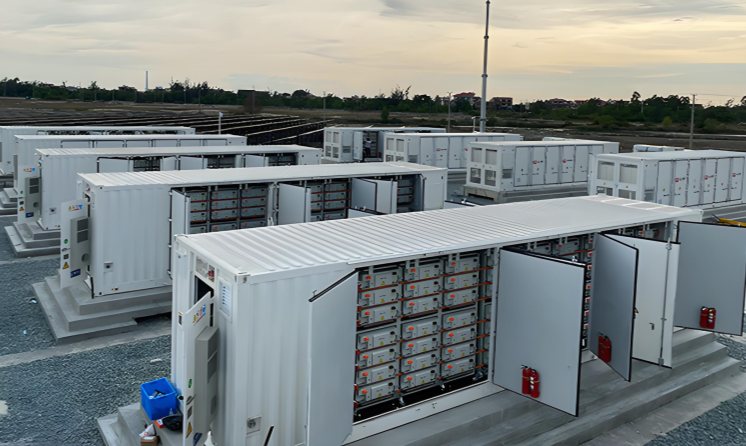
A container energy storage system is a complete battery plant built inside a standard shipping-container-sized enclosure. Batteries, power conversion, controls, cooling and fire protection arrive pre-assembled and pre-tested, so the unit can be trucked to site, set on a foundation and connected. It is the standard format when storage is measured in hundreds of kWh or MWh rather than the single units used in homes.
What is inside the container
A containerized battery energy storage system (BESS) is far more than racks of cells. It integrates everything needed to operate safely and connect to the grid:
Subsystem
Role
Battery racks and modules
Store the energy; LiFePO4 is the dominant chemistry for stationary systems
BMS (battery management system)
Monitors cell voltage and temperature, balances cells, and limits charge and discharge
PCS (power conversion system)
Converts battery DC to grid AC and back, and controls real and reactive power
Thermal management
Forced-air or liquid cooling keeps batteries within their temperature range
Fire detection and suppression
Smoke, heat and gas detectors plus aerosol or gaseous suppression, with alarms and controlled shutdown
EMS and controls
Runs operating schedules, communicates with site SCADA, and logs performance and faults
Enclosure and electrical gear
Weatherproof steel structure, HVAC louvers, busbars, protection devices and isolation points
Cross-sectional view of large container energy storage
Why projects use containers
Factory integration. Assembly, wiring and testing happen in the factory, reducing site work and commissioning risk.
Transport and deployment. The enclosure moves by standard truck, ship or rail, and several containers can be sited side by side to scale a project into the MWh range.
Outdoor rated. Industrial enclosures with IP-rated sealing are designed for dust, rain and corrosion; the exact rating and climate options are specified per project.
Repeatability. Identical units make multi-MWh sites easier to design, permit and maintain.
Cabinet vs container
The terms describe scale, and choosing correctly avoids overbuying.
Attribute
Outdoor cabinet
Container system
Typical capacity
Roughly 50–300 kWh
Roughly 0.5–5 MWh per unit; more when paralleled
Typical site
Factories, shops, small C&I facilities
Large C&I, substations, renewables plants, microgrids
Footprint and siting
Single cabinet, small pad
Foundation or concrete pad, crane placement, service access
Ranges vary by manufacturer and product generation; treat them as a guide rather than a specification.
Typical applications
C&I peak management. Discharge during peak tariff periods and charge off-peak to lower demand charges and energy costs.
Renewables integration. Absorb excess solar or wind output and smooth the variability of generation before it reaches the grid.
Microgrids and weak-grid areas. Combine with solar or wind to stabilize supply in remote sites, islands or areas with unreliable grids.
Facility backup. Support critical infrastructure where long-duration, automatic backup matters.
Air cooling vs liquid cooling
Thermal design is one of the most important choices because temperature drives battery life.
Air cooling is simpler and lower cost, and suits moderate climates and lower charge/discharge rates.
Liquid cooling keeps cell temperatures more even, supports higher power throughput and hot climates, and generally helps preserve cycle life; it adds cost and a coolant loop to maintain.
If the system will cycle daily at high power or sit in a hot climate, liquid cooling is usually the safer long-term choice.
How to specify one
Capacity and power separately. Define usable kWh for the required duration, and kW (continuous and peak) for the loads and grid services involved.
Confirm cycle conditions. Compare cycle-life and warranty figures with their DoD and test conditions stated; a single headline number is not comparable.
Check standards and grid requirements. Storage units are commonly certified to CE, IEC, MSDS and UN38.3 for transport and deployment, with grid-code compliance defined by the destination country.
Plan siting and safety codes. Foundation loads, clearance for service and ventilation, fire separation and emergency access must follow local codes such as NFPA 855 and IEC 62933 where applicable.
Site and grid preparation is a project in itself; a pre-installation checklist covering load data, transformer capacity and permits is worth completing before ordering.
For smaller facilities, see the air-cooled cabinet storage system. The full commercial lineup is on the commercial energy storage category page, and before ordering it is worth working through the C&I pre-installation checklist. For project-specific sizing, use the contact page.
FAQ
How much energy does a storage container hold?
Common single containers range from roughly 0.5 MWh to about 5 MWh, depending on cell generation, cooling design and internal layout. Larger projects parallel multiple containers to reach tens or hundreds of MWh. The exact figure for any unit comes from its datasheet.
Does a container BESS need a building?
No — it is designed to sit outdoors on a suitable foundation or concrete pad. It does require crane access for placement, clearance around vents and doors, and compliance with local fire setbacks and safety codes.
What happens if a battery cell overheats?
The BMS detects abnormal voltage or temperature and reduces power or shuts the affected circuit down. Smoke, heat and gas detectors trigger alarms and the suppression system, while compartment separation and ventilation are designed to limit spread. These defenses are defined by the unit's design and the site's safety code, which is why certified installation matters.
How long does a container BESS last?
Stationary LiFePO4 systems are commonly designed for daily cycling over roughly 10 years or more, with warranties defined by cycles, years and a capacity-retention figure. Actual life depends mainly on cycle depth, operating temperature and charge rate, so cooling choice and operating schedule have a direct effect.
P
Written by Peter Lu — Energy Storage Product Manager, GreenMore
Peter supports distributors and EPCs on cabinet- and container-scale projects, matching capacity, power, cooling and safety standards to site conditions and destination grid codes.





 Network Supported

