Large-area BIPV curved solar tile roof array for commercial buildings by GreenMore
Home

Industrial and commercial energy storage system

Industrial and commercial energy storage system

  • What preparations should be made before installing an industrial and commercial energy storage system?
    What preparations should be made before installing an industrial and commercial energy storage system? Jun 23, 2025
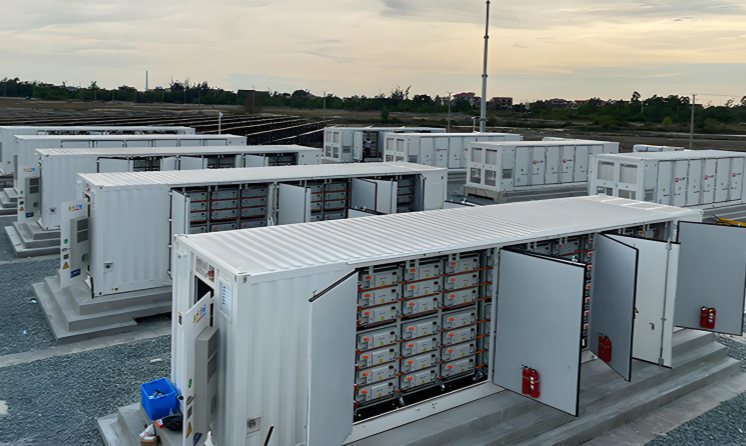
    P Peter Lu Energy Storage Product Manager, GreenMore Installing a commercial or industrial (C&I) energy storage system is a capital project, not a plug-and-play purchase. The technical and commercial outcome depends largely on the preparation done before the first cabinet is delivered. This checklist covers the items that typically determine whether a project succeeds, gets delayed, or gets redesigned halfway through. 1. Tariff and revenue analysis Start with the electricity bill. You need to understand not just the average price per kWh, but the full tariff structure: Time-of-use rates. Identify the peak, shoulder and off-peak periods and the price for each. The spread between peak and off-peak is the primary driver for arbitrage revenue. Demand charges. Many C&I tariffs include a charge based on the maximum kW drawn in a billing period (often a 15-minute or 30-minute window). Energy storage can shave these peaks, but you need to know whether your tariff includes demand charges and how they are calculated. Feed-in or export tariffs. If the system will also export solar energy, know the export rate and any export limits imposed by the grid operator. Future tariff changes. Some markets are moving toward dynamic or real-time pricing. A system sized only for today's tariff may underperform if the structure changes. A simple rule of thumb: if the peak-to-off-peak spread is small (for example, less than 2×), demand charge reduction or backup value may need to carry more of the business case. If the spread is large, arbitrage alone can be attractive. 2. Load profiling A single monthly kWh number is not enough. You need interval data — ideally 15-minute or 30-minute readings over at least 12 months — to understand: Peak demand timing. When do the highest kW draws occur, and how long do they last? This determines the discharge duration needed for demand charge reduction. Load shape by time of day. Does the facility run 24/7, or is it concentrated in business hours? A 24/7 load profile changes the optimal charge-discharge schedule. Seasonal variation. Cooling loads in summer, heating loads in winter, or production cycles can shift the load profile significantly across the year. Critical vs non-critical loads. If backup is part of the scope, identify which circuits must stay powered during an outage and their combined wattage. If interval data is not available, a qualified installer can install a temporary logger for a few weeks to capture the load shape. Do not skip this step — sizing without load data is the most common cause of underperformance. 3. Transformer and grid connection The existing transformer sets a hard ceiling on how much power the site can draw from or export to the grid. Before specifying the storage system, confirm: Transformer rated capacity (kVA). The storage system's charge power, added to the site's existing peak load, must not exceed the transformer rating. Available headroom. If the transformer is already near full load during peak hours, the storage system may need to charge during off-peak hours only, which constrains the operating strategy. Future load growth. If the facility plans to add equipment, EV chargers or production lines, the transformer may need upgrading. Size the storage system with the future transformer capacity in mind, or plan for a coordinated upgrade. Grid operator requirements. Many utilities require an interconnection study, protection coordination review, or specific metering for storage systems above a certain size. Start this process early — it can take weeks or months. 4. Site survey and physical installation C&I energy storage cabinets are heavy, generate heat, and carry high-voltage DC. The installation site must meet several requirements: Item What to check Floor loading capacity Cabinets can weigh several tons. Confirm the floor slab can support the distributed and point loads. Clearances and access Maintenance access around each cabinet, cable routing paths, and crane or forklift access for delivery. Ventilation and cooling Air-cooled cabinets need adequate airflow; liquid-cooled cabinets need a cooling water supply and drain. Check ambient temperature limits from the datasheet. Fire separation Distance from buildings, fire walls, sprinkler coverage, and fire detection systems as required by local fire codes. IP rating and environment Outdoor installations need cabinets rated for the local climate (rain, dust, temperature extremes). Indoor installations need adequate room conditions. Electrical room compatibility If installed inside, the electrical room must meet local codes for battery energy storage systems, which may differ from standard electrical room requirements. Outdoor integrated energy storage cabinet and parallel energy storage power station 5. Permits, codes and insurance Regulatory requirements vary by country and region, but typical items include: Building and electrical permits. Most jurisdictions require permits for the electrical work and, if the system is outdoors or in a dedicated room, possibly a building permit as well. Fire code compliance. Standards such as NFPA 855 (US), IEC 62933 series, or local equivalents define spacing, suppression, detection and ventilation requirements. Confirm which codes apply at your site. Product certifications. The battery system should carry the certifications required in your market (CE, UL, IEC 62619, UN 38.3 for transport, MSDS). Ask for certificates before signing a contract. Insurance. Notify your property insurer before installation. Some policies require specific fire suppression systems or separation distances for battery energy storage. 6. O&M and monitoring plan Plan for operations before the system goes live: Monitoring platform. Confirm what data is visible (SOC, power, temperature, alarms) and who has access. Remote monitoring can catch issues before they become outages. Maintenance schedule. Even LFP systems need periodic inspection: connector torque checks, firmware updates, thermal imaging of busbars, and BMS health checks. Spare parts and warranty terms. Know the warranty duration, what it covers, and the response time for field service. For critical loads, clarify whether a temporary replacement unit is available during repairs. End-of-life plan. Battery capacity degrades over time. Decide in advance whether you will repurpose the batteries for less demanding applications, recycle them, or replace them with new units. If you are scoping a project, see our commercial range on the air-cooled cabinet energy storage system page and the full lineup on the commercial energy storage category page. For project-specific questions, use the contact page. FAQ How long does the preparation phase typically take? For a straightforward site with existing load data and a cooperative utility, 4 to 8 weeks is typical. Sites that need a transformer upgrade, fire code review, or complex interconnection study can take several months. Do I need a new transformer for a C&I storage system? Not always. If the existing transformer has enough headroom to absorb the storage charge power without exceeding its rating, no upgrade is needed. The load profile and charge schedule determine this — it is one of the first things a qualified installer will check. What is the most common mistake in C&I storage projects? Sizing the system without interval load data. A system sized on a monthly kWh number often turns out to be too small to shave peaks or too large to cycle fully every day. Install a temporary logger if you do not have historical interval data. Can the system be expanded later? Many C&I systems are designed with modularity in mind — additional cabinets can be added as load grows or as the business case improves. Confirm with the supplier whether the BMS, PCS and communication architecture support planned expansion before the initial purchase. P Written by Peter Lu — Energy Storage Product Manager, GreenMore Peter works with distributors, installers and system integrators to size residential and commercial storage around real load profiles. He focuses on LiFePO4 systems that match the inverter, grid rules and backup needs of each destination market.

  • What is a container energy storage system?
    What is a container energy storage system? May 07, 2025
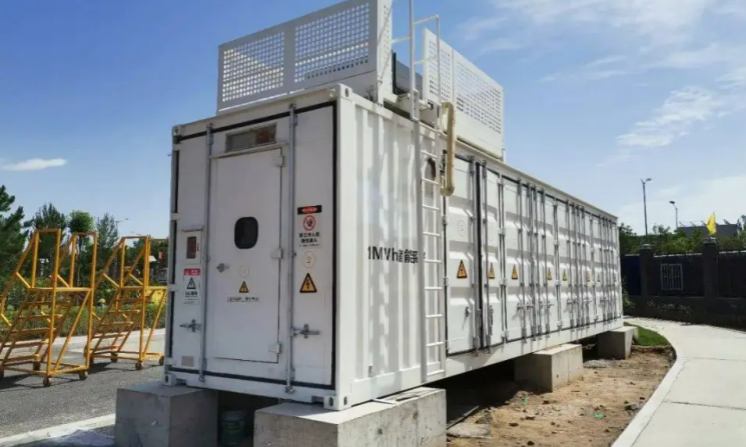
    P Peter Lu Energy Storage Product Manager, GreenMore A container energy storage system is a complete battery plant built inside a standard shipping-container-sized enclosure. Batteries, power conversion, controls, cooling and fire protection arrive pre-assembled and pre-tested, so the unit can be trucked to site, set on a foundation and connected. It is the standard format when storage is measured in hundreds of kWh or MWh rather than the single units used in homes. What is inside the container A containerized battery energy storage system (BESS) is far more than racks of cells. It integrates everything needed to operate safely and connect to the grid: Subsystem Role Battery racks and modules Store the energy; LiFePO4 is the dominant chemistry for stationary systems BMS (battery management system) Monitors cell voltage and temperature, balances cells, and limits charge and discharge PCS (power conversion system) Converts battery DC to grid AC and back, and controls real and reactive power Thermal management Forced-air or liquid cooling keeps batteries within their temperature range Fire detection and suppression Smoke, heat and gas detectors plus aerosol or gaseous suppression, with alarms and controlled shutdown EMS and controls Runs operating schedules, communicates with site SCADA, and logs performance and faults Enclosure and electrical gear Weatherproof steel structure, HVAC louvers, busbars, protection devices and isolation points Cross-sectional view of large container energy storage Why projects use containers Factory integration. Assembly, wiring and testing happen in the factory, reducing site work and commissioning risk. Transport and deployment. The enclosure moves by standard truck, ship or rail, and several containers can be sited side by side to scale a project into the MWh range. Outdoor rated. Industrial enclosures with IP-rated sealing are designed for dust, rain and corrosion; the exact rating and climate options are specified per project. Repeatability. Identical units make multi-MWh sites easier to design, permit and maintain. Cabinet vs container The terms describe scale, and choosing correctly avoids overbuying. Attribute Outdoor cabinet Container system Typical capacity Roughly 50–300 kWh Roughly 0.5–5 MWh per unit; more when paralleled Typical site Factories, shops, small C&I facilities Large C&I, substations, renewables plants, microgrids Footprint and siting Single cabinet, small pad Foundation or concrete pad, crane placement, service access Ranges vary by manufacturer and product generation; treat them as a guide rather than a specification. Typical applications C&I peak management. Discharge during peak tariff periods and charge off-peak to lower demand charges and energy costs. Renewables integration. Absorb excess solar or wind output and smooth the variability of generation before it reaches the grid. Microgrids and weak-grid areas. Combine with solar or wind to stabilize supply in remote sites, islands or areas with unreliable grids. Facility backup. Support critical infrastructure where long-duration, automatic backup matters. Air cooling vs liquid cooling Thermal design is one of the most important choices because temperature drives battery life. Air cooling is simpler and lower cost, and suits moderate climates and lower charge/discharge rates. Liquid cooling keeps cell temperatures more even, supports higher power throughput and hot climates, and generally helps preserve cycle life; it adds cost and a coolant loop to maintain. If the system will cycle daily at high power or sit in a hot climate, liquid cooling is usually the safer long-term choice. How to specify one Capacity and power separately. Define usable kWh for the required duration, and kW (continuous and peak) for the loads and grid services involved. Confirm cycle conditions. Compare cycle-life and warranty figures with their DoD and test conditions stated; a single headline number is not comparable. Check standards and grid requirements. Storage units are commonly certified to CE, IEC, MSDS and UN38.3 for transport and deployment, with grid-code compliance defined by the destination country. Plan siting and safety codes. Foundation loads, clearance for service and ventilation, fire separation and emergency access must follow local codes such as NFPA 855 and IEC 62933 where applicable. Site and grid preparation is a project in itself; a pre-installation checklist covering load data, transformer capacity and permits is worth completing before ordering. For smaller facilities, see the air-cooled cabinet storage system. The full commercial lineup is on the commercial energy storage category page, and before ordering it is worth working through the C&I pre-installation checklist. For project-specific sizing, use the contact page. FAQ How much energy does a storage container hold? Common single containers range from roughly 0.5 MWh to about 5 MWh, depending on cell generation, cooling design and internal layout. Larger projects parallel multiple containers to reach tens or hundreds of MWh. The exact figure for any unit comes from its datasheet. Does a container BESS need a building? No — it is designed to sit outdoors on a suitable foundation or concrete pad. It does require crane access for placement, clearance around vents and doors, and compliance with local fire setbacks and safety codes. What happens if a battery cell overheats? The BMS detects abnormal voltage or temperature and reduces power or shuts the affected circuit down. Smoke, heat and gas detectors trigger alarms and the suppression system, while compartment separation and ventilation are designed to limit spread. These defenses are defined by the unit's design and the site's safety code, which is why certified installation matters. How long does a container BESS last? Stationary LiFePO4 systems are commonly designed for daily cycling over roughly 10 years or more, with warranties defined by cycles, years and a capacity-retention figure. Actual life depends mainly on cycle depth, operating temperature and charge rate, so cooling choice and operating schedule have a direct effect. P Written by Peter Lu — Energy Storage Product Manager, GreenMore Peter supports distributors and EPCs on cabinet- and container-scale projects, matching capacity, power, cooling and safety standards to site conditions and destination grid codes.
  • How businesses use cheap electricity?
    How businesses use cheap electricity? May 05, 2025
    P Peter Lu Energy Storage Product Manager, GreenMore Businesses do not pay one price for electricity. Prices vary by hour, by source and by grid conditions, which means the same kilowatt-hour can be cheap at one moment and expensive at another. Companies that treat electricity as a time-sensitive resource — shifting load, generating their own and storing low-cost energy for later — can materially reduce what they spend on power. Where cheap electricity comes from There are four practical sources of below-average-cost electricity available to industrial and commercial users: Source Why it is cheap Off-peak grid power under time-of-use tariffs Wholesale prices fall at night and on weekends when demand and grid strain are low Self-generated solar power Rooftop PV cost per kWh is fixed at installation and is often well below the retail tariff it replaces Demand response compensation Grid operators pay customers for reducing or shifting load when the system is stressed — it is payment for flexibility, not a lower unit price Green power contracts Long-term power purchase agreements or green tariffs can lock in a fixed, competitive wind or solar price The common problem is timing. Cheap night power is available when most factories use little energy; solar is generated at midday when a building may already be away or lightly loaded; expensive peaks arrive in the early evening when production is running. Storage is what closes that gap — it lets a business buy or generate energy at one time and consume it at another. Strategy 1: Time-of-use arbitrage In markets with peak-valley pricing, a battery system charges during the lowest-priced hours and discharges during the highest-priced hours. Every cycle captures the difference: Gross margin per cycle ≈ discharged kWh × peak price − charged kWh × off-peak price Net margin is lower: round-trip efficiency losses (typically 85–90% reach the loads), battery degradation per cycle and operating costs must all come out of the spread. Arbitrage only works where the peak-off-peak spread is wide enough to clear those costs and the tariff structure is reasonably stable. Some markets offer two cycles per day, which changes the economics considerably; confirm the actual tariff schedule with the utility or a local energy adviser before sizing a system. Strategy 2: Solar plus storage Rooftop or carport PV generates low-cost electricity during the day. Without storage, excess output is exported, often at a feed-in price well below the retail rate. Adding a battery lets a facility store that surplus and use it later, raising the share of solar energy consumed on site at full retail value. Solar-heavy daytime loads: direct self-consumption may already be high, and a smaller battery covers the shoulder periods. Operations that run into the evening: storage carries the building through the post-sunset peak instead of importing at the highest tariff. Weekend shutdowns: batteries can capture weekend generation that would otherwise be exported cheaply. The combination also hedges against future tariff increases: once installed, solar and storage costs are largely fixed while grid prices can move. Large-scale industrial and commercial containerized energy storage power station Strategy 3: Demand response Demand response programs pay large users to reduce consumption when the grid is stressed. A business can meet its obligation by switching to stored energy instead of curtailing production — the facility keeps running while the site draws less from the grid. Batteries respond within seconds, which makes them well suited to fast-acting programs that pay more for immediate availability. Programs differ by market; check enrollment requirements, event frequency and minimum load reduction before committing. Strategy 4: Green power contracts plus storage Long-term wind and solar purchase agreements can provide a fixed, predictable energy price and help meet ESG or reporting requirements. Storage makes that contracted energy usable around the facility's own schedule rather than the generator's, and can store contracted volumes during low-price periods for peak use. Green power is not automatically the cheapest option in every market, so compare contract prices against expected grid tariffs over the full term. How businesses put this in place Collect interval data. Pull at least 12 months of 15- or 30-minute load data, including demand peaks, not just monthly kWh totals. Map costs to hours. Overlay the current tariff schedule — energy charges, demand charges and time-of-use windows — to identify where savings actually sit. Model each strategy. Run arbitrage, solar self-consumption and demand response scenarios against the load data, including efficiency losses and degradation. Size power and capacity separately. kW determines which peaks and loads can be covered; kWh determines how long. Confirm site and grid requirements. Transformer capacity, interconnection rules, permits and safety codes must be resolved before equipment is ordered. Review dispatch performance. After commissioning, compare actual cycles and savings against the model and adjust schedules seasonally. A useful principle: do not size storage for a single revenue stream. Systems that combine arbitrage, self-consumption and occasional demand response are generally more resilient to tariff changes than systems built on one strategy alone. Hardware options range from air-cooled outdoor cabinets for smaller sites to container-scale systems; the full lineup is on the commercial energy storage category page. Before ordering, work through the C&I pre-installation checklist, and for cabinet details see the article on outdoor energy storage cabinets. For a tariff and sizing review, use the contact page. FAQ Is peak-valley arbitrage profitable everywhere? No. It depends on the spread between peak and off-peak prices, the number of cycles per day and the stability of the tariff. A wide, predictable spread tends to support storage; a flat or frequently changing tariff may not. Model it against the local utility schedule rather than assuming it works. Does my business need solar to benefit from storage? Not necessarily. Storage can stand alone on time-of-use arbitrage and demand response where those markets pay well. Solar adds a low-cost charging source and an extra revenue stream, and the two together are common, but either can be viable on its own depending on local conditions. How do demand response payments differ from cheaper electricity? Cheaper electricity lowers the price per kWh you buy. Demand response pays you for reducing or shifting load during specific grid events — it is revenue for flexibility. Using a battery to serve your load during an event lets you earn that payment without cutting production. What size storage does a typical commercial site need? It follows the load curve, not the building's size. Smaller facilities may start with a 50–100 kWh outdoor cabinet; factories with clear daily peaks often look at several hundred kWh or a container system. The right answer comes from interval load data and the tariff analysis, so those should precede any quote. P Written by Peter Lu — Energy Storage Product Manager, GreenMore Peter works with businesses and project partners to match interval load data and tariff structures with storage capacity, from outdoor cabinets to container systems, and is cautious about quoting savings without the underlying numbers.

Subscribe To Our Newsletter

Stay up to date with GreenMore. We share new BIPV solar tile releases, product and certification updates, and field notes from our projects — no fluff, just the things that matter to installers, distributors, and system integrators. If there's something you'd like to see covered, drop us a line — we read every reply.

Copyright @ 2026 GreenMore All Rights Reserved. Network Supported

Sitemap / Blog / Xml / Privacy Policy

leave a message

leave a message
If you are interested in our products and want to know more details,please leave a message here,we will reply you as soon as we can.
submit

Home

Products

WhatsApp

contact