Netanya Solar Roof Tile Project: 407 Tiles, One Integrated Roof
Oct 08, 2026
L
Luke
Product Manager, GreenMore · Photovoltaic building materials
Most solar roof projects start with the same question: can you generate power without turning the building into a power station? This case study walks through a real BIPV project in Netanya, Israel, where 407 curved solar tiles replaced an aging roof and started producing electricity in a single build — no racks, no drilling, no separate waterproofing layer.
The numbers come from the system’s live monitoring, not lab estimates. I will share what worked, what was tricky, and why the owner chose curved tiles over flat panels even though flat panels promise more watts per unit.
The existing roof before BIPV renewal. Faded and broken tiles on a four-aspect residential roof that had reached the end of its service life.
Why the Owner Was Looking for an Alternative
The house sits in Netanya, a coastal city north of Tel Aviv. The original roof tiles were faded and broken, and a renewal was due — a job that typically runs $20,000 to $30,000 in the region. At the same time, the owner wanted to start generating solar power.
Three problems came up in early discussions:
Rack-mounted panels would damage the roof. Conventional panels are drilled through the roof structure, raising leak risk and clashing with the building’s Mediterranean styling.
Panels and tiles age on different clocks. Roof tiles fail long before the panels do. Renewing the roof later means removing the panels first — extra cost, extra work, and downtime.
Looks and clean power rarely come together. Owners who care about curb appeal simply will not accept metal racks and exposed panels on a residential roof.
The brief was clear: clean energy without giving up the roofline, the looks, or the waterproofing. That ruled out conventional panels from the start.
Project Scope and Success Metrics
Before any product was selected, we defined the boundaries of the job and the numbers that would count as success.
Item
Detail
Total roof area
About 140 m², with 126.4 m² of usable tiling
Roof configuration
Four aspects (N / E / W / S), gentle pitch around 8°
Delivery model
Turnkey — tiles, fittings, tier-1 inverter, battery storage, installation
Contractor
Single contractor, end to end. No separate purchasing for the owner.
Success was defined by three measurable targets:
407 tiles — full tiling complete across all four aspects.
28,490 kWh per year — annual yield target met.
Original roof untouched — complete roof renewal without demolition.
All three had to be met together. Hitting the yield target with a damaged roof would not count. A perfect-looking roof with low output would not count either.
The Solution: Triple-Arch Solar Tiles
We selected GreenMore’s triple-arch solar tiles for this project. Three reasons drove the choice:
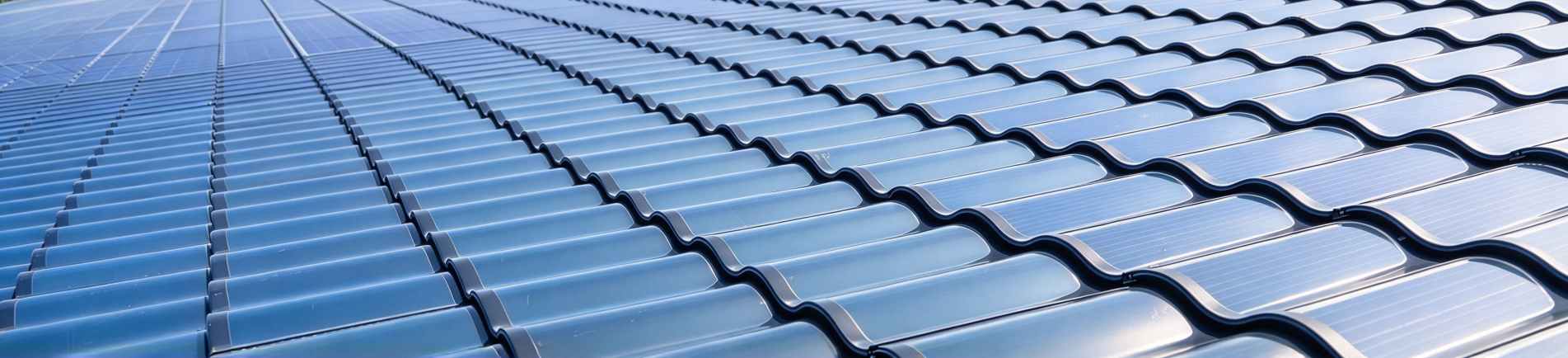
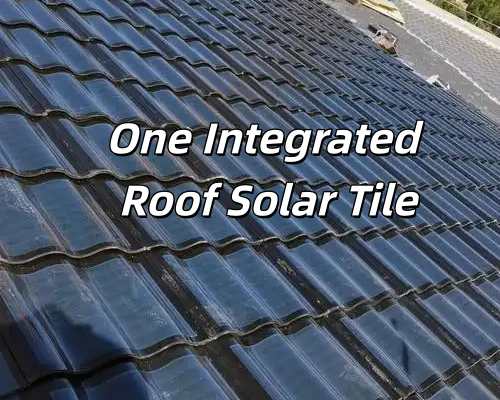
The tile is the roof. No racks, no drilling. Tiles are laid just like ordinary roof tiles, course by course from the eaves up. Fitting tiles handle the ridge and eaves transitions.
Curved profile suits Mediterranean styling. The three-arch shape reads as a traditional roof across all four aspects, rather than a grid of flat panels bolted on top.
Integrated waterproofing. The solar tile itself becomes the new waterproof layer. Single-tile replacement is possible, and the ventilated rear keeps cells cool.
System configuration
407 triple-arch tiles · 126.4 m² coverage · tier-1 inverter · battery storage · on/off-grid ready
We did consider flat tiles with optimizers. Flat tiles give more watts per unit, but the racked look and the separate waterproofing layer fell short of the brief. After evaluation, we held to the integrated curved-tile route. Looks and waterproofing were hard constraints; output was optimised within them.
Construction in progress. Curved solar tiles being laid across the four-aspect roof, course by course from the eaves upward.
Fixing battens and tile placement detail. The existing roof structure was left intact underneath the new solar tiles.
Construction Timeline
The build ran in six stages, delivered by a single crew from survey to commissioning:
Stage
What happened
1. Survey & design
Roof measured, string layout set for four aspects
2. Materials on site
Tiles, fittings, inverter, and battery delivered
3. Battens installed
Fixing battens laid across the existing roof structure
4. Tiling, 4 aspects
407 tiles laid by slope, north through south
5. Flashing & trim
Detail work at valleys, ridges, and junctions
6. Commissioning
Inverter, battery, and grid connection tested
The Hard Parts and How We Handled Them
1. Balancing output across four aspects
A four-aspect roof means each face receives very different sunlight. The north face gets the least, the south face the most. If you wire them carelessly, the weakest face drags the whole string down.
The fix was thoughtful string sizing — grouping tiles by aspect and wiring them so the weaker faces do not bottleneck the stronger ones. The gentle 8° pitch helps here too: at such a shallow angle, every aspect sees relatively even light throughout the day. Average daily yield settled at 74.8 kWh across all four faces.
2. Keeping the roof fully watertight
No drilling, no racks. Fitting tiles handle the ridge and eaves transitions, and the solar tiles themselves become the new waterproof layer. The existing roof was left untouched underneath — no demolition, no exposure to weather during the build. The system meets EN 14782 requirements for self-supporting metal sheets used in roofing.
3. The curved-tile trade-off
Flat tiles generate more watts per unit. That is a fact. But on this roof, the racked look and the separate waterproofing requirement did not meet the brief. The owner’s priorities were clear: roofline unity and waterproofing came first, output came second. Within those constraints, the curved-tile route delivered a stronger overall result.
The completed BIPV roof. 407 triple-arch solar tiles covering all four aspects, with integrated waterproofing and a seamless roofline.
Results: Before and After
BEFORE
Faded, broken tiles — $20–30k renewal due
Zero self-generated solar
Rack-mounted options would damage the roof
AFTER
74.8 kWh average daily yield
28,490 kWh annual equivalent yield
$4,826 annual bill savings
Investment and payback
Item
Value
Total investment
$60,000 turnkey
Nominal payback
About 12 years (solar only)
Actual payback
About 6 years, net of the $20–30k roof renewal that would have been needed anyway
The payback number changes dramatically once you count the roof renewal as a line the owner was going to pay regardless. Solar tiles replace that cost rather than adding to it. That is the real economics of a BIPV roof replacement.
Live monitoring data from October 9, 2026. PV power (yellow) peaks past 11 kW at midday, battery (green) stores surplus and discharges in the evening to cover the household load (purple).
What the Live Monitoring Shows
These figures come from the system’s own monitoring app, recorded on a clear day in early October:
Midday (12:41): 35.30 kWh generated so far that day. Battery at 98%, solar feeding 11.43 kW into the system.
Power curve peak: 91.46 kWh total for the day — a clear day can top 90 kWh.
Evening (20:03): 74.80 kWh total generation. Solar at zero, battery discharging at 3.61 kW to cover the 3.60 kW load. Grid draw: 7 W.
Four aspects at about 8° pitch. The string sizing and the shallow angle close the gap between faces, so no single aspect becomes a bottleneck. The daily average of 74.8 kWh is what the system delivers consistently, not just on its best day.
Triple-Arch Tiles vs Conventional Panels
Dimension
Conventional panels
GreenMore triple-arch tiles
Mounting
Metal racks, drilled through the roof
No racks — laid like ordinary tiles
Roof impact
Breaks the waterproof layer, leak risk
The tile is the waterproof layer — full renewal
Appearance
Visible panels clash with the building
Curved profile matches traditional tiles, seamless
Upkeep
Tiles and panels age apart; renewal means stripping panels
Replace a single tile; ventilated rear cooling
Overall payback
Similar nominal payback, plus a separate roof-renewal bill
About 6 years once renewal cost is counted
Both options generate power. The difference is what else you get: waterproofing, a renewed roof, and a building that still looks like a house. The International Energy Agency’s Solar Energy Buildings programme (Task 66) notes that building-integrated PV is growing fastest in markets where appearance and building code compliance matter — exactly the conditions on this project.
Three Things This Project Taught Us
1. Pick the strategy from the pitch
On gentle multi-aspect roofs, full curved-tile coverage receives light evenly, for steadier output and higher efficiency. Pitch is the first variable to assess on projects like this.
2. Bring the renewal cost into the math
Solar tiles replace a roof renewal that would have cost $20–30k. Once that line is counted, the real economics stand out. Comparing solar tiles to panels without counting the avoided renewal cost is not a fair comparison.
3. Ask first what the owner cares about most
Where looks and waterproofing lead, choose curved tiles — then use turnkey delivery (materials, build, branded electrical) to lower the decision barrier. The owner should not have to coordinate three separate suppliers.
One line: not just a generating roof, but a complete answer for looks, waterproofing, and returns. If your roof is due for renewal and you are considering solar, the two decisions do not have to be made separately.
Request a roof assessment
L
Luke · Product Manager, GreenMore
Luke has worked in the solar industry since 2017, focusing on BIPV product development and project delivery. He writes about real installations, real numbers, and the trade-offs that come up on actual roofs.





 Network Supported

