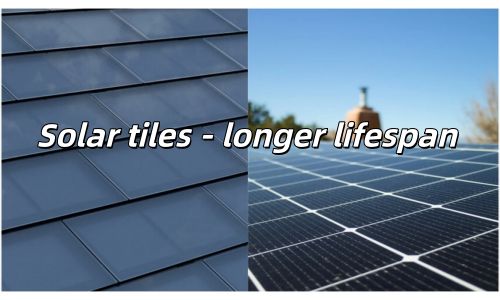
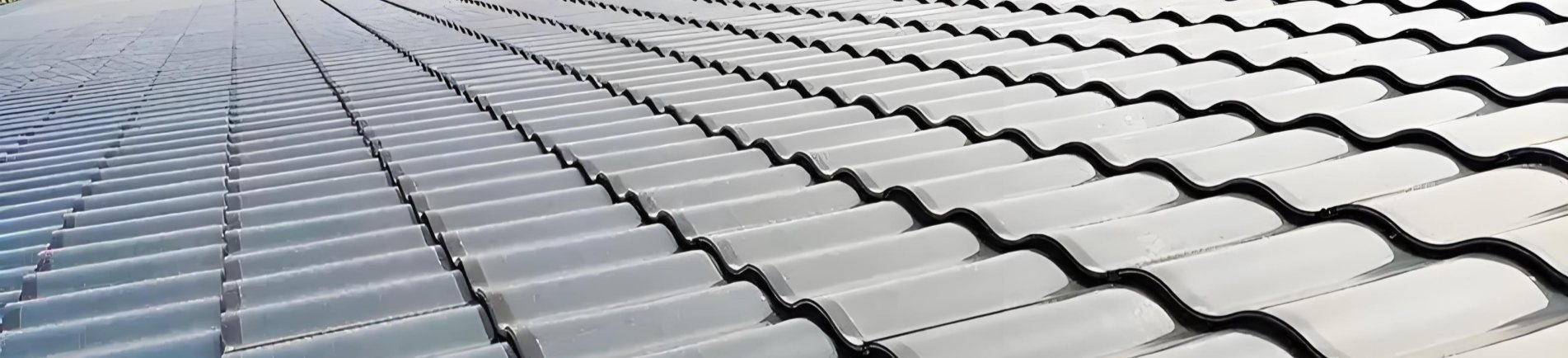
Large-area BIPV curved solar tile roof array for commercial buildings by GreenMore
Home

extreme weather solar tiles

extreme weather solar tiles

  • How Solar Tiles Perform After 10,000 Days of Rain, Heat, Frost, and UV
    How Solar Tiles Perform After 10,000 Days of Rain, Heat, Frost, and UV Sep 18, 2026
    These numbers come from the intersection of two engineering challenges: keeping solar cells producing electricity for three decades, and keeping a roof weathertight for just as long. When the same component has to do both, the environmental resilience requirements multiply. The Degradation Problem Every Solar Owner Faces All solar panels lose power over time. That's not a defect — it's physics. The question is how fast, and whether the rate is predictable enough to bank on for 25 or 30 years. According to a 2024 NREL meta-analysis of degradation data spanning thousands of systems, the median annual degradation rate across all crystalline silicon modules is approximately 0.5–0.7% per year. That's the industry-wide average, including budget panels and premium ones, hot climates and cool ones. But the average hides a wide spread. Premium glass-glass modules using N-type cell technology consistently show degradation rates in the 0.25–0.45% range. A study published in the Oxford Academic Clean Energy journal found that double-glass modules in hot-arid climates degraded at 0.3–0.4% per year, compared to 0.5–0.7% for glass-backsheet designs tested under the same conditions. Here's what that gap means over the life of the system: Degradation Scenario Year 1 Loss Annual Rate Power at Year 10 Power at Year 25 Industry average (glass-backsheet) 2–3% 0.5–0.7%/yr ~93–94% ~80–84% Double-glass (glass-glass) 1–1.5% 0.3–0.4%/yr ~96–97% ~88–91% GreenMore tiled tiles (specified) ≤2% ≤0.45%/yr ~95%+ ~87%+ The 7–10% gap at year 25 isn't just an efficiency difference. On a 10 kW residential system, it represents 10,000–15,000 kWh of additional lifetime energy production — enough to power an average European household for an extra year or two over the system's life. Temperature Extremes: From Desert Noon to Arctic Dawn The −40°C to +85°C operating range covers virtually every climate where buildings exist. But operating temperature and cell temperature are different things. On a 40°C summer day with full sun, rooftop cell temperatures routinely reach 65–75°C. In desert environments like the Middle East or North Africa, peak cell temperatures can exceed 80°C. At those temperatures, every solar cell loses power. The rate of loss is defined by the temperature coefficient — typically −0.30% to −0.45%/°C for crystalline silicon. The key difference between technologies: Cell Technology Temperature Coefficient Power Loss at 65°C Polycrystalline (P-type) −0.40 to −0.45%/°C 16–18% Mono PERC (P-type) −0.34 to −0.38%/°C 13.6–15.2% BC Back-Contact (N-type) −0.29 to −0.32%/°C 11.6–12.8% GreenMore's BC back-contact technology line (added in 2025, up to 24.1% efficiency) uses N-type cells with a lower temperature coefficient, meaning less power loss during hot afternoons. For projects in hot climates, this difference compounds — a 4–6% annual energy advantage in places like the Middle East or Southeast Asia translates to real money saved over decades. But temperature also affects the physical materials. Repeated thermal cycling causes differential expansion in materials that expand at different rates — in a glass-backsheet module, the glass front and polymer back create shear stress on the encapsulant and cell interconnects, contributing to microcracking over time. In a glass-glass structure, both faces expand at the same rate, eliminating this thermal mismatch. It's a primary reason double-glass modules show consistently lower degradation in field studies. Multi-layer structure and weather resistance diagram of photovoltaic tiles UV Exposure: The Invisible Degradation Mechanism Ultraviolet radiation doesn't just affect power output — it attacks the physical materials of the module. Standard EVA encapsulant yellows under prolonged UV exposure, reducing light transmission to the cells. Polymer backsheets become brittle and develop microcracks. Anti-reflective coatings on low-quality modules deteriorate within 5–7 years in high-UV environments. A 2025 study examining crystalline silicon modules after 13 years of desert exposure (Dhahran, Saudi Arabia — peak temperatures 45°C, UV index >11, irradiance >1000 W/m²) found 29.61% power loss in standard glass-backsheet modules, with encapsulant yellowing and frame corrosion as visible failure modes. The modules reached the 80% power threshold in 13 years, well short of the 25-year warranty expectation. Glass doesn't yellow. It doesn't become brittle under UV exposure. And it doesn't allow UV radiation to reach the encapsulant layer in the same way that a thin polymer backsheet does. This is why double-glass modules in the same desert conditions typically show 2× better UV resistance in accelerated aging tests. Climate-by-Climate Performance Different climates stress different aspects of a solar tile's design. Hot-arid environments test UV stability and encapsulant integrity — the 2025 desert field study showed standard modules losing nearly 30% power in just 13 years under extreme conditions. Tropical coastal zones test moisture and salt resistance, where the glass-glass structure's near-zero permeability provides a clear advantage. Cold-continental climates stress freeze-thaw cycling and snow load capacity, where symmetrical thermal expansion matters most. The IPCC Sixth Assessment Report documented that solar energy costs have fallen by up to 85% since 2010. But cost only matters if the system delivers expected energy over its lifetime. A solar roof tile that degrades 30% faster than projected in a hot climate is a bad investment regardless of how cheap it was to install. GreenMore's own specifications — targeting 0.3–0.4% annual degradation for the double-glass structure — sit at the conservative end of what premium glass-glass technology delivers. The 30-year design life accounts for the full range of environmental stressors that a roof-integrated product faces, from UV degradation to thermal cycling to moisture exposure. What This Means for Your 25-Year Energy Projection When modeling the financial return of a solar roof installation, the degradation rate assumption has a larger impact than most people realize. A 0.3%/year assumption vs. a 0.7%/year assumption produces a 10%+ difference in cumulative energy production over 25 years. For GreenMore's tiled type photovoltaic tiles, the combination of double-glass frameless construction, N-type BC back-contact cell technology (up to 24.1% efficiency), and a −40°C to +85°C operating range provides a platform for stable, predictable energy production across three decades and virtually any climate zone on Earth. The full solar tiles product range includes multiple form factors for different architectural and climatic requirements, each sharing the same double-glass structural foundation. For project-specific energy modeling and climate-based product selection, GreenMore's technical team provides support through the customization and contact services on the company website. Solar tiles that survive 30 years of weather without needing replacement aren't a hypothetical product concept. The material science — tempered glass on both faces, stable encapsulants, N-type cells with low temperature coefficients — has been validated by over a decade of field data. The question isn't whether glass-glass BIPV tiles can last. It's whether your project can afford the extra energy they'll produce along the way.
  • How BIPV Roof Tiles Withstand 5,400 Pa of Frontal Pressure Without Cracking
    How BIPV Roof Tiles Withstand 5,400 Pa of Frontal Pressure Without Cracking Sep 18, 2026
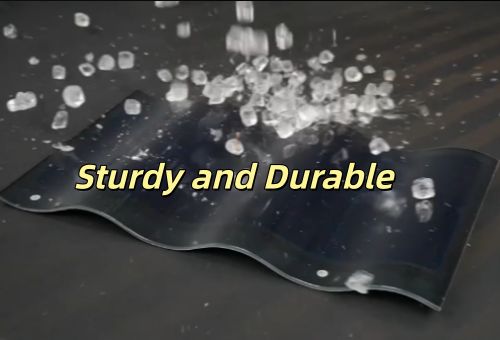
    GreenMore's tiled type photovoltaic tiles are rated for a maximum static mechanical load of 5,400 Pa on the front side and 2,400 Pa on the back side. For context, the IEC 61215-2 standard (the international qualification test for terrestrial PV modules) specifies 3,600 Pa as the mechanical load test threshold. GreenMore's tiles exceed that baseline by 50% on the front face. These numbers matter because a BIPV roof tile doesn't sit on top of a roof — it is the roof. Unlike rack-mounted panels where a separate structure absorbs wind and snow loads, the tile itself must carry the full mechanical stress and transfer it to the building structure through its mounting points. What 5,400 Pa Actually Means in Real-World Terms Pressure in Pascals can feel abstract. Here's what it translates to on the ground: Load Scenario Approximate Pressure Context Category 2 hurricane (154–177 km/h winds) 2,500–3,500 Pa Front-side load on roof surface Heavy wet snow accumulation (60 cm depth) 2,400–3,000 Pa Downward load on tilted roof IEC 61215-2 standard test 3,600 Pa Uniform static load qualification GreenMore front-side rating 5,400 Pa 50% above IEC baseline GreenMore back-side rating 2,400 Pa Uplift resistance In high-wind regions, the ASCE 7-22 building standard (used across the United States) defines ultimate wind speeds (Vult) that vary dramatically by location. Coastal Florida faces Vult values up to 170 mph (76 m/s), while inland cities like Chicago sit around 105 mph (47 m/s). The wind pressure on a roof surface scales with the square of wind speed — which means a roof in Miami faces roughly 2.7× the wind pressure of the same roof in Chicago. The 5,400 Pa front-side rating covers most extreme wind scenarios encountered in residential and commercial rooftop installations. The 2,400 Pa back-side rating addresses negative pressure (uplift) during severe storms, where wind flowing over the roof ridge creates suction forces that try to pull the covering off the deck. GreenMore Triple-Curve Double-Glass Photovoltaic Tile Load Structure Analysis Diagram The Double-Glass Advantage for Structural Rigidity Conventional solar modules use an aluminum frame that provides structural rigidity around the perimeter. Remove the frame — as in GreenMore's frameless design — and the glass itself has to do all the work. This sounds like a liability. It's actually an advantage, once you understand the mechanics. A framed module distributes load to its four edges, where the frame transfers stress to the mounting clamps. If the frame deforms — from corrosion, thermal expansion mismatch, or impact damage — the load distribution changes and cells become vulnerable to microcracking. The frame becomes a single point of failure. A double-glass frameless tile spreads the load across the entire surface area. The symmetrical glass-glass sandwich creates a monolithic structural panel that resists bending in both directions. Under frontal load (wind pushing down, snow pressing from above), the two glass layers share the stress through the encapsulant bonding layer. Under back-side load (wind uplift suction), the same monolithic structure resists deflection uniformly. The IEC 61215-2:2021 standard's mechanical load test (MQT 16) applies uniform static pressure to the module surface for one hour. The 2021 edition also added a cyclic dynamic mechanical load test (MQT 20) that subjects modules to 1,000 cycles of positive and negative pressure — simulating the repeated gusting and lulling of real wind events. GreenMore's tiles are designed to pass both test protocols at their rated load levels. Snow Load: The Non-Uniform Problem Snow doesn't pile up evenly on a roof. In real-world conditions, snow slides down the panel surface and accumulates at the lower edge, creating a non-uniform load that puts concentrated stress on the bottom portion of the module. This is a well-documented failure mode in mountain installations. In 2020, the IEC published IEC 62938, a dedicated standard for testing PV module resistance to non-uniform snow loads. The standard simulates the real failure type: modules bending and cracking at the lower edge of sloped installations where snow accumulates unevenly. GreenMore's 5,400 Pa front-side rating addresses this scenario. The large tile format (1378mm × 564.8mm) means fewer horizontal joints where snow can dam up, and the double-glass structure distributes concentrated edge loads across the full panel area rather than letting them concentrate at a single frame corner. For regions with heavy snowfall — Northern Europe, Canada, the northeastern United States, and high-altitude zones in Asia — the non-uniform snow load rating is often the governing design constraint, not wind speed. Demonstrates the uneven load of snow accumulation on the roof Impact Resistance: Hail, Debris, and Foot Traffic Mechanical load testing typically focuses on static pressure. But roofs also face impact events — hail, falling branches, construction debris, and occasionally maintenance foot traffic. The double-glass tempered structure provides inherent impact resistance. Tempered glass is 4–5 times stronger than annealed glass of the same thickness. When it does break (under extreme impact beyond design limits), it fractures into small, relatively blunt pieces rather than sharp shards — reducing injury risk. For BIPV tiles specifically, the impact resistance matters in another way. Because the tile is the roof covering, any impact damage that compromises the glass surface also compromises the waterproofing layer. This is different from a rack-mounted panel, where a cracked front glass surface affects power output but doesn't let water into the building. The double-glass design — with cells protected on both faces — provides a more robust impact buffer than a single-glass module with a soft polymer back. The 17.2mm total thickness — two layers of tempered glass plus encapsulant and cells — provides the structural depth needed to achieve these load ratings without an aluminum frame. Designing for Extreme Weather Regions The mechanical load rating is just one input to the system design. Installers working in high-wind or high-snow regions need to consider the full load path — from the tile surface through the mounting system to the roof structure and finally to the building frame. GreenMore's hook-and-screw mounting system transfers loads from each tile through mechanical fasteners directly into the roof purlins or decking. The large tile format means each mounting point carries load from a larger area, but the total number of mounting points is lower than with smaller-format tiles. For engineering verification, GreenMore provides structural calculations and load tables to support permitting in different climate zones. For specific project inquiries — including load calculations for high-wind coastal sites or heavy-snow mountain installations — GreenMore's engineering team provides technical support through the contact page. The 5,400 Pa / 2,400 Pa mechanical load rating puts GreenMore's tiled type photovoltaic tiles well above the IEC 61215 qualification baseline. The double-glass frameless structure distributes stress uniformly, eliminates frame-related failure points, and provides the structural rigidity needed for a tile that serves as both the weather barrier and the power generator. For buildings in regions where extreme weather is not a theoretical risk but an annual reality, that structural margin is what keeps the roof intact and the power on.

Subscribe To Our Newsletter

Please Read On, Stay Posted, Subscribe, And We Welcome You To Tell Us What You Think. BIPV solar tiles & energy storage — updates for global partners.

Copyright @ 2026 GM Tech All Rights Reserved. Network Supported

Sitemap / Blog / Xml / Privacy Policy

leave a message

leave a message
If you are interested in our products and want to know more details,please leave a message here,we will reply you as soon as we can.
submit

Home

Products

WhatsApp

contact