How to use home solar batteries correctly
May 03, 2025
A home solar battery does not need much day-to-day attention, but how you charge it, where you install it and how deeply you discharge it all affect both its lifespan and its safety. The short version: keep it cool, dry and ventilated, avoid running it flat as a routine, charge it with the equipment it was designed for, and leave anything internal to a qualified installer. Do that and the pack will get close to its rated cycle life instead of aging early.
What follows is the detail behind those four habits, including the temperature numbers that matter, the one situation where a full battery is the right answer, and what a five-minute monthly check should actually look for.
What actually ages a LiFePO4 pack
Three things decide how long a lithium iron phosphate battery lasts, and only one of them is under your control day to day.
The first is temperature. Sustained heat accelerates the side reactions that consume lithium inventory and thicken the solid electrolyte interphase, and it does so faster than most owners expect — as a rule of thumb, every 10 °C of sustained temperature rise roughly doubles those reaction rates. The second is the state of charge the pack sits at when it is not working. A battery held at 100% for months ages faster than one held near the middle. The third is cycle depth: shallow cycles cost less life per kilowatt-hour delivered than deep ones.
Capacity fade from cycling is measurable and reasonably predictable. GreenMore's LiFePO4 modules are rated at 6,000+ cycles to 80% depth of discharge, which at one cycle a day is roughly sixteen years of service before the pack reaches 80% of its original capacity. Temperature and storage habits can pull that number down significantly, or let you get close to it.
Temperature: the biggest single lever
The numbers that matter
Every datasheet gives a temperature window, and the three windows are not the same. Charging, discharging and storage each have their own limits, and the narrowest one — charging — is the one that catches people out.
Operating state
Range (GreenMore stacked series)
Why it differs
Charging
0 °C to 55 °C
Narrowest window, because charging below freezing damages the anode
Discharging
−20 °C to 60 °C
Widest window, so a cold pack can still deliver power
Storage
−10 °C to 45 °C
Narrower than discharge, because idle time is measured in months
Note the gap between charging and discharging at the cold end. A pack at −10 °C will happily run your loads and will refuse to charge, and that refusal is a feature, not a fault. Check your own model rather than assuming these figures apply — they vary between manufacturers and between cell formats.
Cold charging is a safety issue, not just a comfort issue
Charging a lithium cell below freezing is not merely inefficient. At low temperature the anode accepts lithium ions more slowly than the charging current delivers them, and the surplus plates out as metallic lithium on the surface instead of intercalating into the graphite. That plating is permanent. It reduces usable capacity, and in the worst case it grows into a dendrite that can pierce the separator and create an internal short.
This is why a competent BMS blocks charging below 0 °C regardless of what the inverter is asking for, and why some systems taper the charge current well before the limit is reached. If your battery sits in an unheated outbuilding in a cold climate, the practical fix is either a sheltered position that stays above freezing or a model with an integrated heater. Do not solve it by overriding the BMS.
Heat and calendar aging
Heat is the slower, quieter problem. A pack installed next to a boiler, in a sealed cupboard, or on a wall that takes direct afternoon sun will sit at a higher average temperature than one in a shaded utility room, and the difference compounds over years rather than showing up in a week. Practical steps:
Install in a cool, dry, ventilated location, out of direct sunlight where possible.
Do not box it into a tight, unventilated cupboard, and keep it away from heat sources.
In hot climates, a shaded outdoor wall or a conditioned space makes a noticeable difference over the life of the system.
Leave the clearance the manual asks for above and around the unit — natural cooling designs need air movement, not ducting.
Charging and discharging habits
Modern home batteries pair LiFePO4 cells with a BMS that handles balancing, protection and current limits, so you do not have to micromanage every charge. A few habits still make a difference.
Do not drain it every day
An occasional deep discharge will not hurt a BMS-protected pack — the system cuts off before the cells are damaged. Doing it every day is different. Routine cycling near the bottom of the range spends life faster per kilowatt-hour delivered than cycling in the middle, and a pack left sitting near empty for weeks is worse still. If your tariff or your solar profile pushes you toward deep daily cycles, a larger pack that cycles shallower is usually the cheaper long-run answer.
Use scheduled charging
Most hybrid systems can be set to charge from solar surplus or off-peak tariff hours and discharge during the evening peak. Turning that mode on saves money and, just as usefully, makes the cycling pattern predictable — the same depth, at the same time, every day. Predictable cycling is easier to design around and easier to diagnose when something changes.
Stagger heavy loads
Starting several large appliances at once draws a high current for a short time. A kettle, an oven and a microwave coming on together can pull 5 kW from a 10.24 kWh pack, which is roughly 0.5C — inside the rating, but not where you want to live if the same thing happens every evening. Staggering them by a few minutes keeps both the battery and the inverter in a comfortable range and avoids nuisance trips.
Stick to the matched inverter
Charge with the inverter and settings the system was specified for. An unmatched charger may push a charge profile the BMS does not expect, and even where it works electrically it usually loses the closed-loop communication that lets the battery tell the inverter what it needs. If you are keeping an existing inverter, confirm the model and firmware version against the battery's compatibility list before commissioning, not after.
The one case where full charge is correct
Everything above argues for keeping the pack away from the extremes, which raises an obvious objection: if the battery is there for backup, it needs to be full when the grid fails.
That is true, and it is a genuine trade-off rather than a contradiction. A pack held at high state of charge for months will age faster than one cycling in the middle, but a pack that is empty when the power goes out has failed at the only job it was bought for. Most hybrid inverters resolve this by letting you set a backup reserve — a floor the daily cycling is not allowed to eat into. Set the reserve to cover the loads you actually want protected, and let the rest of the capacity cycle normally. If your area has frequent outages, a higher reserve is worth the extra aging. If outages are rare, a lower reserve gets you more usable capacity and longer life.
Installation and what to inspect
Placement rules worth holding to
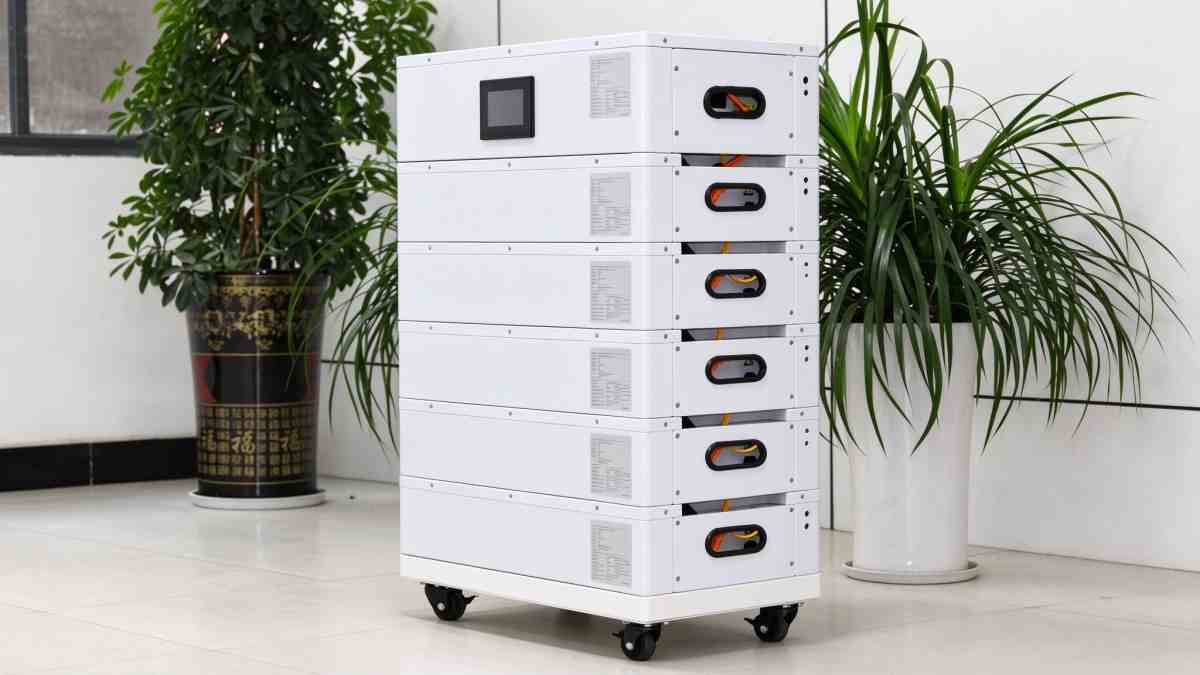
A correctly mounted, certified battery is the starting point. It should be secured to a suitable wall or floor following the installer's instructions, kept clear of stored items, and protected from moisture and physical impact. A garage, a utility room or a sheltered outdoor wall all work for an IP54-rated unit; a sealed cupboard next to a heat source does not. Confirm the supporting surface can take the weight — a four-module stack is not light, and a timber-framed wall is a different conversation from a concrete floor.
The five-minute monthly check
Once a month, look at the installation rather than the app. Four things are worth a glance:
A swollen, cracked or deformed casing, or unusual marks or discolouration around the unit.
Loose, chafed or damaged cabling and connections.
Standing water, damp, corrosion or heavy dust around the installation.
Anything stored on top of or leaning against the unit, blocking the ventilation clearance.
What to do if something looks wrong
Stop using the system and contact your installer. Do not open or attempt to repair the battery yourself — the cells are sealed, the DC side carries dangerous voltage even when the inverter is off, and there is nothing inside that a homeowner can safely service. A swollen casing in particular is a reason to isolate the unit and call someone the same day, not next week.
Storing a battery you are not using
If the system will be off for a while, do not put it away full or empty. A partial state of charge, stored somewhere cool and dry, is the safest condition — the same middle-of-the-range principle that applies to daily cycling.
Situation
Recommended handling
Short-term shutdown
Leave it at roughly half charge in a cool, dry place and follow the model's storage guidance
Long periods idle
Check the state of charge periodically and top it back up so it does not sit empty for months
End of life
Return it through the supplier or a licensed battery recycler; do not put it in household waste
How long is "periodically"
For a pack in long-term storage, a check every three to six months is a sensible default, and anything that has drifted below about 20% should be brought back up to roughly half. Self-discharge on LiFePO4 is slow — a few percent a month at room temperature — but the BMS itself draws a small standby current, so a pack left for a year without attention can end up far lower than expected. Deep discharge during storage is one of the few ways to permanently damage a lithium pack without doing anything obviously wrong.
Common misunderstandings
Habit to avoid
Better approach
Draining the battery fully on a daily basis
Keep routine cycling in the middle of the range; reserve deep discharge for occasional need
Mounting it somewhere hot and unventilated
Choose a cool, dry, ventilated location out of direct sun
Forcing a charge in sub-zero weather
Let the BMS block it; shelter the unit or specify a heated model instead
Using an unmatched charger or inverter
Use the certified equipment and settings the battery is specified for
Opening the pack to repair it yourself
Have all servicing done by a qualified installer or technician
Work with GreenMore
GreenMore's home energy storage batteries use LiFePO4 cells with a built-in BMS that monitors voltage and temperature, balances the cells and protects against over-current, over-voltage, short circuit and leakage. They are installed with compatible inverters and carry a 3-year warranty. The stacked series runs from 5.12 kWh to 20.48 kWh across four modules and is rated IP54 for indoor or sheltered outdoor use.
If you would like guidance on settings, placement or a unit that suits your household, browse the home storage range or talk to our team through the contact page.
Generation, storage and conversion sit in series — a habit that protects the battery protects the whole chain.
Frequently asked questions
Is it bad to fully discharge a home battery?
An occasional full discharge will not damage a BMS-protected LiFePO4 battery, because the system shuts off before the cells are harmed. Doing it every day, or leaving it empty for long periods, does shorten life, so routine use in the middle of the range is best. Think of deep discharge as something you can afford occasionally rather than a daily setting.
Can a LiFePO4 battery be charged below freezing?
No, and it should not be. Charging below 0 °C plates metallic lithium onto the anode instead of intercalating it into the graphite, which permanently reduces capacity and can eventually create an internal short. Discharging below freezing is fine, which is why the discharge range on a typical pack goes down to −20 °C while the charge range stops at 0 °C. A working BMS will block the charge on its own; do not override it.
Should I keep the battery at 100% for backup?
Set a backup reserve rather than keeping the whole pack full. A reserve protects the loads you actually care about without holding every cell at maximum voltage for months on end. Frequent outages justify a higher reserve; rare outages justify a lower one, which leaves more capacity available for daily cycling and slows calendar aging.
Where should a home battery be installed?
In a cool, dry, ventilated location that meets the manufacturer's clearance requirements, secured against movement and protected from moisture and direct heat. Some units are rated for outdoor wall mounting; others are intended for indoor spaces, so check the model. Garages, utility rooms and sheltered outdoor walls are the usual answers.
Do I need to turn the battery off when I go away?
No. Most systems can stay on and maintain themselves, and backup protection is useful while you are away. If you do need to shut it down for an extended period, store it at around half charge and check it every three to six months.
Can I service the battery myself?
Routine visual checks and keeping the area clear are fine, but opening the casing or working on internal components should be left to a qualified installer. The cells are sealed and the DC side carries dangerous voltage even after the inverter is switched off.
Updated on November 12, 2026
P
Peter Lu
Energy Storage Product Manager, GreenMore
Peter advises homeowners and installers on battery settings, placement and charge habits that get the full rated life from LiFePO4 systems, with a focus on practical safety rather than complicated maintenance routines.





 Network Supported


