Three‑Curve Solar Tiles: Types, Technology, and Best Roof Applications
May 07, 2026
L
Luke
Product Manager, GreenMore · Photovoltaic building materials
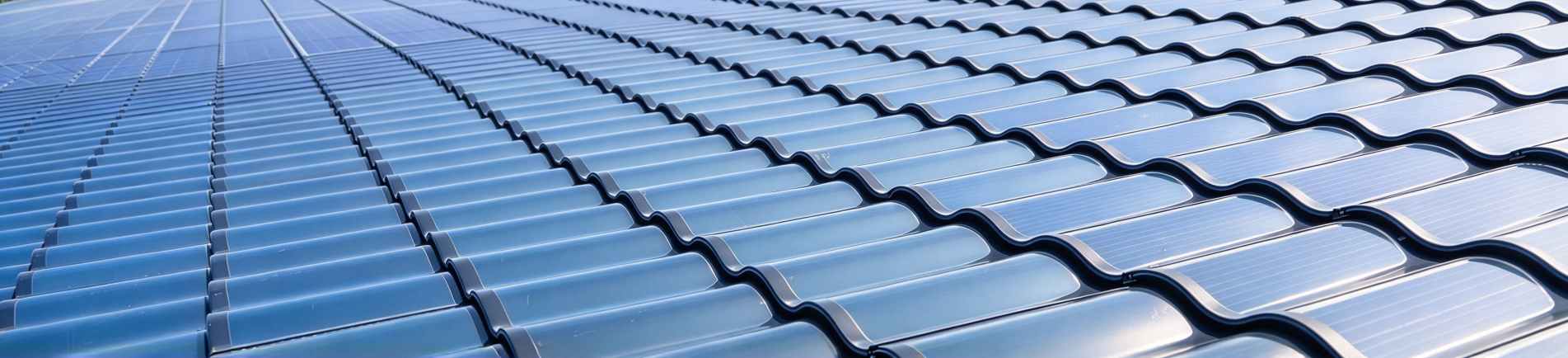
Three-curve solar tiles are the product most people mean when they picture a solar roof that does not look like solar. Rather than fixing flat panels over an existing covering, these tiles follow the profile of traditional curved roof tiles, interlock course by course, and generate electricity as part of the building itself.
At GreenMore we make those tiles in two technologies. This guide explains how each is built, how they compare on real, published figures, and where each one is the right choice.
What a Three-Curve Solar Tile Is
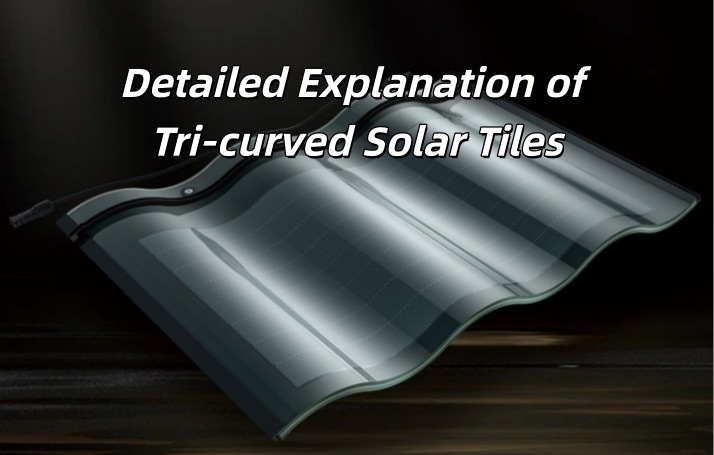
A three-curve tile has three parts working together: a curved, load-bearing glass shell; photovoltaic cells laminated inside it; and an interlocking edge that overlaps the neighbouring tiles. It is fitted like an ordinary roof tile — laid in courses from the eaves up, fixed to battens or rails, with the side and top edges overlapping the course below.
That overlap is the key difference from a flat panel. Rain runs down and over the joints rather than through them, EPDM strips seal the compressed edges, and a waterproof underlay below provides a second line of defence. The result reads as one continuous roof surface, which is why three-curve tiles are used for modern BIPV (building-integrated photovoltaics) projects where appearance matters as much as output.
The Two Technologies We Actually Make
GreenMore produces three-curve tiles in two technologies. They share the same curved-glass construction and fixing method but use different cell materials, so they suit different roofs and climates.
CIGS thin-film three-curve tiles — our long-standing range, made since 2019.
Back-contact (BC) three-curve tiles — our higher-efficiency range introduced in 2025.
We are sometimes asked about other cell types such as TOPCon. We do not currently make a three-curve tile in that technology, so we would rather say so than list an option we cannot actually supply. If a project specifically calls for it, tell us and we will discuss it rather than relabel another product.
1. CIGS Thin-Film Three-Curve Tiles
CIGS stands for copper indium gallium selenide, a thin semiconductor film deposited on glass rather than a cut silicon wafer. Thin-film cells are uniform in colour, respond well in diffuse and low-angle light, and lose a little less output as they get hot — qualities that suit a curved, dark roof.
Parameter
Published value
Representative tile power
32–34 W per tile (colour range 25–32 W)
Power per square metre
About 100–105 W/㎡
Dimensions
About 720 × 500 mm
Weight
About 6.5 kg per tile; roughly 21–22 kg/㎡
Glass
Laminated double toughened curved glass, transmittance over 91.5%
Front static load
5400 Pa
Wind rating
Tested to 177 km/h (about level-15 typhoon)
Fire rating
Class A
Operating temperature
−40 °C to +85 °C
Max. system voltage
1000 V DC
Junction box
IP67, MC4 connectors
Updated on September 27, 2026
Where CIGS tiles fit best
CIGS tiles are the natural choice for cultural and tourism buildings, heritage-style and curved roofs, villas, and lightweight structures — anywhere a uniform dark finish and a traditional profile matter. They also hold up well in regions with a lot of diffuse light and in coastal settings, and they are offered in several colours (dark, red, green, grey) to match the building.
One technical point for engineers: thin-film generators have different electrical earthing requirements than crystalline arrays. CIGS systems are normally run with an isolating inverter and a defined earthed pole, following the applicable standard — we specify this in the system design rather than treating all inverters as interchangeable.
NREL Solar Cell Conversion Efficiency Chart
2. Back-Contact (BC) Three-Curve Tiles
Back-contact cells move all the electrical contacts to the rear of the silicon cell, so there are no metal lines on the front surface. More of the front is available to absorb light, the appearance is a clean, deep black, and conversion efficiency is considerably higher — this is our premium, high-output range for a curved roof.
Parameter
Published value
Models
GM-HW37BC / GM-HW42BC / GM-HW50BC
Tile power
37 / 42 / 50 W
Module efficiency
Up to 24.1%
Dimensions
720 × 500 × 32 mm
Weight
6.5 kg per tile
Power tolerance
0 to +3%
Front static load
5400 Pa
Fire rating
Class A
Power temperature coefficient
−0.26%/°C
Max. system voltage
1000 V DC
Where BC tiles fit best
BC tiles are aimed at high-end residential roofs and new builds where the owner wants the curved-tile look but more output per square metre. The front is clear of busbars, so the roof has a very consistent deep-black finish, and the higher efficiency means a given roof area covers more of the household’s use. They carry the same 25-year linear power warranty as the rest of the tile range.
CIGS vs BC at a Glance
Feature
CIGS thin-film
Back-contact (BC)
Cell material
CIGS semiconductor film
Crystalline silicon, rear contacts
Typical tile power
25–34 W
37–50 W
Module efficiency
Lower, about 100 W/㎡ installed
Higher, up to 24.1%
Appearance
Uniform, several colours
Deep black, no front lines
Diffuse / low-angle light
Strong
Good
Best for
Heritage, tourism, curved, coastal roofs
High-output premium residential and new builds
The honest trade-off is the same for both: a three-curve tile costs more per watt than a conventional framed panel, and the curved profile generates less per square metre than a flat module. On a new build or a re-roof — where the tile replaces the covering rather than sitting over it — the comparison should be against the cost of the roof plus an add-on array. If a sound existing roof only needs the cheapest generation, conventional panels remain the sensible choice.
Global renewable energy and solar photovoltaic power generation share
Adding Storage and the Rest of the System
Three-curve tiles generate direct current, which an inverter converts to grid-compatible alternating current. Tiles are grouped into strings sized to the inverter’s voltage window across the local temperature range. A grid-tied inverter exports surplus; a hybrid inverter adds a battery connection.
Adding a battery lets the roof store midday generation for the evening, run selected circuits during an outage, and increase the share of generation used on site. The battery is sized from the loads and the hours of backup required, not just from the array size. Our home energy storage range lists the supported capacities, and we provide complete solar-plus-storage packages when a project needs them.
As elsewhere, we keep the claim precise: a grid-tied tile roof with a battery meaningfully reduces dependence on the grid, but full off-grid independence needs a larger array, storage for poor-weather stretches, and often a backup generator.
Best Roof Applications
Three-curve solar tiles are used on:
Residential roofs — villas and townhouses, especially on new builds or re-roofs.
Cultural, tourism and heritage-style architecture, where a traditional tile profile is part of the design.
Small commercial and hospitality buildings — hotels and offices that want a clean roofline.
Lightweight and curved structures that would not suit a heavy framed array.
Frequently Asked Questions
How long do three-curve solar tiles last?
We state this through the warranty rather than a marketing lifespan: the tiles carry a 25-year linear power warranty. The inverter, battery, and other non-tile components carry a 3-year warranty, stated separately.
How reliable is the waterproofing?
Waterproofing comes from roofing geometry: the tiles overlap and interlock, EPDM strips seal the compressed joints, and a waterproof underlay provides a second layer. Correct detailing at eaves, verges, and ridges completes it — this is standard tiled-roof construction rather than a single seal.
Can three-curve tiles replace traditional roof tiles?
Yes. They are the outer weatherproof covering and a generator at once, so they replace the tiles rather than being fitted over them. A waterproof underlay still sits underneath as it would under an ordinary tiled roof.
Which technology is better in cloudy or diffuse-light regions?
CIGS thin-film is usually the better match there, because thin-film cells respond well to low-angle and diffuse light. BC tiles still work in those conditions; they simply give less of their advantage away from strong, direct sun.
Which technology gives more output per square metre?
Back-contact tiles. They reach up to 24.1 percent module efficiency, versus roughly 100 W/㎡ for the installed CIGS range. Choose BC when roof area is limited and output is a priority; choose CIGS when colour choice, heritage styling, or cost is the main driver.
Do the tiles need external mounting brackets?
No external racking over the roof. The tiles fix to battens or rails that are part of the roof build-up, just like ordinary tiles, and they interlock with their neighbours. The supporting structure is designed for the building’s wind and snow loads.
Can they be paired with energy storage?
Yes. A hybrid inverter connects a home battery, letting you use more of the generation in the evening and keep essential loads running during outages. We supply the battery and inverter as the supporting parts of the tile system.
How do I choose between CIGS and BC for a project?
Start with the roof and the goal. Choose CIGS for heritage, tourism, curved or coastal roofs, colour matching, and diffuse-light climates. Choose BC for premium residential and new builds that want maximum output per square metre with a clean black finish. If you send the building type, roof area, location, and target generation, we will recommend a specific, buildable configuration.
Work With GreenMore
GreenMore is a photovoltaic tile manufacturer. Our three-curve solar tiles, photovoltaic bricks, and photovoltaic curtain walls are produced in-house, in CIGS thin-film and back-contact technologies, with the inverter and battery supplied as supporting components. Tell us your project details and we will put together a real proposal matched to the local code.
Reach us through our contact page or email export@gmsolarkit.com.
Independent references
U.S. Department of Energy — How Does Solar Work?
NREL — Best Research-Cell Efficiency Chart
IEA — Solar PV
L
Luke · Product Manager, GreenMore
Luke manages GreenMore’s photovoltaic building-material range, from the CIGS thin-film triple-arch tile to the newer back-contact line. In the solar industry since 2017, he focuses on designs that are genuinely buildable, with honest specs and warranty terms that match the products actually shipped.





 Network Supported

