Welcome to GreenMore
Welcome to GreenMore
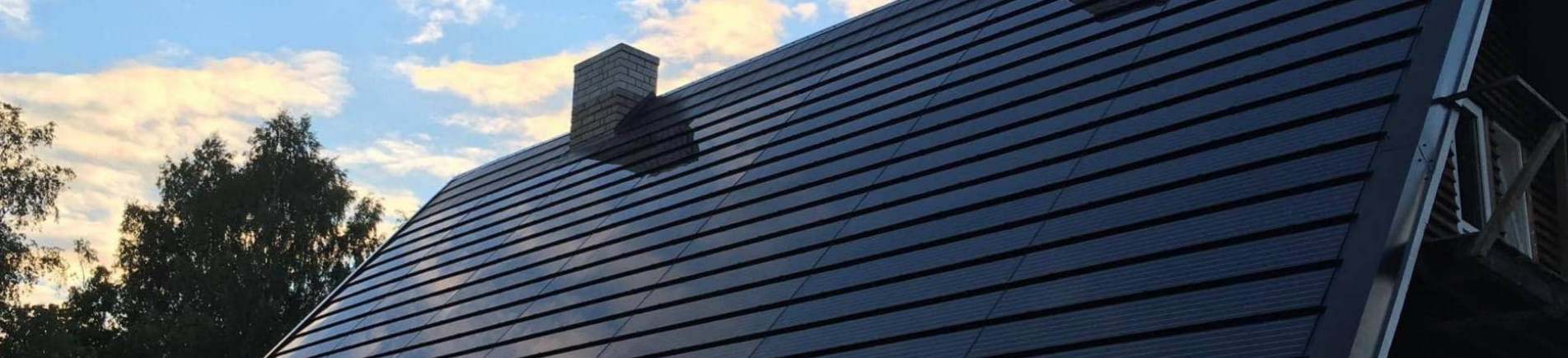
A flexible BIPV roof system uses lightweight, bendable solar modules that are bonded or laid directly onto the roof surface. At roughly 2.5–6 kg/m², the modules are far lighter than conventional glass panels and follow curved, irregular or load-limited roofs with few or no penetrations. This makes them well suited to retrofits and architecturally complex buildings — provided heat dissipation, bonding durability, fire and electrical safety are engineered properly. Flexible BIPV is not a universal upgrade over rigid panels; it is the right choice where low weight, shape adaptability and a non-penetrating installation matter most.
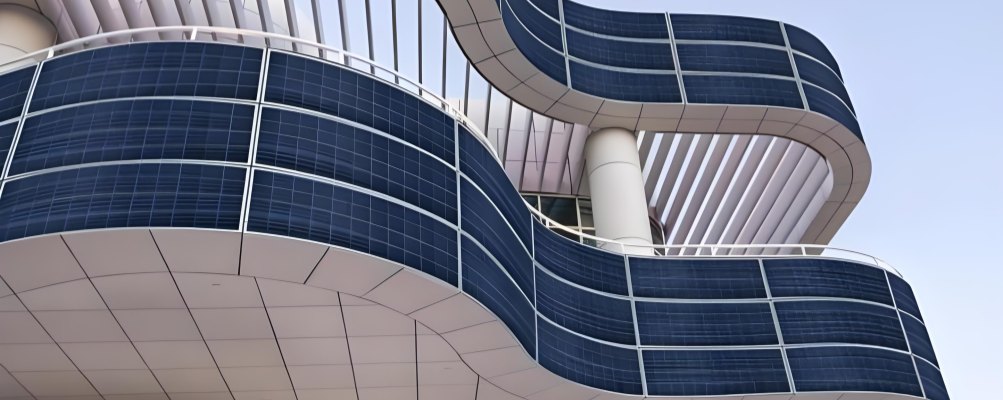
Lightweight
Typically 2.5–6 kg/m², for roofs that cannot carry glass panels.
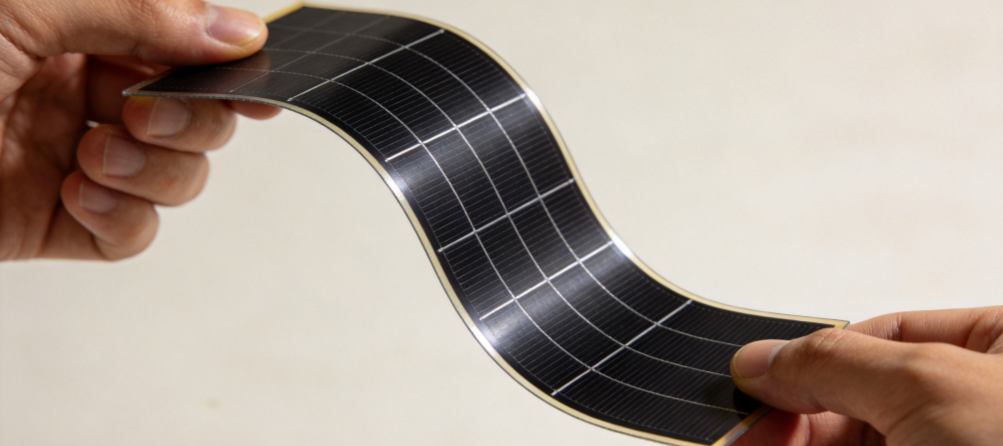
Bendable
Follows curved, arched and irregular roof surfaces.
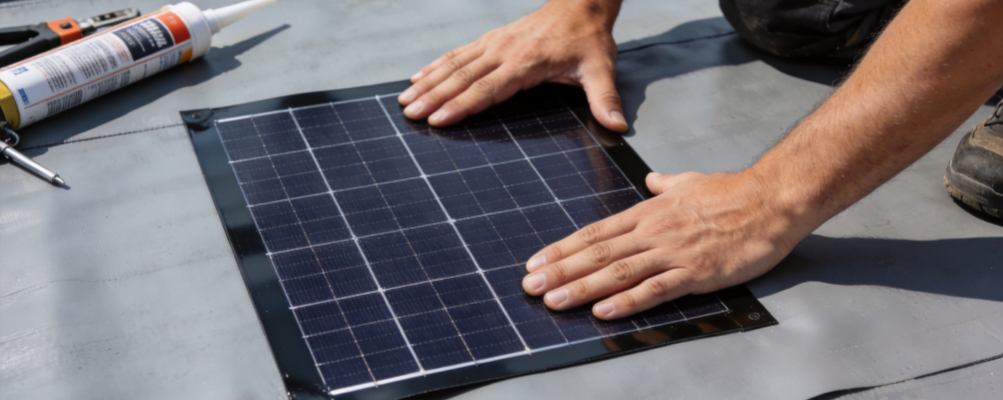
Non-penetrating
Bonded or laid in place, reducing roof damage and leak risk.
Cell options
Flexible crystalline, thin-film and emerging perovskite.
| Aspect | Advantage | What to verify |
|---|---|---|
| Weight & load | Much lighter than glass modules; suits load-limited roofs. | Confirm roof capacity, wind load and snow load. |
| Shape | Bends to curves, arcs and irregular surfaces. | Bend radius and bonding flatness affect output and life. |
| Installation | Bonded or laid with few holes, less racking. | Validate adhesive ageing, de-bonding and wind lift. |
| Building integration | Translucent, coloured and curtain-wall options. | Transparency and colour can reduce efficiency. |
| Performance | Flexible crystalline can exceed 23%; thin-film performs well in low light. | Some flexible modules still trail premium rigid panels. |
| Durability | No glass, good impact resistance, easy handling. | Check weathering, yellowing, delamination and moisture ingress via certifications and warranty. |
Flexible crystalline is closest to a conventional generation scenario, with flexible crystalline modules now reaching 23% or higher. Thin-film offers advantages in translucency, colour options and low-light or high-temperature performance. Perovskite shows strong potential for ultra-light, curved and indoor low-light applications, though long-term outdoor stability at scale is still being validated. GreenMore selects the technology based on roof geometry, irradiance and project lifetime requirements.
C&I rooftop retrofits
Existing roofs that cannot be reinforced, shut down or penetrated.
BIPV integration
Curtain walls, skylights, eaves, sunshades and balcony facades.
Rural pitched roofs
Laid onto tiled or sloped roofs with minimal structure change.
Mobile & specialised
RVs, boats, trucks, vehicles, agricultural sheds, floating systems and portable power.
Flexible BIPV uses lightweight, bendable solar modules that are bonded or laid directly onto a building surface instead of framed glass panels on rails. The modules become part of the roof or facade, suiting curved and load-limited structures.
Choose flexible modules when the roof cannot support the weight of glass panels, follows a curved or irregular shape, or cannot be penetrated without risking waterproofing. For roofs with ample load capacity and a long service-life requirement, rigid panels often remain the more cost-effective choice.
A non-penetrating bonded installation reduces roof damage and leak risk compared with drilling, but the adhesive must be specified for the roof material and local climate. GreenMore reviews the existing waterproofing, bonding method and wind-lift loads before installation and can combine modules with a compatible waterproof membrane.
Flexible crystalline modules now reach 23% or higher, close to conventional panels, while thin-film modules perform well in low light and high temperatures and offer translucent or coloured options. Output also depends on roof orientation, curvature, shading, ventilation and system design.
Flexible modules have no glass to break and resist impact well. Long-term performance depends on the encapsulation resisting yellowing, delamination and moisture ingress, so certified products with a documented power warranty and degradation curve should be used. Exact warranty terms follow the module datasheet; where a system includes storage inverters or lithium batteries, those components carry a 3-year warranty.
Yes, when using modules with durable encapsulation and verified salt-mist, damp-heat, fire and electrical certifications. GreenMore checks these requirements for each coastal or high-humidity project rather than assuming a standard module is suitable.
Have a load-limited or curved roof? Send us the roof dimensions, structure type and location, and GreenMore will assess whether a flexible BIPV system is the right fit. Contact our engineering team →
Stay up to date with GreenMore. We share new BIPV solar tile releases, product and certification updates, and field notes from our projects — no fluff, just the things that matter to installers, distributors, and system integrators. If there's something you'd like to see covered, drop us a line — we read every reply.




Copyright @ 2026 GreenMore All Rights Reserved.  Network Supported
Sitemap / Blog / Xml / Privacy Policy