How many KWh is 51.2V 200Ah?
Mar 26, 2025
P
Peter Lu
Energy Storage Product Manager
A 51.2V 200Ah battery stores 10.24 kWh of energy. You get there by multiplying voltage by ampere-hours and dividing by 1,000: 51.2 × 200 ÷ 1,000 = 10.24 kWh. This is one of the most common capacities in 48V-class home storage, and it is typically built from 16 LiFePO4 cells in series (16 × 3.2V = 51.2V nominal).
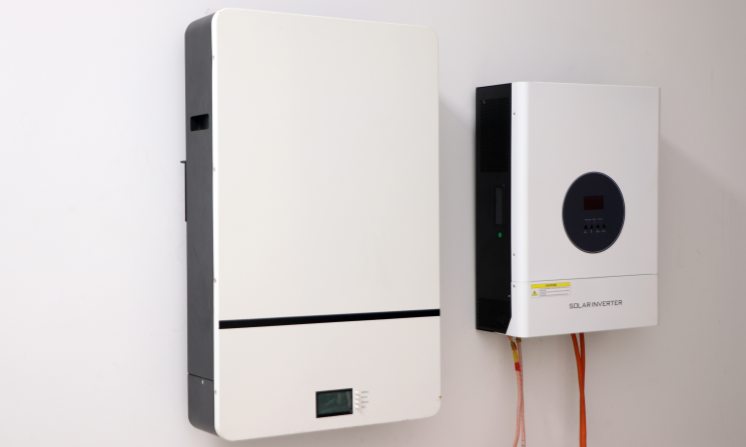
A popular science illustration of residential energy storage battery capacity and kilowatt-hours
The calculation explained
Ampere-hours (Ah) describe how much current a battery can deliver over time, while volts (V) describe its electrical pressure. Multiplying the two gives watt-hours (Wh), and dividing by 1,000 gives kilowatt-hours:
Energy (kWh) = Voltage (V) × Capacity (Ah) ÷ 1,000= 51.2 × 200 ÷ 1,000= 10.24 kWh
The same rule works for other sizes. For example, a 51.2V 100Ah battery holds 5.12 kWh, and a 48V 200Ah battery holds roughly 9.6 kWh. If you only know the Ah figure, you cannot find the energy without the voltage, which is why both numbers appear on the specification label.
Nominal vs usable capacity
The 10.24 kWh figure is the battery's nominal energy. In real use you may not be able to draw all of it. Most systems reserve a small amount at the bottom to protect the cells, and some energy is lost in the battery and inverter during conversion, so the usable energy delivered to your loads can be slightly below 10.24 kWh. When comparing batteries, check whether the quoted figure is nominal or usable, because two units labelled "10 kWh" are not necessarily equal once conversion losses and reserves are counted.
What 10.24 kWh covers in a home
How far 10.24 kWh goes depends on your household. As a rough guide, it can carry efficient essentials — lighting, a refrigerator, communications and some electronics — through an evening or an outage, while heavy heating, cooling and electric cooking draw it down quickly. Average daily consumption varies widely by country and home, so the most reliable estimate comes from your own electricity bills rather than a generic figure.
Configuration
Nominal energy
Typical role
1 × 51.2V 200Ah
10.24 kWh
Evening self-consumption and essential backup for a small to medium home.
2 units in parallel
20.48 kWh
Larger evening load and longer backup runtime.
3 units in parallel
30.72 kWh
Higher-consuming home or extended off-grid use with solar recharge.
Why capacity is given in kWh
It matches the bill. Electricity is charged in kWh, so stored kWh directly tells you how much evening or peak-tariff energy the battery can replace.
It matches the inverter. Inverter and solar-array sizing is done in kW and kWh, so the battery's energy figure shows whether the system is balanced.
It is required for certification. Standards such as IEC and UL expect the energy rating to be clearly marked so safety and compatibility can be checked.
Expanding with parallel modules
Modular 48V-class batteries can often be added in parallel to increase total energy while keeping the same voltage, which lets you start with one unit and add more later. The exact number of modules supported and the cabling rules depend on the model and its BMS, so check the specification rather than assuming any number can simply be connected. Adding modules in stages is often more practical than buying the full capacity up front, provided the inverter and wiring are rated for the final size from the start.
GreenMore supplies home energy storage batteries built around 51.2V LiFePO4 modules with a BMS for monitoring, balancing and protection, together with compatible inverters. We size the number of modules against your actual usage and backup needs rather than quoting a fixed package. Browse the home storage range or send us your recent electricity bill for a recommendation.
Frequently asked questions
Is 51.2V the same as a 48V battery?
Essentially, yes. A 16-cell LiFePO4 battery has a nominal voltage of 51.2V but is commonly called a 48V system because it works with 48V inverters. Its actual voltage moves with state of charge, from roughly 40V when empty to about 58.4V fully charged.
Is the full 10.24 kWh available to use?
Not always. The figure is nominal; systems typically reserve some energy to protect the cells, and conversion through the inverter causes small losses. Check the stated usable capacity when comparing models.
Can I add more batteries later?
Usually, if the model supports parallel expansion and the inverter and cabling are rated for the larger size. Confirm the maximum number of modules and the installation requirements before you buy, so the system can grow without being replaced.
How many 10.24 kWh units does a home need?
That depends on daily usage and backup goals. Many homes start with one unit for evening self-consumption and essential backup, adding a second or third if they use more power or want longer runtime. Your electricity bills give the most accurate starting point.
P
Peter Lu
Peter is GreenMore's Energy Storage Product Manager. He helps homeowners and installers convert battery voltage and Ah figures into usable kWh, size parallel modules against real load profiles, and understand the difference between nominal and usable capacity. Reach him through the contact page or at export@gmsolarkit.com.






 Network Supported

