Large-area BIPV curved solar tile roof array for commercial buildings by GreenMore
Home

Energy storage system manufacturers

Energy storage system manufacturers

  • How businesses use cheap electricity?
    How businesses use cheap electricity? May 05, 2025
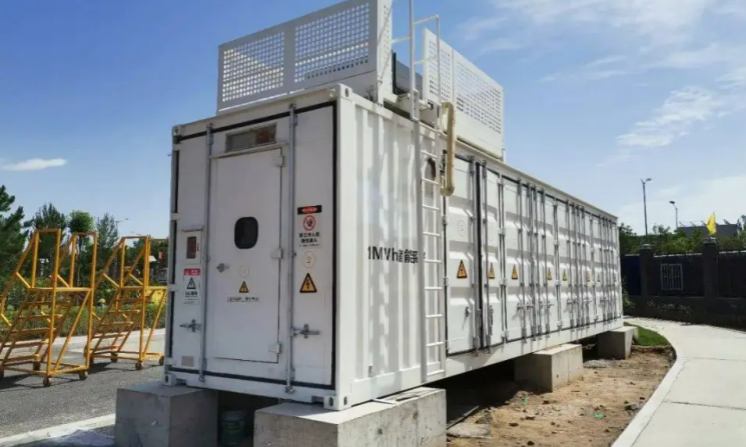
    P Peter Lu Energy Storage Product Manager, GreenMore Businesses do not pay one price for electricity. Prices vary by hour, by source and by grid conditions, which means the same kilowatt-hour can be cheap at one moment and expensive at another. Companies that treat electricity as a time-sensitive resource — shifting load, generating their own and storing low-cost energy for later — can materially reduce what they spend on power. Where cheap electricity comes from There are four practical sources of below-average-cost electricity available to industrial and commercial users: Source Why it is cheap Off-peak grid power under time-of-use tariffs Wholesale prices fall at night and on weekends when demand and grid strain are low Self-generated solar power Rooftop PV cost per kWh is fixed at installation and is often well below the retail tariff it replaces Demand response compensation Grid operators pay customers for reducing or shifting load when the system is stressed — it is payment for flexibility, not a lower unit price Green power contracts Long-term power purchase agreements or green tariffs can lock in a fixed, competitive wind or solar price The common problem is timing. Cheap night power is available when most factories use little energy; solar is generated at midday when a building may already be away or lightly loaded; expensive peaks arrive in the early evening when production is running. Storage is what closes that gap — it lets a business buy or generate energy at one time and consume it at another. Strategy 1: Time-of-use arbitrage In markets with peak-valley pricing, a battery system charges during the lowest-priced hours and discharges during the highest-priced hours. Every cycle captures the difference: Gross margin per cycle ≈ discharged kWh × peak price − charged kWh × off-peak price Net margin is lower: round-trip efficiency losses (typically 85–90% reach the loads), battery degradation per cycle and operating costs must all come out of the spread. Arbitrage only works where the peak-off-peak spread is wide enough to clear those costs and the tariff structure is reasonably stable. Some markets offer two cycles per day, which changes the economics considerably; confirm the actual tariff schedule with the utility or a local energy adviser before sizing a system. Strategy 2: Solar plus storage Rooftop or carport PV generates low-cost electricity during the day. Without storage, excess output is exported, often at a feed-in price well below the retail rate. Adding a battery lets a facility store that surplus and use it later, raising the share of solar energy consumed on site at full retail value. Solar-heavy daytime loads: direct self-consumption may already be high, and a smaller battery covers the shoulder periods. Operations that run into the evening: storage carries the building through the post-sunset peak instead of importing at the highest tariff. Weekend shutdowns: batteries can capture weekend generation that would otherwise be exported cheaply. The combination also hedges against future tariff increases: once installed, solar and storage costs are largely fixed while grid prices can move. Large-scale industrial and commercial containerized energy storage power station Strategy 3: Demand response Demand response programs pay large users to reduce consumption when the grid is stressed. A business can meet its obligation by switching to stored energy instead of curtailing production — the facility keeps running while the site draws less from the grid. Batteries respond within seconds, which makes them well suited to fast-acting programs that pay more for immediate availability. Programs differ by market; check enrollment requirements, event frequency and minimum load reduction before committing. Strategy 4: Green power contracts plus storage Long-term wind and solar purchase agreements can provide a fixed, predictable energy price and help meet ESG or reporting requirements. Storage makes that contracted energy usable around the facility's own schedule rather than the generator's, and can store contracted volumes during low-price periods for peak use. Green power is not automatically the cheapest option in every market, so compare contract prices against expected grid tariffs over the full term. How businesses put this in place Collect interval data. Pull at least 12 months of 15- or 30-minute load data, including demand peaks, not just monthly kWh totals. Map costs to hours. Overlay the current tariff schedule — energy charges, demand charges and time-of-use windows — to identify where savings actually sit. Model each strategy. Run arbitrage, solar self-consumption and demand response scenarios against the load data, including efficiency losses and degradation. Size power and capacity separately. kW determines which peaks and loads can be covered; kWh determines how long. Confirm site and grid requirements. Transformer capacity, interconnection rules, permits and safety codes must be resolved before equipment is ordered. Review dispatch performance. After commissioning, compare actual cycles and savings against the model and adjust schedules seasonally. A useful principle: do not size storage for a single revenue stream. Systems that combine arbitrage, self-consumption and occasional demand response are generally more resilient to tariff changes than systems built on one strategy alone. Hardware options range from air-cooled outdoor cabinets for smaller sites to container-scale systems; the full lineup is on the commercial energy storage category page. Before ordering, work through the C&I pre-installation checklist, and for cabinet details see the article on outdoor energy storage cabinets. For a tariff and sizing review, use the contact page. FAQ Is peak-valley arbitrage profitable everywhere? No. It depends on the spread between peak and off-peak prices, the number of cycles per day and the stability of the tariff. A wide, predictable spread tends to support storage; a flat or frequently changing tariff may not. Model it against the local utility schedule rather than assuming it works. Does my business need solar to benefit from storage? Not necessarily. Storage can stand alone on time-of-use arbitrage and demand response where those markets pay well. Solar adds a low-cost charging source and an extra revenue stream, and the two together are common, but either can be viable on its own depending on local conditions. How do demand response payments differ from cheaper electricity? Cheaper electricity lowers the price per kWh you buy. Demand response pays you for reducing or shifting load during specific grid events — it is revenue for flexibility. Using a battery to serve your load during an event lets you earn that payment without cutting production. What size storage does a typical commercial site need? It follows the load curve, not the building's size. Smaller facilities may start with a 50–100 kWh outdoor cabinet; factories with clear daily peaks often look at several hundred kWh or a container system. The right answer comes from interval load data and the tariff analysis, so those should precede any quote. P Written by Peter Lu — Energy Storage Product Manager, GreenMore Peter works with businesses and project partners to match interval load data and tariff structures with storage capacity, from outdoor cabinets to container systems, and is cautious about quoting savings without the underlying numbers.
  • FAQ about GreenMore
    FAQ about GreenMore Sep 27, 2026
    M Mark Marketing Director, GreenMore · BIPV solar tiles & export partnerships This page collects the questions our overseas partners ask most often, with straight answers. If something is not covered here, the quickest route is the contact page. GreenMore Solar Tile Factory 1. What does GreenMore actually make? We are a photovoltaic tile factory. Our core products — solar tiles (including the three-arch curved tile), photovoltaic bricks and photovoltaic curtain walls — are made in our own production facility. The range also covers solar floor tiles, flat photovoltaic tiles, complete solar power systems and matching energy storage, so we can supply the photovoltaic building material together with the electrical system that makes it work. A fuller overview is in our post What Does GreenMore Do? 2. What makes the three-arch tile different from a normal solar panel? A standard panel is mounted on rails above an existing roof, so the panel and the roof stay separate. The three-arch tile replaces the roof covering. Its curved, three-wave profile follows traditional barrel and pantile roofs, which makes it suitable for villas, resorts, heritage-style and cultural buildings where flat panels would look wrong. It carries a 5,400 Pa mechanical load rating and a 25-year power warranty, the same kind of durability you would expect from a conventional roof tile. 3. Which product should I choose for my project? It mainly depends on the roof and the visual target. Use three-arch curved tiles on visible, pitched or traditional-style roof faces; flat or stacked photovoltaic tiles on simpler, larger planes where cost per watt matters more; solar floor tiles for walkable surfaces such as terraces and paths. Many projects mix them — curved tiles at the front, flat tiles at the rear. Send us the building type, roof area, country and desired capacity, and we will propose a shortlist. You can browse the full range on the solar tiles category page. 4. Do you manufacture the products yourselves? Yes. GreenMore is a photovoltaic tile factory, and our main products — solar tiles, photovoltaic bricks and photovoltaic curtain walls — are produced in our own facility, including the glass and cell build-up, lamination, framing and finished roof units, with quality inspection carried out in-house. The complete solar power and storage systems we offer are supporting products, integrated around the tiles we make. We are a focused, growing factory rather than a giant mass producer, which lets us support custom colors and profiles and stay flexible on order size. Serious buyers are welcome to request the product and certificate details directly. 5. What is your MOQ, and can you support small first orders? Yes. As the manufacturer we can support a relatively small first order while a partner tests the product in their market, then scale up as demand grows. The exact MOQ varies by product and by whether the order is a standard specification or a custom one, so tell us the item and quantity and we will confirm. Standard specifications are the fastest and most economical; custom colors and profiles carry a slightly higher minimum. 6. Can you customize color, shape or branding? Customization is one of our strengths. We can adapt tile color to match a roof, work with curved and flat profiles, and support OEM branding on packaging and manuals for distributor partners. Custom electrical configurations are also possible. The trade-off is lead time and minimum quantity, which we will quote clearly before you commit rather than after. 7. Which certifications do the tiles carry? Our photovoltaic tiles are built against the standards our target markets accept, including EN 14782 and EN 1090-1 for building components, ISO 9001 and ISO 14001 management systems, and CE marking, together with the relevant IEC 61215 and IEC 61730 photovoltaic requirements. The exact certificate set depends on the model and destination country, and we provide copies of the actual documents on request. We do not list a certification we cannot show a certificate for. 8. How do you handle grid compatibility in my country? We configure the inverter and protection settings for the destination market — voltage and frequency, anti-islanding, grid codes and the required connection point. Rules differ between the EU, the UK, Australia, the Middle East and other regions, and they are updated regularly, so we check the current requirements for each project instead of assuming one setup works everywhere. For system-level detail, our metal roof BIPV page describes the typical electrical layout. 9. What are the lead time and shipping terms? Lead time depends on the product, quantity and whether it is standard or custom, so we give a specific date on the quotation rather than a generic promise. Standard tile orders move faster than custom or large integrated systems. We ship by sea in export-grade packaging and can work under FOB or CIF terms; we will confirm the port and Incoterm with you. Tracking and shipping documents are provided once the order leaves. 10. What warranty do you provide? We separate the building material from the electrical parts. The photovoltaic tiles carry a 25-year power warranty, covering output against the agreed degradation curve. Non-tile components such as inverters, batteries, PCS and EMS carry a 3-year warranty, which matches the warranty field on the relevant product pages. We keep this distinction clear because a 25-year roof warranty does not mean every electrical part lasts 25 years. 11. What support do distributors receive? Partners receive product and installation training, technical datasheets, marketing material and direct access to our technical team for project design. Because we are a smaller company, that support is genuinely one-to-one rather than a generic portal — we help with roof layouts, component matching and pre-sales engineering, and for larger projects we can discuss regional arrangements and joint marketing. We do not promise exclusive territory before a relationship is established, but we will discuss how to protect your market as volumes grow. 12. Can you supply solar and storage together with the tiles? Yes, and that is often the most convenient arrangement. We can supply the tiles with a matched solar system — inverters, mounting accessories, cabling and monitoring — and add home or commercial battery storage so the package works after sunset and during outages. Sourcing it as one compatible set removes the risk of mismatched specifications. See our home energy storage solutions and commercial energy storage solutions pages for scope. Still have a question? Email export@gmsolarkit.com or use the contact page, and we will come back with a specific answer for your market and project. M Written by Mark — Marketing Director, GreenMore Mark leads GreenMore's marketing and overseas partner programs. He works directly with distributors, installers and EPC firms to match BIPV solar tile systems to local building and grid requirements.


Subscribe To Our Newsletter

Stay up to date with GreenMore. We share new BIPV solar tile releases, product and certification updates, and field notes from our projects — no fluff, just the things that matter to installers, distributors, and system integrators. If there's something you'd like to see covered, drop us a line — we read every reply.

Copyright @ 2026 GreenMore All Rights Reserved. Network Supported

Sitemap / Blog / Xml / Privacy Policy

leave a message

leave a message
If you are interested in our products and want to know more details,please leave a message here,we will reply you as soon as we can.
submit

Home

Products

WhatsApp

contact