Solar Roof Tiles Explained: Stylish Design Meets Sustainable Power
Sep 27, 2026
L
Luke
Product Manager, GreenMore · BIPV solar tiles, facades & storage
Homeowners increasingly want clean energy without giving up how their house looks. Conventional panels do the job, but they are clearly an addition bolted on top of the roof. Solar roof tiles take a different route — the electricity generator becomes the roof covering itself. This article explains what they are, how they compare with panels, what they cost, and where a home battery does and does not help.
What Are Solar Roof Tiles?
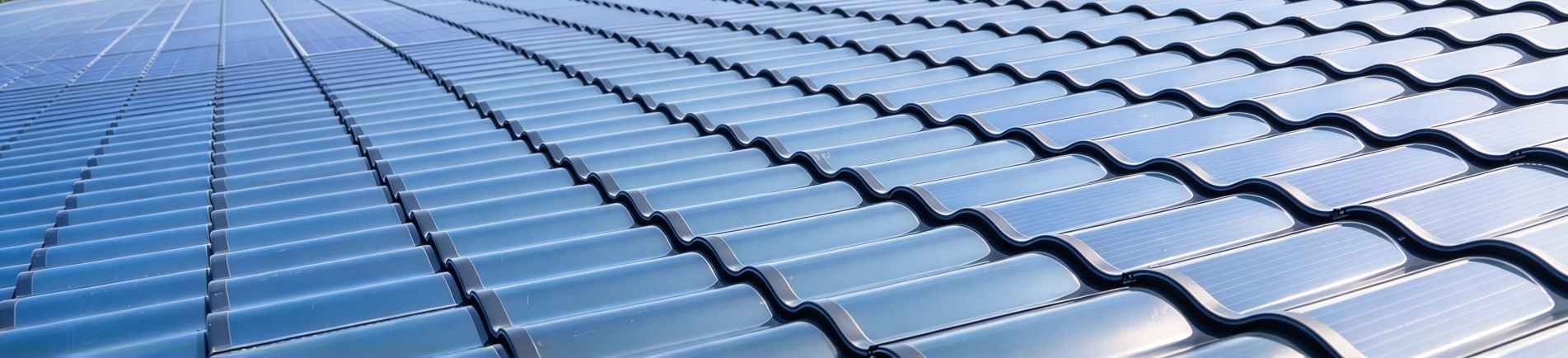
Solar roof tiles — also called solar shingles — are photovoltaic units made to look and lay like a normal roof covering. Rather than fitting framed panels above an existing roof, the tiles replace the covering and follow its lines. At GreenMore we make two main families in our own factory:
Curved three-arch tiles for traditional, clay-tile and premium profiles, such as our solar roof tiles.
Flat photovoltaic tiles for cleaner, more modern planes.
Each tile carries out three jobs at once: it finishes the roof, keeps the weather out and generates electricity. You can read more detail in our guide what is a triple-arch hantile.
Why Homeowners Choose Them
A roof that still looks like a roof
The main reason is appearance. Tiles sit flush and follow the roof’s shape, so a heritage, traditional or carefully designed home keeps its character rather than carrying a visible rack of panels.
Generation and weatherproofing in one layer
Because the tiles replace the covering, you are not paying for a roof and then a second generation system on top of it. That single-layer logic is what makes the economics work, particularly on a new build or a roof that was going to be replaced anyway.
Lower running costs
The electricity generated is electricity you do not buy, and surplus can be exported under whatever scheme applies locally. The saving depends on your tariff, roof orientation and how much daytime generation you use in the house.
Built for outdoor exposure
Our tiles use laminated toughened glass and are rated for 5400 Pa static load, Class A fire performance and operation from −40 °C to +85 °C, so they handle wind, snow, hail and coastal humidity rather than being fragile indoor electronics.
GreenMore Residential Wave-Shaped Building-Integrated Photovoltaic Roof
Solar Tiles vs. Conventional Panels
Both are mature, reliable technologies. The honest answer is that they suit different situations rather than one simply winning.
Feature
Solar roof tiles
Conventional panels
Appearance
Flush, follows the roof; looks like tiling
Framed modules on rails; clearly visible
Power density
Curved around 103 W/m²; flat near 200 W/m²
Highest; least area per kW
Cost
Higher per kW, but includes the roof surface
Lower for generation alone
Best timing
New builds and re-roofs
Retrofits on a sound existing roof
Role
Roof covering and generator
Generator only
Do You Need a Home Battery?
Solar tiles work fine on their own. During the day they power the house and export any surplus. A battery earns its place in two situations: when you are away during the day and most generation would otherwise be exported cheaply, and when you want backup during outages. It stores midday generation for the evening and, on an island-capable system, keeps key loads running if the grid fails. We explain the interaction in how solar roof tiles work with storage.
A point worth making plainly: a grid-tied solar roof with a battery reduces your dependence on the grid, but it is not usually complete “energy independence.” Genuine off-grid living needs an oversized array, a larger battery bank and often a generator for long cloudy periods. You can compare options in our home battery range.
What It Costs and How Long It Lasts
Solar tiles cost more per kilowatt than conventional panels, but the fair comparison is against the combined cost of a new roof plus panels. On a building that needs re-roofing, the gap narrows considerably; on a sound existing roof where you only want generation, retrofit panels are usually the cheaper route. Our solar roof solutions are quoted per project against the roof area and the country.
On warranties, the photovoltaic tiles carry a 25-year power output warranty, while the inverter, battery and other non-tile parts carry a 3-year warranty. These are separate figures and we never blur them into one number.
Frequently Asked Questions
Do solar roof tiles work on any roof?
They work best on pitched roofs with good orientation and enough usable area. Because curved tiles produce less per square metre than large panels, a small or heavily shaded roof may not fit the capacity you want; we check this from your dimensions before recommending them.
Can solar tiles be fitted to an existing roof?
They are designed to replace the covering rather than sit over it, so retrofitting usually means re-roofing the relevant area. If your roof is still in good condition and you only want generation, conventional panels are generally the more economical choice.
How much can a solar tile roof reduce bills?
It depends on roof size, orientation, local sunlight and your daytime use, so there is no universal percentage. A realistic estimate is modelled from your actual bills and roof rather than promised up front.
Do you supply the tiles and battery together?
Yes. As the tile manufacturer we supply the roof and configure a compatible inverter and battery for your grid, so everything is matched and supported through one contact.
See what fits your roof
Send us your roof area and pitch, orientation, country and target capacity, and whether you want a battery. We will recommend tiles or panels based on the actual numbers. Use the contact page or email export@gmsolarkit.com.
L
Written by Luke — Product Manager, GreenMore
Luke manages GreenMore's BIPV tile and home storage product line. He has worked on photovoltaic systems since 2017 and helps homeowners choose honestly between solar tiles, conventional panels and battery storage based on the roof and the real costs.






 Network Supported


