Solar Roof Tiles Explained: Cost, Payback and Value
Nov 13, 2025
A solar roof tile is what you get when the roof covering and the power plant are the same object. Instead of bolting framed panels onto an existing roof, the tiles replace the covering and follow its lines, so the house looks like a house rather than a small power station.
That sounds like a simple swap. It changes the numbers more than most homeowners expect, in both directions: the system usually costs more per kilowatt than panels, but it also replaces something you were going to buy anyway. Whether that works out depends on one question — was the roof due for replacement in the next few years? The sections below put real figures on it.
What Solar Roof Tiles Are
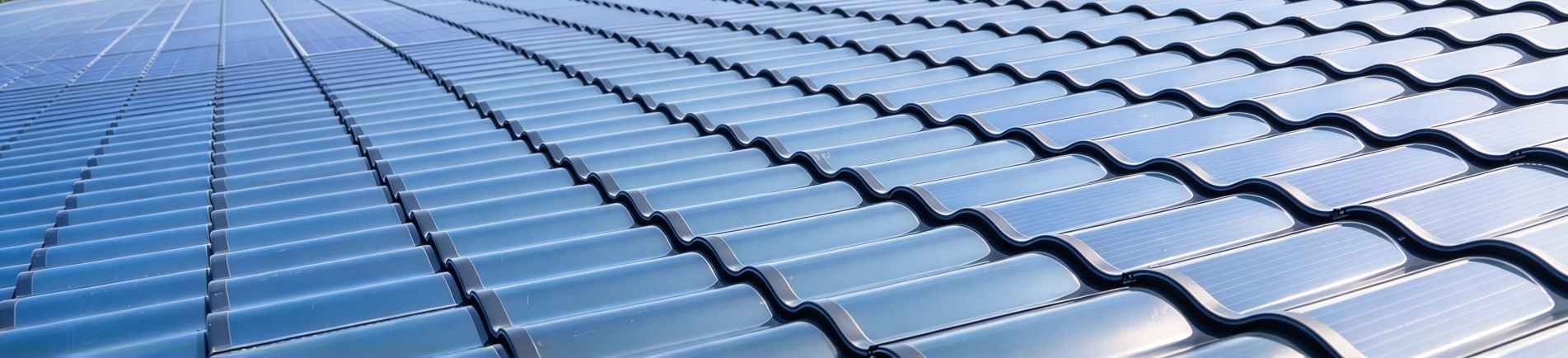
Solar roof tiles, also called solar shingles, are photovoltaic units built to look and lay like ordinary roof covering. They interlock, they shed water, they carry the same wind and snow loads as the roof they replace, and they happen to generate electricity.
We make two families in our own factory, and the difference between them decides almost everything downstream:
Curved three-arch tiles for traditional, clay-tile and premium profiles. Around 103 W/m², which keeps the shape but gives up output per square metre.
Flat photovoltaic tiles for clean modern planes. Around 200 W/m², because a flat format takes a full-size monocrystalline cell.
Both are laminated toughened glass units rated for 5,400 Pa static load, Class A fire performance and operation from −40 °C to +85 °C. That matters more than it sounds: a roof tile spends thirty years being hailed on, baked and frozen, and anything less robust than a glass laminate will not survive it.
If you want the detail on the curved format specifically, the three-arch tile guide goes into profiles, coursing and installation. This article stays on the decision: how much power, what it costs, whether it pays back.
How Much Power a Home Roof Actually Makes
Homeowners usually start with a budget and work backwards. It is easier the other way round, because the roof sets the ceiling before money enters the conversation.
Take a typical detached house with 30 square metres of usable pitched roof. Allow 85% for edges, ridges and obstructions, which leaves about 25.5 square metres of active surface. With curved tiles at 103 W/m² that is roughly 2.6 kWp. With flat tiles at 200 W/m² it is about 5.1 kWp — nearly double from the same roof.
Annual output then depends on where you live. Specific yield, the kWh you get per installed kWp per year, runs from about 950 in northern Germany to 1,600 in southern Spain and 1,800 in the Gulf. The PVGIS tool from the EU Joint Research Centre will give you the figure for your own address, tilt and orientation, which is worth ten minutes before you talk to any installer.
30 m² roof, 85% usable
Curved tile, 2.6 kWp
Flat tile, 5.1 kWp
Northern Germany, 950 kWh/kWp
2,470 kWh/yr
4,845 kWh/yr
Southern Spain, 1,600 kWh/kWp
4,160 kWh/yr
8,160 kWh/yr
Dubai, 1,800 kWh/kWp
4,680 kWh/yr
9,180 kWh/yr
For context, a German household uses around 3,500 to 4,000 kWh a year. A 5.1 kWp flat-tile roof in northern Germany covers that on paper, though not in the evenings, which is where the battery question comes in. A 2.6 kWp curved roof covers about two thirds of it.
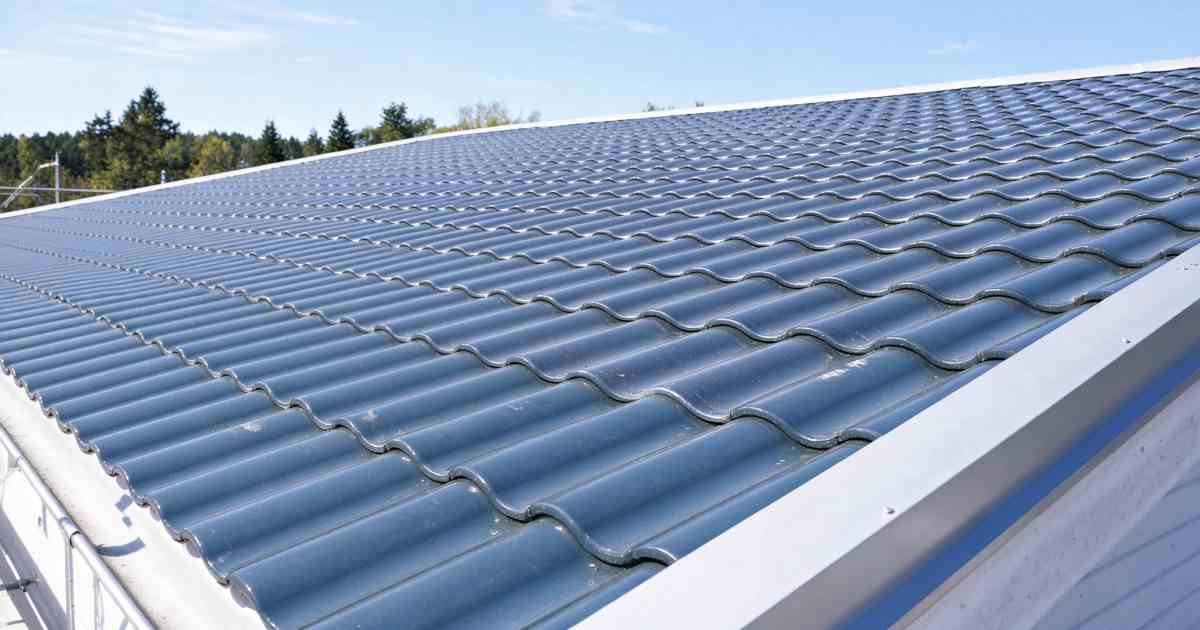
Curved three-arch tiles at 103 W/m²: the profile costs about half the output per square metre.
Solar Tiles vs. Conventional Panels
Both are mature technologies. The honest answer is that they suit different houses, and on the wrong house a solar tile roof is an expensive way to get less electricity.
Solar roof tiles
Conventional panels
Power density
103 – 200 W/m²
200 – 230 W/m²
What it is
The finished roof covering
An addition above the roof
Cost per kWp
Higher, but includes the roof surface
Lower for generation alone
Best on
New builds, re-roofs, visible pitches
Sound roofs, large flat or low-pitch areas
Appearance
Follows the roof lines
Visible framed modules on rails
Roof life
Replaces the covering
Original roof ages underneath
The last row is the one people underestimate. Panels last twenty-five years; the tiles or shingles under them also last twenty-five years, and they start from the day the house was built. If your roof is fifteen years old, a panel array will likely need to come off once for re-roofing before the panels themselves retire. That is a real cost, just a deferred one.
What It Costs, and When It Pays Back
Prices vary enough between countries that any single number is misleading. The ranges below are typical installed costs in European markets in 2026, covering materials, labour, scaffolding, inverter and grid connection. They are ranges to plan against, not quotations.
30 m² roof, 5.1 kWp
Installed cost
Note
Solar tile system
9,700 – 11,700 EUR
Includes the finished roof surface
New tile roof + conventional panels
About 9,100 EUR
100 EUR/m² roofing plus 1,200 EUR/kWp
Difference
+600 to +2,600 EUR
The tile premium buys appearance and a single layer
Panels only, roof kept
About 6,100 EUR
When the roof is sound and staying put
That table is the whole argument in one place. On a roof that needs replacing anyway, the premium for solar tiles is 6% to 29%, not the two-to-three times that people assume when they compare a tile price against a panel price. On a roof that is sound and staying, the comparison flips: you would be buying a roof you did not need, and panels win on cost.
The roof is the common item. Whether you are buying one anyway decides the comparison.
Payback follows from that. Using a 5.1 kWp flat-tile roof at 70% self-consumption, which is realistic for a household that is out during the day. Retail tariffs are the 2026 household averages published by Eurostat; check your own contract, because the spread between countries is wider than the spread between years.
Germany
Spain
Dubai
Annual generation
4,845 kWh
8,160 kWh
9,180 kWh
Retail tariff
0.35 EUR/kWh
0.18 EUR/kWh
0.075 EUR/kWh
Annual value
1,303 EUR
1,028 EUR
551 EUR
Payback, full cost
7.4 years
9.4 years
17.6 years
Payback, roof due anyway
5.1 years
6.5 years
12.1 years
Two things stand out. Germany pays back fastest despite producing half of what Dubai produces, because the electricity it displaces is worth nearly five times as much. And Dubai, with the best sun in this table, has the worst payback — residential tariffs there are subsidised, so the kilowatt-hours are cheap to buy and there is little to save. The Dubai figures are converted to euros so the columns compare like with like.
That does not make solar tiles pointless in the Gulf. It changes the reason. In Dubai and Riyadh the case rests on a roof that has to be built anyway, on cooling loads that run all year, on backup during outages, and on building regulations that increasingly expect on-site generation. If you are buying on payback alone in a subsidised market, be honest with yourself about it.
Do You Need a Home Battery?
Solar tiles work fine without one. During the day they run the house and export the surplus. A battery changes when you use the generation, not how much you make.
The economics are less generous than the sales material suggests. On the German example above, adding 5 kWh of storage lifts self-consumption from about 70% to 85%, which is worth roughly 200 EUR a year. At current installed prices for a 5 kWh system, that is a payback measured in decades, not years. The battery is not paying for itself through avoided imports in that scenario.
It earns its place in three narrower situations:
Outages are frequent or costly. If you lose power several times a year, or you run a home office, medical equipment or a heat pump that cannot sit idle, the value is in continuity, not in the tariff.
Your tariff has a real spread. Dynamic or time-of-use contracts in parts of Spain, Italy and the Nordics can make daily shifting worthwhile. A flat tariff cannot.
You are off-grid or nearly so. Then storage is not optional, and the sizing rules are completely different.
One more thing worth saying plainly: a grid-tied solar roof with a battery reduces your dependence on the grid, but it is not energy independence. Genuine off-grid living needs an oversized array, a much larger bank and usually a generator for long cloudy spells. If you want the configuration detail, how solar roof tiles work with storage covers it, and the home battery range lists what we supply.
Fitting Them to Your Roof
Solar tiles are a roofing product before they are an electrical one, so the questions that decide feasibility are roofing questions.
Pitch and orientation. Best between 30° and 45° facing roughly south in the northern hemisphere, north in the southern. East-west splits work but lose 10% to 15%.
Roof structure. The tiles weigh about 21 to 22 kg/m², similar to clay or concrete tile, so most timber and steel structures carry them without reinforcement. Always confirm with the structural drawings.
Coursing and battens. Curved tiles need batten spacing matched to the profile; flat tiles are more forgiving. Get the layout drawing before the scaffold goes up, not after.
Wiring route. Cables run in the batten cavity to a roof-level junction, then down to the inverter. Retrofitting this into a finished roof is the expensive part, which is why tiles favour new builds and re-roofs.
Shading. A chimney or tree across one corner costs more on a small array than a large one, because there is less to spread the loss over.
What We Make
GreenMore is a photovoltaic tile factory, not a reseller. The curved three-arch tile and the flat photovoltaic tile are both made in our own plant, and we supply the full solar tile range for residential and commercial roofs. If the architectural question matters more than the electrical one, the BIPV overview explains how integrated roofs differ from mounted systems.
On warranty, two numbers apply and they are deliberately separate. The photovoltaic tiles carry a 25-year power output warranty. The inverter, battery and other non-tile components carry 3 years. We do not merge them into a single headline figure, and you should be wary of anyone who does.
Frequently Asked Questions
Are solar roof tiles worth it?
On a roof that needs replacing in the next few years, usually yes: the premium over a new roof plus panels works out at roughly 6% to 29%, and you get a single-layer roof instead of a roof with hardware bolted to it. On a sound roof that is staying put, panels are the cheaper way to generate, and we will tell you so.
How much does a solar tile roof cost?
For a 30 square metre roof at about 5.1 kWp, budget 9,700 to 11,700 EUR installed in Europe, including the finished roof surface, inverter and grid connection. The same roof built with new tiles plus conventional panels comes to roughly 9,100 EUR. Both figures are typical ranges, not quotations.
Do solar roof tiles work on any roof?
They work on most pitched roofs with reasonable orientation and enough area. They are a poor fit for flat roofs, heavily shaded sites, or roofs with complex geometry full of valleys and dormers. Because curved tiles produce less per square metre, a small roof may not reach the capacity you want.
Can solar tiles go on an existing roof?
They replace the covering rather than sit over it, so fitting them means re-roofing the relevant area. That is not a limitation so much as the point: the economics only work when a new roof is part of the plan.
How much can a solar tile roof reduce my bills?
In the German example above, about 1,300 EUR a year at 70% self-consumption. In southern Spain, about 1,000 EUR a year from a much larger output, because the tariff is roughly half. The saving tracks your tariff and your daytime consumption more than it tracks the sun.
Do you supply the tiles, inverter and battery together?
Yes. As the manufacturer we supply the roof surface and configure a compatible inverter and battery for your grid, so the components are matched and supported through one contact rather than three.
L
Luke
Product Manager, GreenMore
Runs the BIPV tile and home storage product line. Has worked on photovoltaic systems since 2017 and helps homeowners choose honestly between solar tiles, conventional panels and battery storage based on the roof and the real costs.
Updated on November 16, 2026





 Network Supported


