What does GreenMore do?
Sep 27, 2026
J
Jimmy Wang
Founder and CEO, GreenMore · BIPV solar tiles and roof systems
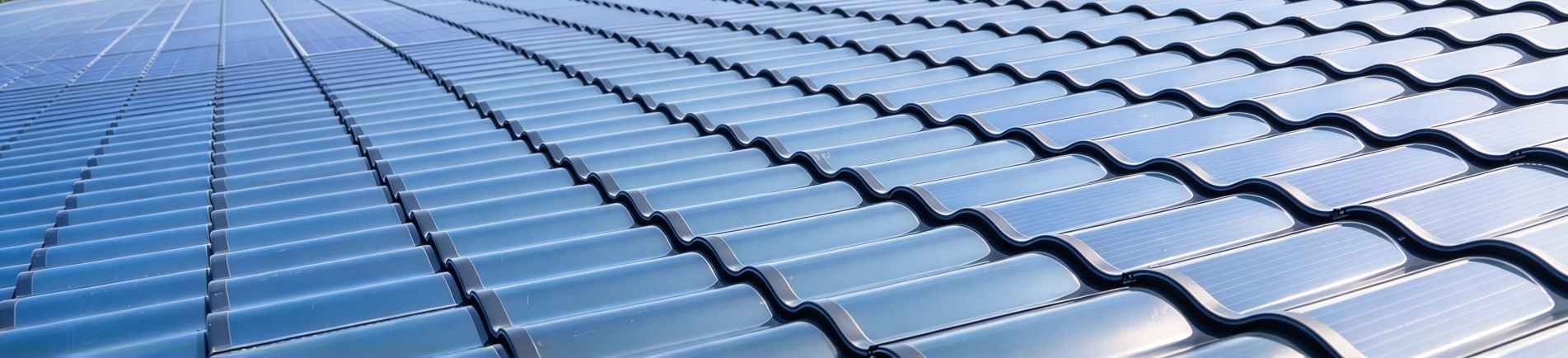
GreenMore is a photovoltaic tile factory making building-integrated photovoltaic (BIPV) products for export. Our core product is the three-arch curved solar tile — the wave-shaped tile that sits on a roof in place of the ceramic version and generates power while it does the roofing job.
Around that flagship we manufacture flat photovoltaic tiles, photovoltaic floor tiles and photovoltaic curtain walls in the same plant, and supply the solar power system and the battery that go with them. An overseas dealer, installer or EPC contractor can source the building material, the electrical balance and the storage from one team.
Lamination and finishing lines at the GreenMore photovoltaic tile plant in Nanjing.
We sell building materials that generate power
The easiest way to understand BIPV is to contrast it with a normal solar installation. In a conventional rooftop setup, framed panels are mounted on top of an existing roof with rails and clamps. The panels and the roof are two separate things, each with its own supplier, its own warranty and its own failure modes. BIPV flips that order: the photovoltaic product is the roof.
That is why we describe our tiles as three products in one — a building material that keeps the weather out, a photovoltaic module that generates electricity, and a finished surface that gives the roof its appearance. Once you accept that framing, the requirements stop being abstract. The tile has to carry wind uplift, snow load, rain and UV like any roof covering before its electrical performance matters at all.
Our tiles are tested to a 5,400 Pa front static load and carry a 10-year product warranty on top of the 25-year power output warranty. The governing product standard for self-supporting metal roofing is EN 14782, and the module-level test sequence a buyer should ask for is IEC 61215.
The product line
Six product families, starting with the one we are known for.
Three-arch curved solar tile
Our flagship, and the product most of our export volume runs through. The bionic triple-wave profile follows traditional barrel and pantile roofs, so it fits villas, heritage-style and cultural buildings, resorts and courtyard homes where a flat framed panel would read as an afterthought.
It comes in two cell routes. The CIGS thin-film version is a semi-tempered double-glass tile rated between 25 W and 32 W depending on colour, and it is the version architects pick when the roof has to look like a roof rather than like a power plant. The back-contact (BC) version uses monocrystalline cells at up to 24.1% module efficiency and runs from 37 W to 50 W per tile, for projects where output per square metre outranks the thin-film appearance.
Both are 720 × 500 mm and weigh around 6.5 kg, so a roofer handles them the way he already handles the ceramic tile he knows. You can see the full range on the solar tiles category page.
Photovoltaic curtain wall
For commercial facades we supply glass-to-glass photovoltaic units built into the mullion and transom system rather than bolted onto it. A vertical elevation sees a very different irradiance profile from a pitched roof, so the module layout, the cell spacing and the transparency level are designed per elevation instead of being pulled off a catalogue page.
This is the product that usually enters a project through the architect rather than the roofer, and it is the one that turns a building envelope into a generating surface without adding a second skin to the building.
Flat and curved photovoltaic tiles
For simpler roof planes we supply flat-laid and stacked photovoltaic tiles that replace conventional tiles with a thinner, more uniform surface. They are commonly mixed with the three-arch tile on the same roof — curved tiles on the visible front elevation, flat tiles on the larger rear planes — which keeps the appearance where it is seen and the cost where it is not.
Solar floor tiles and PV bricks
Our photovoltaic floor tiles are built to be walked on, with an anti-slip surface for terraces, garden paths, plazas and outdoor display areas. The same laminated construction appears as photovoltaic bricks for wall and parapet applications. Both extend the BIPV idea from the roof down to grade without exposing fragile framed panels to foot traffic.
Solar power systems
Tiles alone do not make a working system. We design and supply the solar side — string or micro inverters, mounting and waterproofing accessories, cabling, monitoring and the roof layout — and we pre-configure it for the grid rules of the destination country. A project that also needs a conventional ground-mount or flat-roof array can source that from us in the same order.
Energy storage
To make the generation usable after sunset and during outages, we offer wall-mounted and stacked home batteries and commercial battery cabinets. Storage is a supporting product rather than the main event for us, but it is what lets us hand over a complete solar-plus-storage package instead of a roof and a promise. You can see the scope on our home energy storage solutions and commercial energy storage solutions pages.
Product
Where it goes
Cell route
Output per unit
Warranty
Three-arch curved tile, CIGS
Pitched roofs, villas, heritage work
CIGS thin film
25–32 W
10 yr product / 25 yr power
Three-arch curved tile, BC
Same roofs, higher yield per m²
Back-contact monocrystalline
37–50 W
10 yr product / 25 yr power
Flat photovoltaic tile
Large simple roof planes
Monocrystalline
75–115 W
10 yr product / 25 yr power
Photovoltaic curtain wall
Commercial facades
Glass-to-glass
Designed per elevation
Per project
Photovoltaic floor tile
Terraces, plazas, garden paths
Monocrystalline
40 W
10 yr product / 25 yr power
Home and C&I storage
Indoor, outdoor, wall or cabinet
LFP
5–20 kWh home, 215–372 kWh cabinet
3 yr
How we work: a factory, not a trading desk
GreenMore is a photovoltaic tile factory, not a trading company passing orders between third parties. The tiles — three-arch, flat, floor — and the curtain wall units are made in our own plant, from the glass and cell build-up through lamination, framing and the finished roof unit. We run the incoming and in-process quality checks ourselves and hold the certificates in our own name rather than borrowing a supplier's.
The complete solar power and storage systems we supply are supporting products, integrated around the tiles we manufacture.
We are a focused, growing factory rather than a giant mass producer, and that shape suits BIPV work. Custom colours and profiles are possible, order sizes stay flexible, and every batch is inspected against the agreed specification before it ships. Where a project needs the actual paperwork — EN 14782, EN 1090-1, ISO 9001, ISO 14001, CE — we send the documents, not a logo on a slide.
Who we work with
We are a business-to-business supplier, so we do not sell single roofs directly to homeowners. Our customers are the companies that deliver those projects:
Distributors and dealers who stock solar tiles and batteries for their local market.
Installation contractors and roofers who need a tile they can fit with familiar roofing methods.
System integrators and EPC firms delivering villas, resorts, heritage renovations and small commercial buildings.
Architects and project owners looking for a photovoltaic finish that fits the design rather than fighting it.
Our core markets are Europe and the Middle East, where most of our tile volume goes. Storage and system enquiries reach us from a wider set of countries, which is why you will find those projects on this site next to the roofing work. We are a young brand and we stay selective about the partners we take on, so that each one gets supported properly.
One source, fewer hand-offs
The practical reason buyers come to us is coordination. Sourcing tiles from one vendor, inverters from a second and batteries from a third means three sets of specifications, three shipments and three people to call when something does not line up. We put those pieces together as one BIPV package, confirm they are electrically compatible, and stand behind the result.
If the project is a metal roof or a sloped roof, our metal roof BIPV page walks through the installation approach. The full catalogue sits on the products page.
Questions buyers ask us
Is GreenMore a manufacturer or a trading company?
A manufacturer. The photovoltaic tiles and curtain wall units are produced in our own plant in Nanjing, including lamination, framing and the finished roof unit. We do not buy finished tiles and relabel them.
What is GreenMore's main product?
The three-arch curved solar tile, in a CIGS thin-film version rated 25 to 32 W and a back-contact version rated 37 to 50 W. Flat photovoltaic tiles, floor tiles, bricks and curtain walls sit around it as the rest of the envelope range.
Which countries does GreenMore export to?
The tile business is concentrated in Europe and the Middle East. Energy storage and complete system enquiries come from a broader group of markets, including Africa and South America.
Does GreenMore sell to homeowners?
No. We supply distributors, installers, system integrators, EPC firms and architects. A homeowner who wants our tiles should go through the contractor handling the roof.
What certifications do the tiles carry?
EN 14782, EN 1090-1, ISO 9001, ISO 14001 and CE. The storage products carry CE, IEC and UN38.3. We send the certificate documents with the quotation when a project needs them.
Talk to us about your project
Send us the building type, roof area, country and target capacity, and we will come back with a product shortlist, a roof layout and an indicative quote. Reach us through the contact page or at export@gmsolarkit.com.
Updated on November 12, 2026






 Network Supported


