Welcome to GreenMore
Welcome to GreenMore
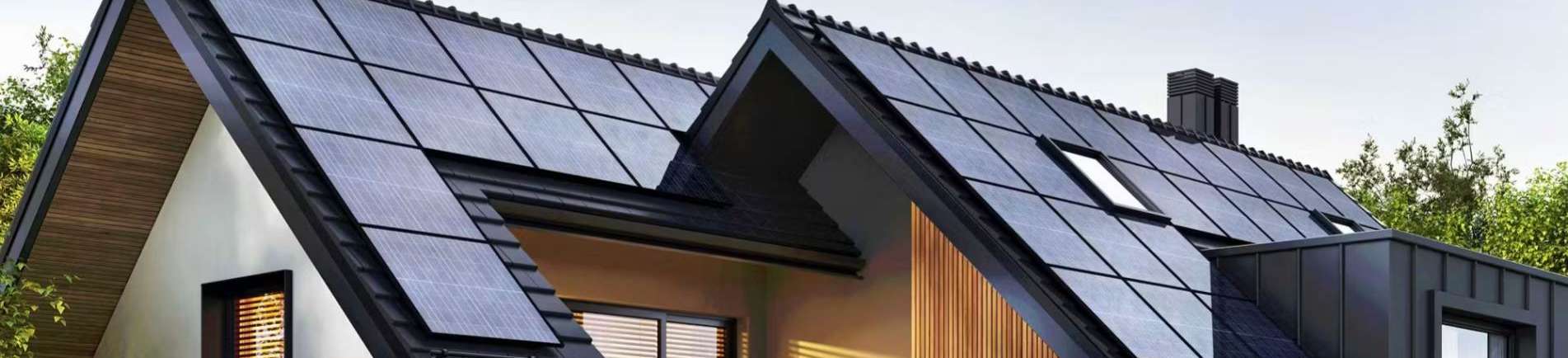
A hotel in Kenya does not usually lose power because there is no grid. It loses power because the grid it has is thin, and because the diesel generator that covers the gap costs more per unit than the rooms earn. This project is built around that specific problem: a 30 kW three-phase rack-mounted inverter with a built-in transfer switch, a 26.16 kWp array and a 40.96 kWh high-voltage battery bank, arranged so the hotel runs on solar and battery first, on KPLC second, and on diesel almost never.

Everything below is sized from two numbers in the inverter datasheet, and both of them are voltage limits rather than power ratings.
| Item | Specification |
|---|---|
| System Type | Grid-interactive solar with battery backup, off-grid capable |
| Inverter | GM-LEI30K, 30 kW rated, 33 kVA maximum, 3/N/PE 230/400 V, built-in ATS |
| Battery Bank | 16 × GM-ESS-BP50S16, two strings of eight, 40.96 kWh at 409.6 V |
| Solar Array | 48 × LONGi LR5-72HBD-545M, 545 W each, 26.16 kWp, three strings of sixteen |
| PV Input | 900 V maximum, MPPT 250–900 V, 3 trackers at 10 kW and 25 A each |
| Battery Window | 250–650 V, LiFePO4 with CAN and RS485 BMS |
| Usable Energy | 36.9 kWh at 90% depth of discharge |
| Application | Hotel and commercial, three-phase |
| Installation Site | Kenya |
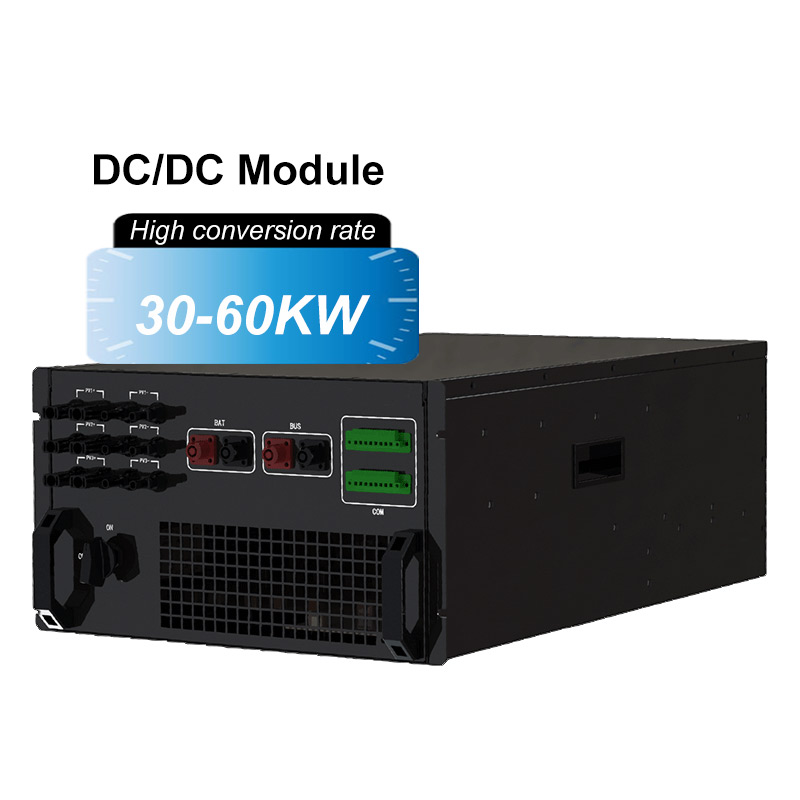
The inverter is a two-module rack build, a DC/DC stage and a DC/AC stage with the transfer switch integrated, 40 kg each at 436 × 650 × 240 mm. Peak efficiency is 98.6% on a three-level topology, and the unit carries 100% unbalanced load across the three phases, which matters in a hotel where one phase feeds the kitchen and the other two feed rooms.
The panels are LONGi Hi-MO 5 bifacial double-glass at 545 W, 2,278 × 1,134 mm. Forty-eight of them make 26.16 kWp across 124 sq m of glass, and with walkways and a service margin the roof footprint is closer to 170–190 sq m.
PVGIS puts Kenya between 1,510 kWh per kWp per year in Nairobi and 1,635 in Mombasa, with the weakest months in June and July at about 3.9 kWh per kW per day and the best in March at 4.9. On 26.16 kWp that is 39,500–42,800 kWh a year, or 108–117 kWh a day averaged. It is a large array relative to the battery, and deliberately so: the daytime load in a hotel — laundry, kitchen, water heating, pool pumps — is where most of the energy goes, and the battery only has to carry the evening.
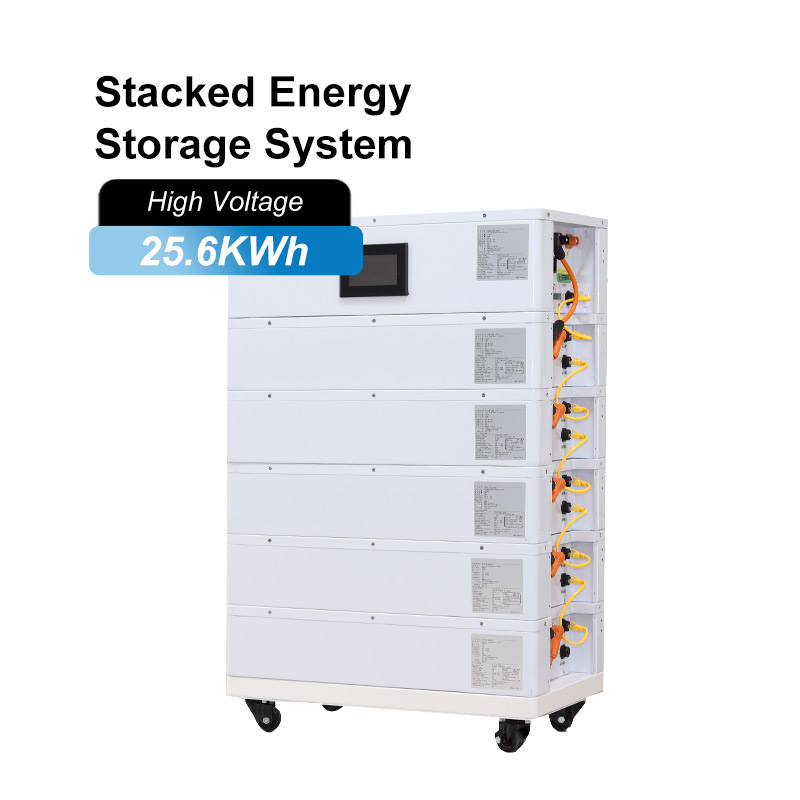
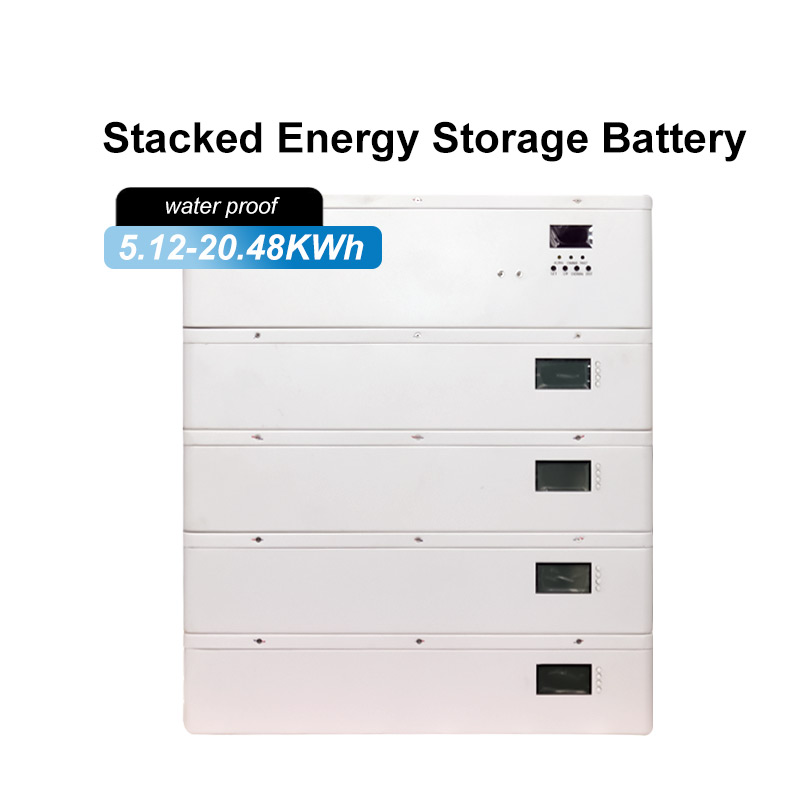
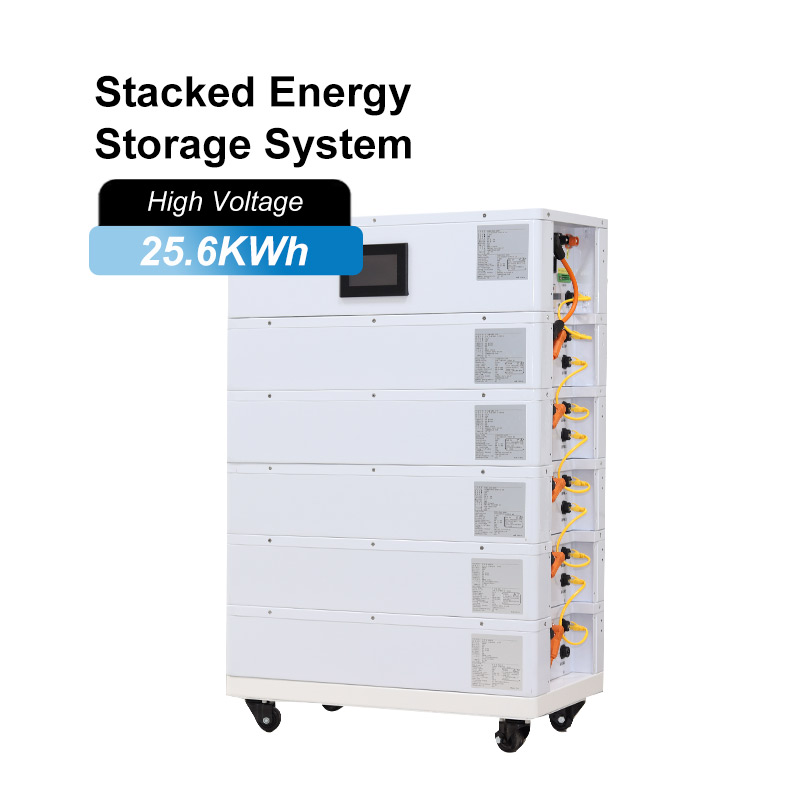
Sixteen GM-ESS-BP50S16 boxes, two strings of eight. Each box is a 50 Ah LFP unit at 2.56 kWh, and eight in series give 409.6 V nominal with a working range of 345.6–467.2 V. That range is the reason for this battery rather than the 51.2 V modules used across most of the home range, and the next section explains why.
The enclosures are IP54 with natural cooling, charging between 0 °C and 55 °C and discharging between −20 °C and 60 °C, certified to CE, IEC and UN38.3, with a three-year warranty. In a Kenyan hotel plant room the temperature range is not the issue; dust and ventilation are.
A rack-mounted three-phase hybrid, 30 kW rated and 33 kVA maximum at 3/N/PE 230/400 V, with THD below 3% and 110% overload carried continuously. The built-in automatic transfer switch moves the load between grid and inverter without a break, which is the single feature that decides whether a hotel notices an outage at all.
It holds 100% unbalanced load, so a kitchen pulling hard on one phase while two room wings idle does not trip anything. Three MPPTs at 10 kW and 25 A each, PV input to 900 V, battery input 250–650 V, peak efficiency 98.6% on a three-level topology, IP20, rated to 55 °C and 3,000 m, under 45 dB on intelligent air cooling. Modbus RTU and TCP over Ethernet or RS485, with CAN to the BMS.
Three separate limits in the datasheet apply to each string, and they do not all point the same way.
Power first. Each MPPT channel accepts 10 kW, and a 545 W module means eighteen would fit under that ceiling. Current next: the input is limited to 25 A, a 545 W module produces 13.92 A short-circuit current, and two strings would come to 27.8 A. So it is one string per tracker, and there are three trackers.
Voltage decides the length. The input ceiling is 900 V, and a 545 W module has an open-circuit voltage of 49.65 V at standard test conditions. Seventeen in series gives 844 V at 25 °C, which looks fine until the temperature coefficient is applied: at 0 °C, a cold highland morning, the string reaches 900 V exactly. That is the limit, not a margin. Sixteen modules reach 847 V under the same conditions and leave 53 V of headroom.
So the array is three strings of sixteen, 48 modules, 26.16 kWp, one string into each tracker. There is no fourth string because there is no fourth tracker, and no way to lengthen the existing ones without crossing the voltage ceiling.
Tilt matters less here than in most markets. Kenya sits on the equator, so a fixed 10–15° facing either north or south collects close to the same annual energy, and the shallow angle is chosen to shed dust and rain rather than to chase a season. Bifacial gain from a light-coloured roof adds a few percent that the yield figures above do not count.
Most GreenMore home storage runs on 51.2 V modules, the GM-ESS-B100S16 and B200S16 range, and a quotation for a 30 kWh bank built from those is a familiar sight. It cannot be connected to this inverter.
The GM-LEI30K battery input starts at 250 V and ends at 650 V. A 51.2 V module tops out at 58.4 V. There is no configuration of three or four of them that reaches the bottom of that window, and the modules are not rated for series connection in any case. The bank has to be high-voltage, which is why this build uses the BP50S16 series: 2.56 kWh per box, 51.2 V per box, explicitly rated for up to eight in series at 467.2 V.
That arithmetic sets the bank. One string of eight is 20.48 kWh. Two strings, connected in parallel at the inverter’s battery terminals, are 40.96 kWh. The 30 kWh figure that circulates for this project falls between the two and cannot be built, which is worth knowing before a customer compares it against a quotation that quietly assumes it can.
Parallel strings carry two practical requirements. Each string needs its own fuse or breaker on the DC side, and both strings must be brought to the same state of charge before they are tied together, or the higher one will dump current into the lower one at a rate nothing in the BMS is expecting.
At 90% depth of discharge the bank gives 36.9 kWh. Divided by load, that is:
| Load on the Backup Bus | Runtime from 36.9 kWh |
|---|---|
| 30 kW — the full inverter rating | 1.2 hours |
| 20 kW — kitchen, laundry and pumps together | 1.8 hours |
| 15 kW — one shift of core operations | 2.5 hours |
| 10 kW — rooms, lighting, security, refrigeration | 3.7 hours |
| 5 kW — overnight essential circuits | 7.4 hours |
| 3 kW — quiet hours only | 12.3 hours |
A 30 kW inverter with a 40 kWh bank is a one-hour bridge at full output. That is not a criticism of the design; it is what the ratio means, and a hotel that expects to run its whole load through a six-hour outage needs roughly 180 kWh of storage rather than 40. What the bank is sized for is the realistic case: the hotel keeps the essential circuits alive overnight and sheds the rest, which is what a 5 kW average night load over seven and a half hours looks like.
Against a typical Kenyan mid-size hotel, the daily picture is this:
| Load Group | Daily kWh | Notes |
|---|---|---|
| Guest rooms, 40 keys — lighting, sockets, TVs | 60–80 | Peaks in the evening, low by day |
| Water heating | 40–60 | The largest single line if electric |
| Kitchen | 30–50 | Breakfast and dinner service |
| Pumps, pool, laundry | 20–35 | Daytime, and the best match for solar |
| Common areas, security, WiFi, cold room | 10–15 | Round the clock |
A hotel in that band uses 160–240 kWh a day. The array produces 108–117, so it covers roughly half of the annual energy and a much larger share of the daytime load, while the battery carries the evening essentials and KPLC supplies the rest. Any claim that this system takes a hotel off the grid entirely describes a system three times this size. Smaller lodges run the same design at a fraction of the scale, as in the 12 kW project in Rwanda, while a site that needs to ride out days rather than hours moves up to a 1 MWh backup build.
The commercial case is straightforward. EPRA gazetted KSh 4.1591 per kWh in pass-through charges for September 2026 — KSh 3.00 fuel energy cost, KSh 1.1443 foreign exchange adjustment and a KSh 0.0148 water levy — all of it on top of the base tariff. Kenya Power’s application for new tariffs from 2026/27 was withdrawn in June 2026, so the schedule that took effect on 1 July 2025 is still the one being billed.
All in, a commercial customer in the CI1 band of 100–1,500 kVA pays roughly KSh 26–32 per kWh, and a smaller CI0 customer under 100 kVA pays KSh 25–30. EPRA’s own data shows commercial tariffs rising between 11% and 27% across 2024 and 2025. A hotel this size usually falls in the smaller band, so KSh 25–30 is the likelier figure. That is less per unit than a factory pays, but still three to four times the cost of solar energy across the life of the array.
| Units Displaced per Year | At KSh 26 | At KSh 29 | At KSh 32 |
|---|---|---|---|
| 20,000 kWh | 520,000 | 580,000 | 640,000 |
| 30,000 kWh | 780,000 | 870,000 | 960,000 |
| 40,000 kWh | 1,040,000 | 1,160,000 | 1,280,000 |
Those are annual bill reductions in shillings, before the fuel and forex adjustments move again. The same table is the argument against the diesel generator: a litre of diesel makes roughly 3 kWh in a small set, so the generator that covers an outage at KSh 40 or more per unit is the most expensive electricity on the property, and every hour the battery carries instead is money the hotel keeps.
Reserve margin is the other half of the case. Kenya’s system reserve margin fell to about 2.3% at the end of 2025, and outages have become routine rather than exceptional. A hotel that cannot check guests in during an outage is not saving a tariff difference, it is losing revenue, and that is a cost the table above does not capture.
Kenyan import tax on a solar system depends on which component you are looking at, and a quotation built on the assumption that the whole shipment comes in clean will be wrong.
Bare solar cells and modules enter at 0% import duty and 0% VAT under the exemptions in the VAT Act 2013. Lithium-ion batteries under HS 8507.60.00 carry 0% excise and remain VAT zero-rated under the Finance Act 2026, which took effect on 1 July 2026; a proposal in the Bill to downgrade that to exempt status, which would have cost importers the ability to reclaim input VAT, was dropped before assent.
Inverters are the exception. HS 8504.40 has no equivalent relief, so the GM-LEI30K attracts standard EAC Common External Tariff duty plus VAT at 16%. Mounting structures, cabling and DC protection are standard-rated too. The practical result is a blended duty rate well above zero even though the module line reads zero.
One item to watch rather than plan around: the Business Laws Amendment Bill 2026 proposes cutting import VAT on a wider range of green energy equipment from 16% to 8%. It was still in Parliament in late 2026. Price the shipment against the Act that has been assented, not the Bill that has been tabled.
Plant room requirements, in the order they tend to bite:
| Item | Requirement |
|---|---|
| Inverter | 19-inch rack or wall cabinet, IP20, ambient under 55 °C with air moving past |
| Battery bay | 16 boxes at 655 × 355 × 160 mm, two stacks of eight, clear of direct sun |
| DC protection | Separate fuse or breaker per battery string, rated for 409.6 V nominal |
| Earthing | Three-phase four-wire, neutral bonded at the transfer switch, separate earth electrode |
| Roof load | 124 sq m of module at about 13 kg/sq m, plus rail and ballast |
| Cable runs | Three PV strings, one per tracker, equal length and equal module count |
Yes, on the circuits wired to the backup bus. The built-in transfer switch moves the load from grid to inverter without a break, so the lights do not blink and the point-of-sale terminals do not reboot. How long depends entirely on what is on that bus: 5 kW of essential circuits runs for 7.4 hours, while 20 kW of kitchen and laundry runs for 1.8. The discipline is deciding which circuits belong on the backup bus before the first outage, not during it.
Because the GM-LEI30K battery input starts at 250 V. The 51.2 V modules that most home storage uses cannot reach that window, so the bank has to be built from the high-voltage BP50S16 series, where eight boxes in series give 409.6 V and 20.48 kWh. One string is 20.48, two are 40.96, and there is nothing valid in between. A 30 kWh bank would need eleven and a half boxes in series, which the hardware does not allow.
Yes, by adding strings rather than lengthening them. Each string stops at eight boxes because that is the series limit of the BP50S16 at 467.2 V, so expansion means another parallel string with its own DC protection and a state-of-charge match before it is tied in. The inverter and array do not change.
Yes. The GM-LEI30K runs standalone at 30 kW three-phase with 100% unbalanced load, so a site with no KPLC line at all can use the same equipment. What changes is the arithmetic: with no grid to fall back on, the array and the bank both have to cover the worst week rather than the average one, which usually means doubling the storage.
The GM-LEI30K inverter and the GM-ESS-BP50S16 batteries each carry a three-year warranty from GreenMore. The LONGi modules carry LONGi’s own product warranty and long-term power warranty, handled through the module manufacturer. Mounting and balance-of-system items are covered by their respective suppliers.
Planning a hotel or commercial retrofit in Kenya? Send us the daily kWh, the phase arrangement and the county, and we will size the array against PVGIS yield for that site rather than a national average. Contact our sales team →
Stay up to date with GreenMore. We share new BIPV solar tile releases, product and certification updates, and field notes from our projects — no fluff, just the things that matter to installers, distributors, and system integrators. If there's something you'd like to see covered, drop us a line — we read every reply.




Copyright @ 2026 GreenMore All Rights Reserved.  Network Supported
Sitemap / Blog / Xml / Privacy Policy