Welcome to GreenMore
Welcome to GreenMore
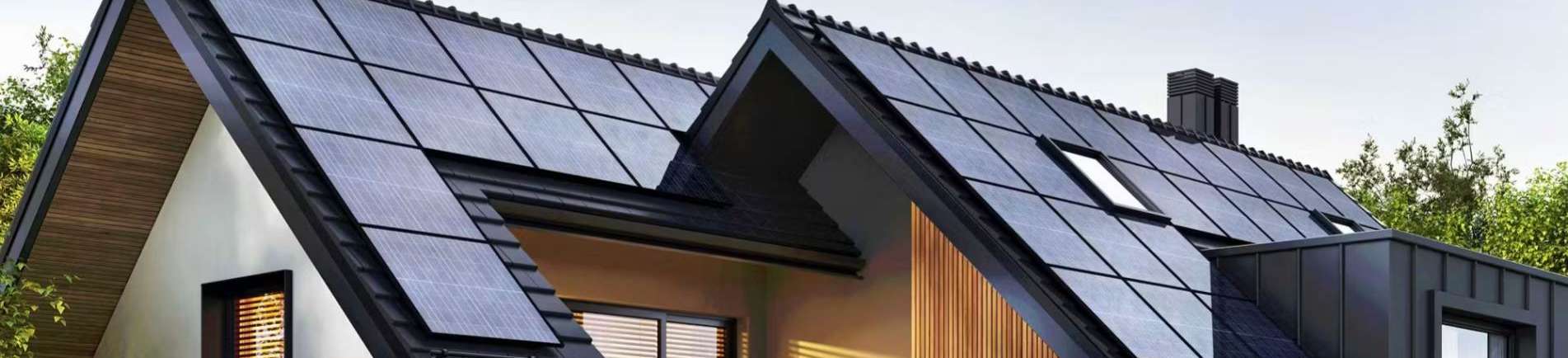
Rwanda is not an unlit country. 88.3% of households have electricity, and a quarter of them run on a solar system rather than a line. The gap this project fills is narrower and more practical: a house that needs more than a solar lantern, sits far enough from a transformer that a connection is its own project, and cannot absorb a monthly bill at the top residential block. The answer here is a 6.48 kWp array, a 10.24 kWh lithium pack and a 10 kW low-frequency inverter, sized so the house runs on its own generation day and night and only falls back on load discipline in a long rainy spell.
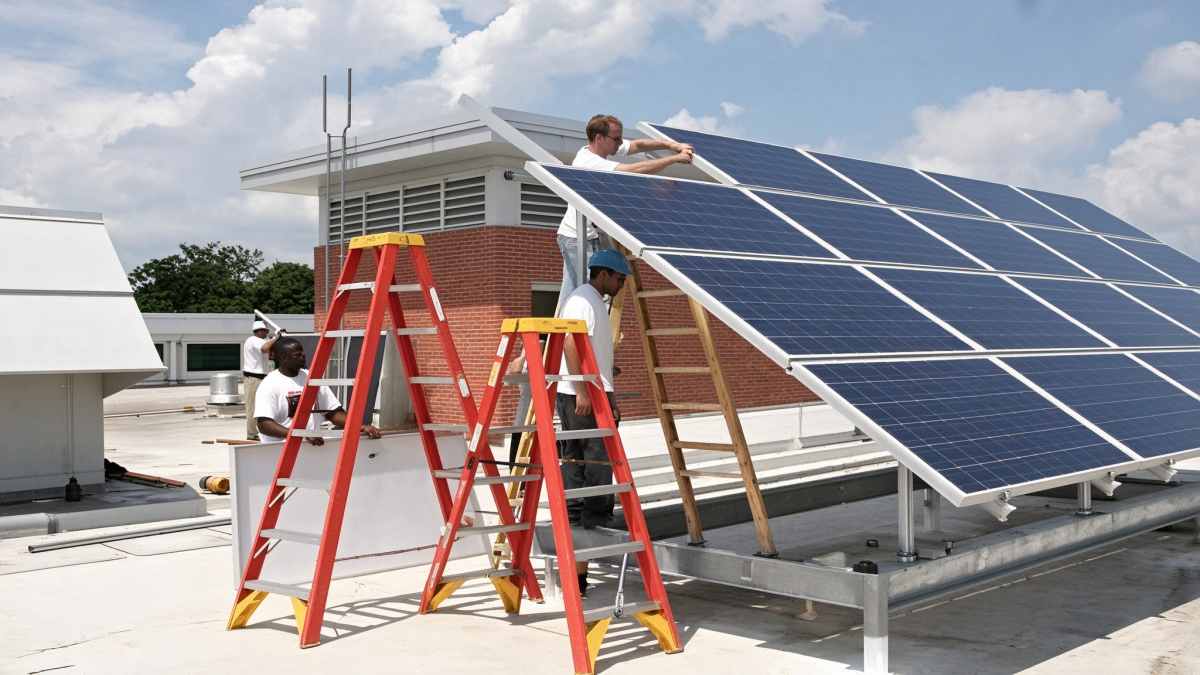
Two numbers in the inverter datasheet set everything else: a 150 V ceiling on the PV input and a 6,100 W ceiling on the charger. Both are low, and both are explained below.
| Item | Specification |
|---|---|
| System Type | Off-grid, self-consumption with battery storage, grid or generator input optional |
| Inverter | GM-DP0100, 10 kW continuous, low-frequency toroidal transformer, 10 ms transfer |
| Battery Bank | 1 × GM-ESS-B200S16-MP, 10.24 kWh at 51.2 V, 200 Ah |
| Solar Array | 12 × LONGi LR5-72HBD-540M, 540 W each, 6.48 kWp, six strings of two |
| PV Input | 150 V maximum, MPPT 60–145 V, one tracker, 6,100 W charger ceiling |
| Charge Current | 120 A at the controller, 100 A at the pack |
| Usable Energy | 9.2 kWh at 90% depth of discharge |
| Application | Residential, off-grid capable |
| Installation Site | Rwanda |
The inverter is a transformer-based unit rather than a high-frequency one. That costs efficiency — 88% peak against the 97% a modern hybrid reaches — and buys surge behaviour that matters on a house with a borehole pump: 120% instantaneous overload, and a sine wave that stays clean when a motor starts. The difference between the two topologies is the reason this design accepts the efficiency hit.
LONGi Hi-MO 5 bifacial double-glass, 540 W, 2,278 × 1,134 mm. Twelve of them make 6.48 kWp across 31 sq m of glass, and a roof footprint closer to 45 sq m once walkways and the service margin are counted.
Rwanda receives 4–5.4 kWh per sq m a day, which the country’s own resource assessments convert to 3.7–4.29 kWh per kWp per day of practical output. On 6.48 kWp that is 8,750–10,150 kWh a year at the modules, and 7,400–8,600 kWh at the socket once the inverter’s 88% peak and roughly 85% average conversion are applied. Call it 20–24 kWh a day in a normal month, and about a third less in the long rains.
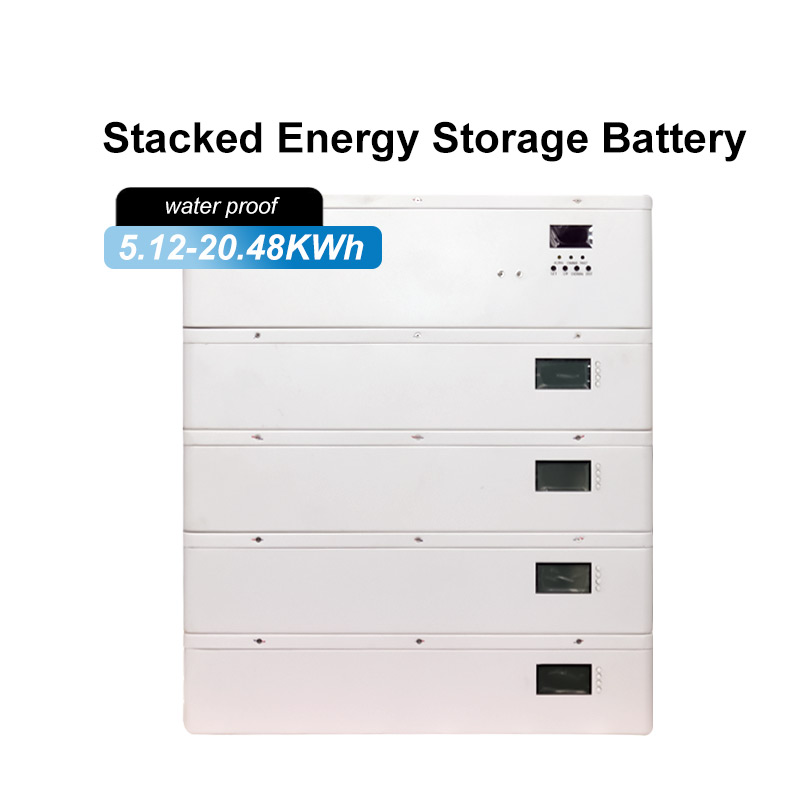
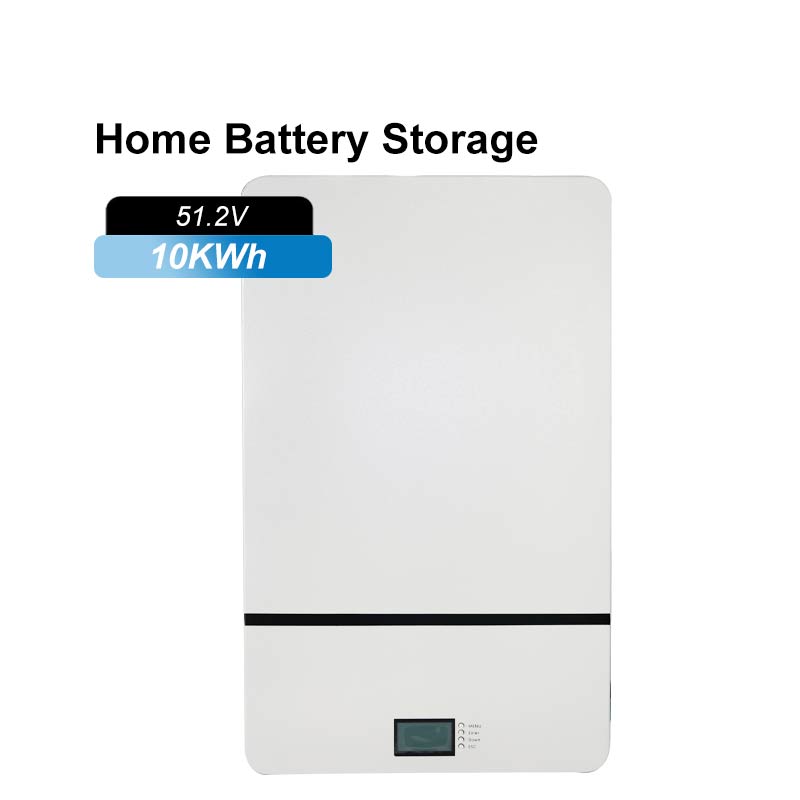
One GM-ESS-B200S16-MP: 200 Ah of LFP at 51.2 V, working range 40–58.4 V, 84 kg in a 650 × 370 × 310 mm enclosure. Charge and discharge are both rated 0.5C continuous, which is 100 A, with 1C available as a pulse. IP54, natural cooling, CAN, RS485 and RS232 to the inverter, certified to CE, IEC 62619, MSDS and UN38.3, three-year warranty. The pack sits on a 48 V-class bus, and the choice between that and a 512 V architecture matters before comparing quotes.
At 90% depth of discharge the pack gives 9.2 kWh. That is one comfortable night for this house and not two, which is the honest way to size it: parallel modules take the bank to 81.92 kWh when a second night of autonomy becomes a requirement rather than a preference.
10 kW continuous at 220/230/240 V, 50 or 60 Hz, pure sine, with a 60 A AC charger that accepts 154–272 V. That input range is wide enough to take a weak rural line or a small generator, so the same inverter serves a house that later gets a connection instead of one that never will.
Transfer time is 10 ms typical and 20 ms maximum. RS485 with Modbus for monitoring, operating range 0–60 °C and 3,000 m, 512 × 320 × 136 mm at 58 kg on a wall. Three-year warranty, like the battery.
Three limits apply, and the voltage one binds first. The PV input ceiling is 150 V, and a 540 W module has an open-circuit voltage of 49.50 V. Three in series is 148.5 V at 25 °C, which looks compliant until a cool morning at 0 °C pushes it to 158 V. Two in series is 99.0 V at standard conditions and 105.6 V at 0 °C, which leaves real headroom. So the string length is two modules, and it cannot be anything else.
The charger then caps the array. The MPPT is rated 6,100 W, which at 540 W per module is eleven and a bit, so twelve modules sit 6% above the ceiling. That is deliberate over-panelling: on the clearest days the controller clips at 6,100 W, and in the long rains the extra glass is what keeps output up when irradiance falls. Doubling the array would buy nothing, because everything above 6,100 W has nowhere to go.
The pack sets the third limit. 0.5C of a 10.24 kWh battery is 5.12 kW, so charge acceptance is about 100 A at 51.2 V, and the 120 A controller has to be programmed down to that. With a daytime load running, the net current stays under it, which is why the array is not throttled further.
Wiring follows from the two-module string: six parallel strings, each fused, combined in a DC combiner and taken to the single MPPT input. Array short-circuit current is 83.1 A and the operating voltage is 83.3 V, inside the 60–145 V window. It is an unusual shape — low voltage, high current — and it is what a 150 V input forces.
Nine kilowatt-hours is a night, not a day. Divided by load:
| Load on the Backup Bus | Runtime from 9.2 kWh |
|---|---|
| 5.0 kW — pump, iron and fridge starting together | 1.8 hours |
| 3.0 kW — heavy evening load | 3.1 hours |
| 2.0 kW — fridge, lights, TV, fans | 4.6 hours |
| 1.5 kW — typical overnight average | 6.1 hours |
| 1.0 kW — lights, router, fridge cycling | 9.2 hours |
| 0.5 kW — standby circuits only | 18.4 hours |
There is a second limit under that table. The pack’s continuous discharge is 0.5C, 100 A, which is 5.12 kW. The inverter is rated 10 kW and will deliver it, but only on the 1C pulse rating, so a sustained 10 kW draw is a burst rather than a duty. For a house this is academic — nothing runs at 10 kW for an hour — and it stops being academic the day someone adds a welder.
A realistic Rwandan household on this system sits here:
| Load Group | Daily kWh | Notes |
|---|---|---|
| Lighting, 12 LED points, 5 hours | 0.5–0.7 | Evening, mostly after dark |
| Refrigerator and freezer | 2.0–2.6 | Runs overnight, the largest night load |
| TV, decoder, laptops, phone charging | 1.0–1.4 | Evening peak |
| Borehole or booster pump, 1 kW for 1.5 hours | 1.5 | Best moved to midday |
| Iron, kettle, small appliances | 0.8–1.2 | Short, high draw |
| Fans, occasional air conditioning | 0–3.6 | The variable that decides the design |
| Productive use: sewing machine, clippers, grinder | 0–2.0 | Daytime, and the reason to over-size |
That lands between 6 and 13 kWh a day, with 10–12 typical. The array produces 20–24, roughly double, and that ratio is intentional: Rwanda’s long rains cut yield by about a third, and a battery sized for one night cannot carry a second one. The surplus is the reserve. Smaller loads land on a different ratio, as in the Ethiopia household storage project; commercial loads of the same shape scale up, as in the Kenya 30 kW hotel build.
RURA revised the end-user tariff with effect from 1 October 2025, and the shape of it matters more than the average. Households pay RWF 89 per kWh for the first 20 units of the month, RWF 310 for the next 30, and RWF 369 for everything above 50. Non-residential customers pay RWF 355 up to 100 kWh and RWF 376 above it. All figures are VAT-exclusive, and VAT is 18%.
| Customer Category | Monthly Block | RWF per kWh |
|---|---|---|
| Residential | 0–20 kWh | 89 |
| Residential | >20–50 kWh | 310 |
| Residential | >50 kWh | 369 |
| Non-residential | 0–100 kWh | 355 |
| Non-residential | >100 kWh | 376 |
The 20-unit lifeline block is why the average price in Rwanda looks low and the marginal price does not. A house consuming 300 kWh a month pays 20 × 89 plus 30 × 310 plus 250 × 369, which comes to RWF 103,330 before VAT and about RWF 121,900 after it. That is an average of RWF 406 per kWh, and every additional unit the house uses costs RWF 435. This project’s household sits well above the lifeline block by definition — a 10 kW inverter is not a 20 kWh a month load.
At 4,000 kWh a year displaced, the bill avoided is RWF 1.48 million at the RWF 369 block, or RWF 1.74 million once VAT is counted. Against that, the same house on a diesel set pays for fuel at a multiple of the grid rate for every hour it runs, and the maintenance interval on a small set is measured in hundreds of hours, not years.
The comparison that decides the project is usually not solar against the grid, though. It is solar against a connection quote, which for a plot at the end of a long low-voltage run includes poles, a transformer contribution and a wait. That is the case this system was built for.
The headline number is good and the detail underneath it is not. A Senate committee assessment reported in November 2026 put household access at 88.3%, up from 78.9% in 2024, and split it as 63.3% connected to the grid against 25% on off-grid solar. The same report questioned whether households whose subsidised solar systems no longer work should still be counted.
Supply is the weaker half. Installed capacity rose from 406 MW to 472.9 MW, of which about 367 MW is generated locally and the rest imported. Hydropower output falls with water levels in the dry season, the 80 MW peat plant at Gisagara has been hampered by flooding in the Akanyaru wetland, and the Rwanda Governance Board’s 2025 citizen survey found 32.8% of respondents dissatisfied with outages. A country can be at 88% access and still be a country where the lights go out.
Three solar plants totalling 300 MW are planned for 2027 to 2029, and the target is universal access by 2029. Neither changes what a house at the end of a rural feeder experiences this year. That is the gap a self-contained system fills, and it is why the inverter here keeps an AC input: if the line arrives in three years, the same box becomes a grid-tied backup instead of an orphan.
Rwanda rebuilt its VAT law in 2025 and the result is a set of targeted, time-limited reliefs rather than a permanent exemption list. For this project that cuts two ways.
Solar equipment imported for electricity generation is VAT-free until 30 June 2028 under Law No. 009/2025, which amended the 2023 VAT law. Importers, grid developers and independent power producers can all use it, and it is worth having: standard VAT is 18%, which on a system of this size is not a rounding error.
Customs is separate. Rwanda applies the EAC Common External Tariff, and solar equipment and batteries sit among the items that can be exempted under the customs law. What is not exempted, or not correctly classified, is what costs money: a battery invoiced under the wrong HS code arrives with duty attached, and the clearance argument happens after the container is on the dock.
Three levies apply regardless of duty status, all on the CIF value: the 1.5% Infrastructure Development Levy, the 0.2% African Union Levy and the 0.2% Quality Inspection Fee. They are small individually and they are not zero, which is why a landed-cost sheet that shows only duty and VAT is always short.
The practical instruction is to price against the law that has been gazetted and to check the sunset date before committing a shipment. An exemption with eighteen months left on it is a different asset from a permanent one.
Plant room requirements, in the order they usually bite:
| Item | Requirement |
|---|---|
| Inverter | Wall space for 512 × 320 × 136 mm at 58 kg, ventilated, ambient under 60 °C |
| Battery | 650 × 370 × 310 mm at 84 kg, floor-standing or on a plinth, out of direct sun |
| DC combiner | Six fused string inputs, 150 V rated, one output to the MPPT |
| Earthing | Separate earth electrode, neutral bonded at the inverter |
| Roof load | 31 sq m of module at about 13 kg/sq m, plus rail and fixings |
| Cable runs | Six equal-length string pairs; unequal lengths cost harvest on a shared MPPT |
Between 8,750 and 10,150 kWh a year at the modules, using the country’s own 3.7–4.29 kWh per kWp per day range. At the socket, after the inverter’s 88% peak and roughly 85% average conversion, that is 7,400–8,600 kWh, or 20–24 kWh a day in a normal month. The long rains from March to May cut that by about a third, which is why the array is larger than the daily load.
At 90% depth of discharge it gives 9.2 kWh, which covers a 1.5 kW overnight average for six hours with margin. A house drawing 2 kW continuously would empty it in four and a half hours, so the honest answer is that it depends on the fridge and the pump rather than on the battery. Moving the pump to midday is usually worth more than adding capacity.
Yes. The GM-ESS-B200S16-MP is designed for parallel expansion, and the family runs to eight modules, 81.92 kWh, on the same 51.2 V bus. Each added module needs its own breaker and CAN address, and the bank has to be brought to a matched state of charge before it is paralleled. The inverter and array do not change.
Yes. The AC input accepts 154–272 V and charges at up to 60 A, so a small generator or a later service connection becomes a charging source rather than a replacement. Transfer time is 10 ms typical, 20 ms maximum, which is fast enough that a router and a fridge compressor do not notice the switch.
The GM-DP0100 inverter and the GM-ESS-B200S16-MP battery each carry a three-year warranty from GreenMore. The LONGi modules carry LONGi’s own product and long-term power warranty, handled through the module manufacturer. Mounting, cabling and the DC combiner are covered by their respective suppliers.
Sizing a house that the grid has not reached? Send us the daily kWh, the roof area and the district, and we will size the array against the worst month rather than the annual average. Contact our sales team →
Stay up to date with GreenMore. We share new BIPV solar tile releases, product and certification updates, and field notes from our projects — no fluff, just the things that matter to installers, distributors, and system integrators. If there's something you'd like to see covered, drop us a line — we read every reply.




Copyright @ 2026 GreenMore All Rights Reserved.  Network Supported
Sitemap / Blog / Xml / Privacy Policy