What is Triple-Arch Hantile?
Sep 27, 2026
L
Luke
Product Manager, GreenMore · BIPV solar tiles & roof systems
As photovoltaic products move from industrial arrays onto everyday homes, buyers increasingly ask for solar that actually suits the building rather than sitting awkwardly on top of it. The triple-arch hantile is our answer to that. It is a curved solar roof tile shaped like a traditional clay tile, so the roof keeps its familiar look while it generates electricity. Here is a clear look at what it is, how it is built, where it works and how it pairs with energy storage.
What Is a Triple-Arch Hantile?
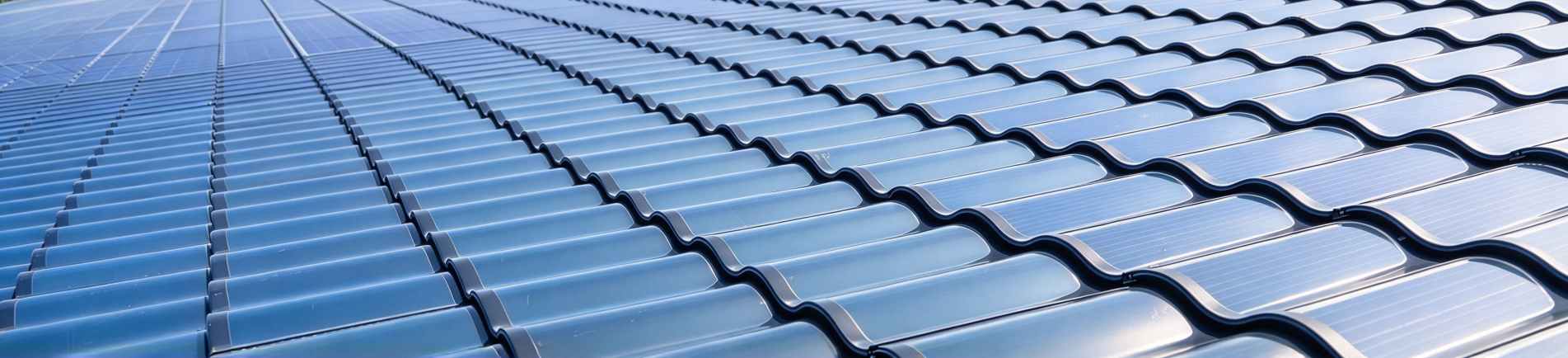
A hantile is a building-integrated photovoltaic (BIPV) roof tile. The word combines the Chinese character han with tile, and the product is designed to imitate the appearance of a traditional clay or cement roof tile. The “triple-arch” version uses a three-stage curved surface — a main arch with smaller side curves — that follows the silhouette of classic barrel and pantile roofs. The shape is not only decorative: the overlaps guide rainwater off the roof and help the tiles sit neatly together in rows.
Technically, each tile is a laminated photovoltaic module. Solar cells are sealed between layers of toughened, high-transmittance glass and finished with edge protection and sealing strips, so the finished unit works as a weatherproof building material and a power generator in one. It replaces conventional tiles directly instead of being mounted above them. The full range is on our solar tiles category page.
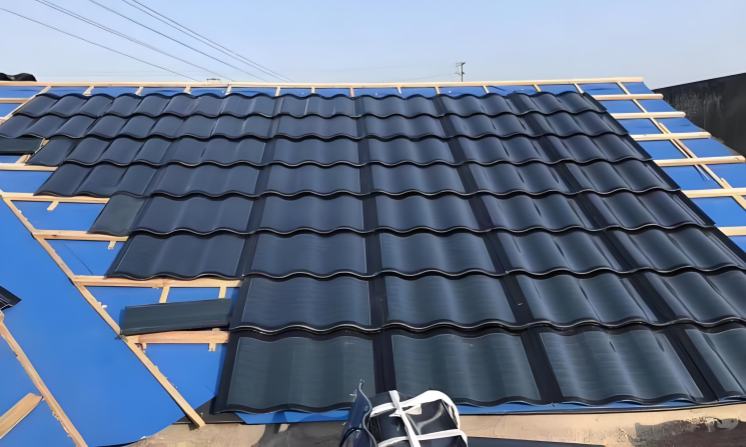
Real-life view of GreenMore residential wave-shaped photovoltaic tile pitched roof installation
How It Is Built
A few construction details matter more than impressive-looking percentages. These are the features the product is actually engineered around:
Curved laminated glass
The tile uses laminated, double-toughened curved glass with high light transmittance (above 91.5% on the glass itself). The laminate holds the glass together if it is ever broken, which is the same safety principle used in car windscreens, and the surface carries a nano self-cleaning coating so rain washes away dust.
Overlapping, rail-light fitting
Tiles overlap from left to right and bottom to top, with an up-and-down overlap of roughly 85 mm, so the joints shed water without exposed fixings through the waterproof layer. EPDM sealing strips and edge trims close the joints. The modular overlaps also absorb small construction tolerances, which makes laying them close to ordinary roofing work.
Ventilation behind the tiles
An air gap behind the tiles lets hot air rise and escape, cooling the cells naturally. Because photovoltaic output drops as the modules heat up, this rear ventilation helps steady production on sunny days. We treat it as good roof design rather than quoting a fixed extra percentage, since the gain varies with the roof and climate.
Wind, load and fire performance
The installed system is rated for a 5,400 Pa front static load, Class A fire performance and working temperatures from −40 °C to +85 °C. Our double-glass hantile roof system has been tested against wind speeds up to 177 km/h (level 15 typhoon). You can read more about the structural side in our pieces on how the tiles handle 5,400 Pa and fire ratings for solar roof tiles.
Power and Cell Options
The curved shape is available with two cell technologies, so buyers can balance appearance, efficiency and budget:
CIGS thin film — a uniform, subtly colored surface with good response to diffused and morning/evening light. The classic 34 W three-arch tile delivers about 103 W per square metre; the HW32L model is rated at 32 W per tile. We have produced thin-film curved tiles since 2019.
Back-contact crystalline (2025) — for maximum output from a limited area. The new BC curved tiles range from 37 W to 50 W per tile, with module efficiency up to 24.1%, while keeping the same traditional profile.
Each tile measures roughly 720 × 500 mm and weighs about 6.5 kg, close to a conventional roof tile in handling. Exact electrical figures differ slightly between models, so the current datasheet is the reference for a specific order.
Where It Is Used
Villas and high-end homes where owners want solar without giving up a classic roofline.
Heritage-style and cultural buildings, resorts and courtyards where flat panels would look out of place.
Renovation and urban-renewal projects that re-roof in the original style while adding generation.
Low-carbon communities combining distributed solar roofs with shared or home storage.
Because the tiles form the finished weather surface rather than sitting above it, they are easiest to include when a roof is being built or re-covered. Our wider work in this area is collected under the BIPV systems section, and the fitting process is explained in our guide to installing solar tiles on a roof.
Pairing the Tile with Energy Storage
A solar tile roof generates while the sun is up, but households often use most of their electricity in the evening. A battery closes that gap, which is why many homes now plan the two together. Adding storage lets you:
Use more of your own solar — store midday surplus and draw it down at night instead of buying it back.
Shift load away from peak prices — charge in cheap periods and discharge when tariffs are high.
Keep essentials running in an outage, where the inverter and battery are set up for backup.
Monitor everything together — generation, battery state of charge and household use in one portal or app.
Wall-mounted batteries suit homes short on space, while stacked batteries let capacity grow in modules. How the pieces work together is covered in our article on solar roof tiles with energy storage, and the options are listed under our home energy storage batteries. One point to keep clear: the photovoltaic tiles carry a 25-year linear power warranty, whereas the battery, inverter and other non-tile parts carry a 3-year warranty. They are specified separately.
How to Choose the Right System
When planning a triple-arch roof, with or without a battery, it helps to have a few facts ready:
Roof area, orientation and pitch — these set how many tiles fit and how much they produce; south-facing planes usually lead.
Average daily electricity use — used to size both the roof and any battery.
Inverter and grid rules — whether you need a hybrid inverter for storage and what the local utility allows.
Color and finish — standard colors are the most economical; custom colors can be matched to the building.
Compatibility and support — confirm the tiles, inverter and battery are designed to work as one system and who supports them after delivery.
GreenMore is a photovoltaic tile factory, and the triple-arch hantile is the product we built the company around. We manufacture these curved tiles in our own facility and supply the matching inverters and batteries so an overseas partner can source a complete, compatible solar roof from one team.
Get a layout and quote for your roof
Send us the roof area, pitch, orientation, country, preferred color and target capacity (plus whether you want a battery), and we will recommend a tile model, lay out the roof and give an indicative quote. Reach us through the contact page or email export@gmsolarkit.com.
L
Written by Luke — Product Manager, GreenMore
Luke manages GreenMore's solar tile product line, with a particular focus on the triple-arch hantile. He has worked on photovoltaic systems since 2017 and spends his time helping overseas partners match curved solar tiles, inverters and batteries to residential and commercial roofs.





 Network Supported

