Welcome to GreenMore
Welcome to GreenMore
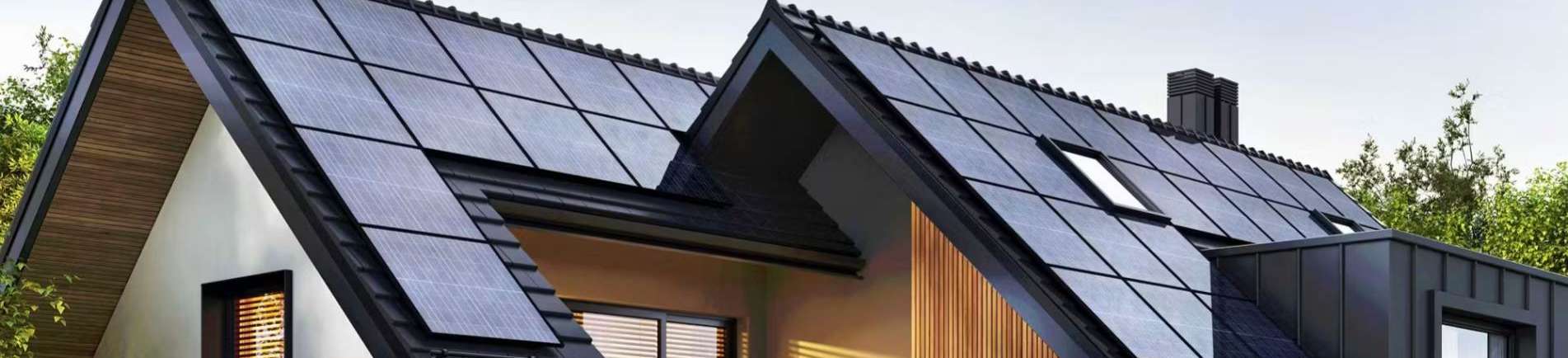
A megawatt of flat photovoltaic tile on a Malaysian factory roof, wired to five outdoor cabinets that hold 250 kW for the half hour the meter is watching. The tiles replace the waterproofing layer rather than sit on top of it, so they are paid for twice: once as a roof, once as a generator.
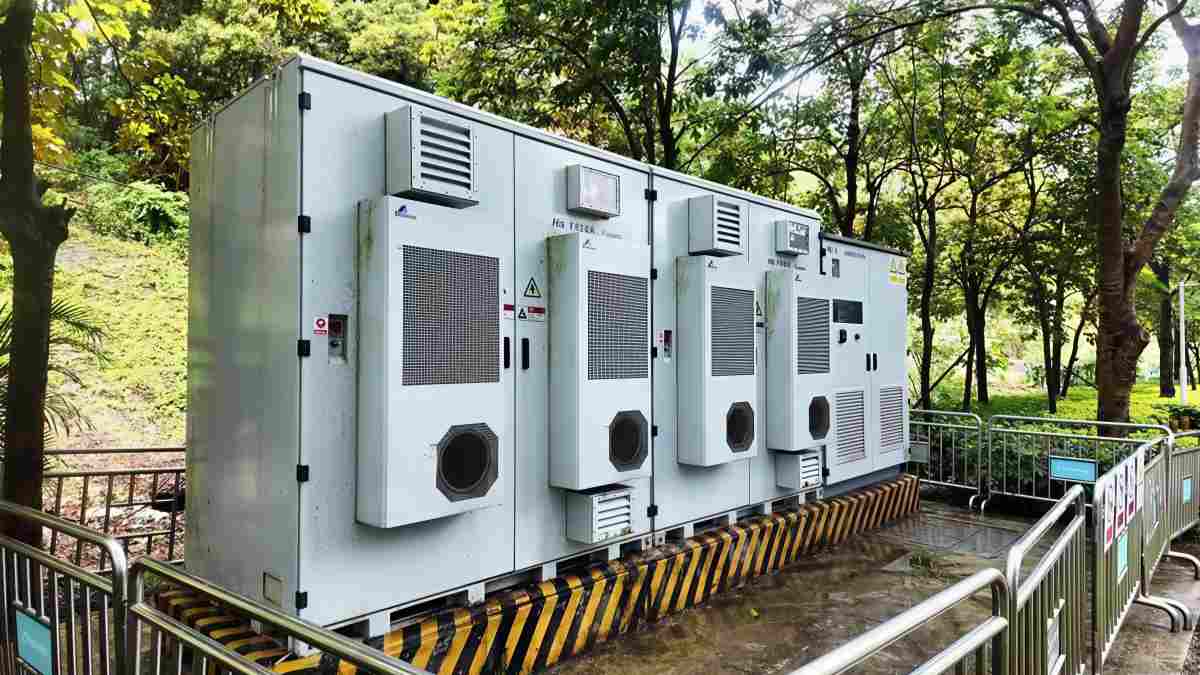
The reference build. Voltages, dimensions and weights come from the current datasheet.
| Location | Peninsular Malaysia, single-storey production hall |
| Roof area | About 6,300 m² of deck |
| BIPV tile | GW30, 110 W, 1,060 × 650 × 35 mm, 20.09% efficiency |
| Tile count | 9,091 pieces |
| Array capacity | 1,000 kWp, 159.7 W/m² of deck |
| Added roof load | 12.9 kg/m² before battens and fixings |
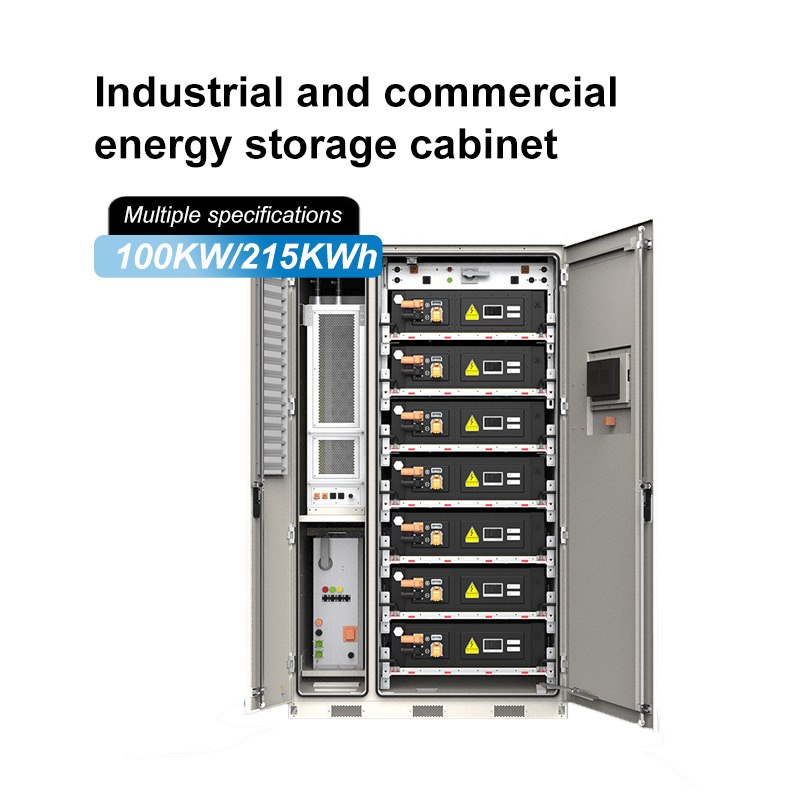
| Storage | Five GM-ESSA0050B cabinets, 250 kW / 276.48 kWh |
| Battery | LFP, 460.8 V nominal, 403.2 to 511.2 V, 1C |
| Cabinet | IP54, 0 to 45 °C, under 75 dB, aerosol suppression |
| Grid interface | 400 V, 3P+N+PE, 200/400 V isolation transformer |
| Tariff | Medium voltage, time-of-use |
| Warranty | 25 years on tile power, 3 years on cabinets |
A flat tile is not a framed module, and the difference shows in the area bill. The GW30 is 1,060 by 650 mm at 110 W, or 159.7 W/m²; a 650 W TOPCon module lands near 230 W/m², so a megawatt of tile needs 6,300 m² where a megawatt of module needs 4,300 m².
| Metric | GW30 flat tile | Framed TOPCon module |
|---|---|---|
| Area for 1 MWp | 6,300 m² | 4,300 m² |
| Output per m² | 159.7 W | About 230 W |
| Dead load | 12.9 kg/m² | 10 to 14 kg/m² with rails |
| Roof function | Is the weatherproof layer | Sits above a membrane |
Here the area penalty is not a penalty: the tile is the waterproofing, so nothing is ballasted and no rail is bought. Output is another story. From 4.0 kWh/m²/day and 80 percent system efficiency, 1,000 kWp returns about 1.17 GWh a year, concentrated between 10:00 and 16:00 and peaking near 750 kW at midday. That is why a storage cabinet appears here.
A quarter of a megawatt-hour behind a megawatt reads like a rounding error, and in Europe it would be. Malaysian demand charges work differently.
TNB records maximum demand as the highest average power over any thirty-minute window in the billing month. One bad half hour sets the charge for the whole month, and the charge is per kilowatt, not per kilowatt-hour. A plant that runs 900 kW all month and touches 1,300 kW for thirty minutes, when four chillers restart at shift change, pays for 1,300 kW.
Clipping that half hour needs energy, not duration: 250 kW for thirty minutes is 125 kWh, and five cabinets hold 276.48 kWh, so one event takes 45 percent of the block. At 50 kW each they run at 0.90C, inside the 1C capability of the cells, so 250 kW is continuous rather than a burst.
The real limit is energy. Holding 200 kW across the whole 14:00 to 22:00 window takes about 1,600 kWh, six times what five cabinets hold, so an eight-hour peak cannot be clipped at any discharge rate. It takes more cabinets, not different ones: each adds 50 kW and 55.296 kWh on the same parallel bus.
Malaysian C&I tariffs were restructured on 1 July 2025 and run to 31 December 2027 under Regulatory Period 4. The maximum demand charge split into a capacity and a network charge, and categories moved from business type to supply voltage.
| Charge | MV general | MV time-of-use |
|---|---|---|
| Energy charge | 29.83 sen/kWh | 31.32 sen peak, 27.23 sen off-peak |
| Capacity charge | RM 29.43/kW | RM 30.19/kW of peak demand |
| Network charge | RM 59.84/kW | RM 66.87/kW of peak demand |
| Retail charge | RM 200/month | RM 200/month |
| Demand-based total | RM 89.27/kW | RM 97.06/kW |
Both are levied per kilowatt, so a plant that cuts consumption but keeps its peak saves nothing there. On time-of-use they apply only to the highest demand inside the 14:00 to 22:00 window on weekdays, and the rates are locked to the end of 2027. A plant drawing 1,400 kW at peak pays 1,400 × RM 97.06 = RM 135,884 a month before a kilowatt-hour is billed. The energy charge is small beside it: the peak-to-off-peak spread is 4.09 sen, and a 276 kWh block cycling daily moves RM 11.
Until mid-2025 Malaysian rooftop solar ran on Net Energy Metering, which offset exports against imports at the retail rate. That quota closed to new applications on 30 June 2025, and for the rest of the year no export-credit scheme was open.
Solar ATAP, in force since 1 January 2026 under guideline GP/ST/No. 60/2025, credits exports at the monthly average system marginal price rather than the retail rate: RM 0.1911/kWh in January 2026, RM 0.1893 in February, against 31.32 sen at peak.
Unused credit expires at the end of each billing period: under NEM it carried forward for twelve months, under ATAP it is forfeited and cannot offset the fuel adjustment. Export is capped at capacity × 5 hours × billing days, and at the energy imported that month.
Size is capped at 100 percent of maximum demand and at 1,000 kWac of inverter output. This plant records 1,400 kW, so the demand test would have allowed more; the kWac ceiling is what stops it.
Self-consumption is therefore worth 27 to 31 sen while export is worth about 19 and cannot be banked, which is why storage earns its place here. It also means the array should not be oversized: a 1 MW roof on a 600 kW daytime load exports a third of its production and never recovers it.
| Scenario | Investment | Annual net benefit | Simple payback |
|---|---|---|---|
| Storage only, five cabinets | RM 0.40 to 0.55 M | RM 220,000 | 1.8 to 2.5 years |
| Roof only, 1 MWp BIPV | RM 3.5 to 4.5 M | RM 300,000 | 11.7 to 15.0 years |
| Both, as built | RM 3.9 to 5.05 M | RM 520,000 | 7.5 to 9.7 years |
The roof line saves energy: at 1.17 GWh and 90 percent self-consumption the plant avoids buying about 1.05 GWh, which weighted two thirds off-peak and one third at peak comes to an average 28.6 sen, about RM 300,000 a year. The cabinet line saves demand: clipping 200 kW off a 1,400 kW peak avoids 200 × RM 97.06 × 12 = RM 233,000, less RM 9,000 to 12,000 of recharge energy.
Most clients find that backwards: storage pays back in two years, the roof in more than a decade, yet the project was built roof-first, because the roof was bought as a roof at a price a membrane renewal would have carried. Judged as energy it is marginal; judged as a roof that generates, it pays twice.
The engineering question on a BIPV retrofit is not whether the roof carries the tiles: at 12.9 kg/m² the tile layer weighs less than the membrane and insulation it replaces. The question is the interface.
Here the tiles went down as a replacement roof, not an overlay. The waterproofing was stripped to the deck, battens and flashings went in, and the tile became the weatherproof surface. That costs more labour, but it removes the trapped-moisture problem that ruins overlays within three wet seasons, and lets the owner book the renewal inside the same capital request.
Working around production decides the schedule. The hall could not be shut, so the roof was divided into bays, each opened, tiled and closed inside one dry-weather window measured in hours. Nine thousand tiles at 8.9 kg each is 81 tonnes to lift.
On a metal sandwich deck the tiles clamp to purlins through the panel, penetrations are sealed with EPDM collars, and the span is checked against dead load plus wind uplift. Where a client wants the array above an intact membrane, the Triple-Arch Hantile fits better: 32 W per piece on a curved interlocking profile that handles steeper pitches and reads as a traditional roof.
Kuala Lumpur is the most lightning-prone capital on earth, and ground flash density across central Peninsular Malaysia peaks around 12 flashes per square kilometre a year. MS IEC 62305 is enforced under Arahan/ST/No. 4/2019, and Part 2 requires a risk assessment to set the protection level first.
So the frame is bonded to the earth termination network at multiple points, separation distances are calculated rather than assumed, and surge protective devices sit at the DC combiner and the AC output of every cabinet.
Rain is the second issue, and the one the tile is designed around. Peninsular Malaysia receives 2,400 to 2,600 mm a year, much of it in afternoon events of 30 to 60 mm an hour. A framed module sheds water onto whatever is underneath; a tile is the roof, so every lap and flashing has to be right the first time.
Heat matters less for the roof than for where the electronics sit. Ambient runs 27 to 33 °C at humidity near 80 percent, and a dark roof in full sun reaches 60 to 70 °C, costing the GW30 about 7 percent of output for a 25 °C rise. The cabinets sit at ground level, right for maintenance and wrong for ambient: a pad beside a west-facing wall runs 5 °C hotter, and the GM-ESSA0050B is rated to 45 °C with no margin.
A single-shift plant drawing 900 to 1,200 kW between 08:00 and 18:00 absorbs almost all of it, because output peaks near 750 kW at midday against a load above it. A three-shift plant absorbs very little.
The target is a thirty-minute window, not an eight-hour peak. Clipping needs 250 kW for 30 minutes, which is 125 kWh, and five cabinets hold 276.48 kWh, enough for two events a day.
Yes, through the thirty-minute average. On time-of-use the demand charges apply only to the highest demand inside 14:00 to 22:00, so discharging there lowers the figure RM 97.06 is applied to.
Not the whole factory. 250 kW is a fraction of a 1,400 kW peak, and 276 kWh carries 250 kW for about 1.1 hours. It can hold a critical panel: control room, lighting, servers, fire pumps and drives that cannot stop.
About 19 sen against 27 to 31 sen avoided by self-consumption, and unused credit is forfeited each billing period. Export is a residual, which is why the array is sized to the daytime load.
Sizing a BIPV roof or a storage block for a factory in Malaysia or Southeast Asia? Send the roof area, the connection voltage, twelve months of half-hourly demand data and the shift pattern. We will come back with a tile count, a cabinet count and the demand charge it removes.
Stay up to date with GreenMore. We share new BIPV solar tile releases, product and certification updates, and field notes from our projects — no fluff, just the things that matter to installers, distributors, and system integrators. If there's something you'd like to see covered, drop us a line — we read every reply.




Copyright @ 2026 GreenMore All Rights Reserved.  Network Supported
Sitemap / Blog / Xml / Privacy Policy