Welcome to GreenMore
Welcome to GreenMore
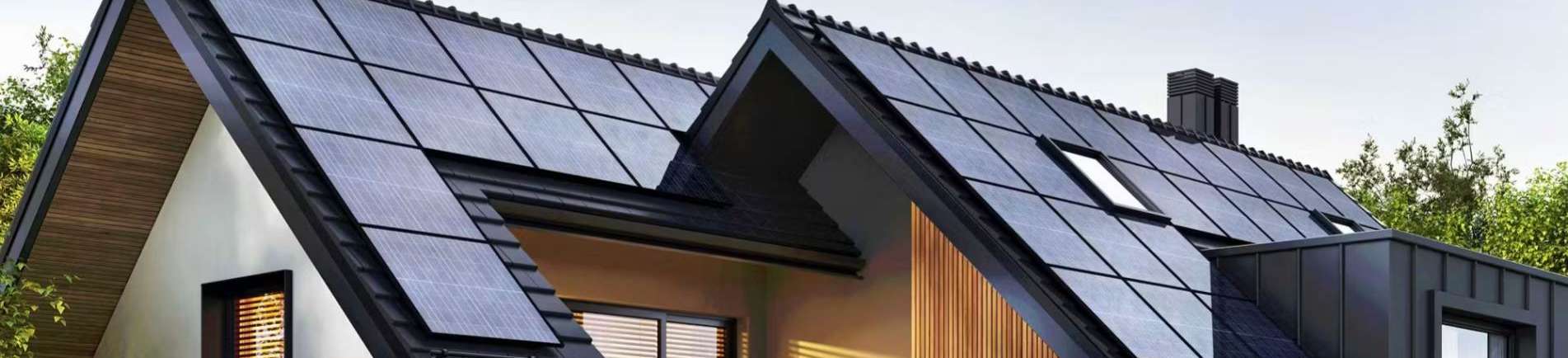
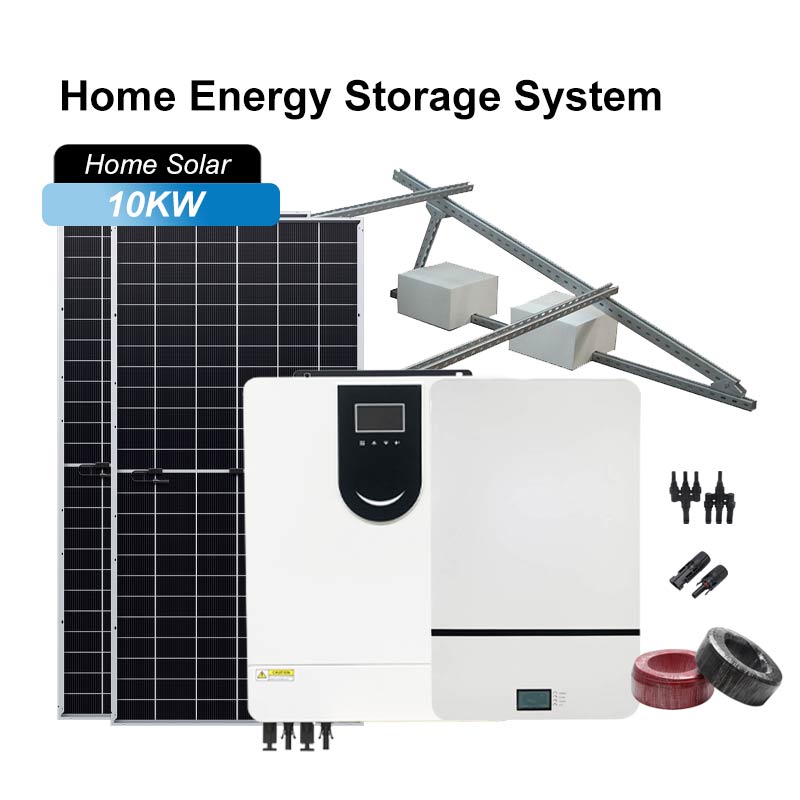
A 25 kW roof in Japan is not a house system with the numbers turned up. It sits above the 10 kW residential threshold, which moves it into the commercial rooftop tariff with a self-consumption obligation, and it takes 770 triple-arch tiles covering about 269 m² to build. This villa splits that field across two three-phase hybrids, 15 kW and 10 kW, with 20.48 kWh of LFP storage behind them, and the design only makes sense once the tariff category, the string arithmetic and the 8.3 yen export price are on the same page.
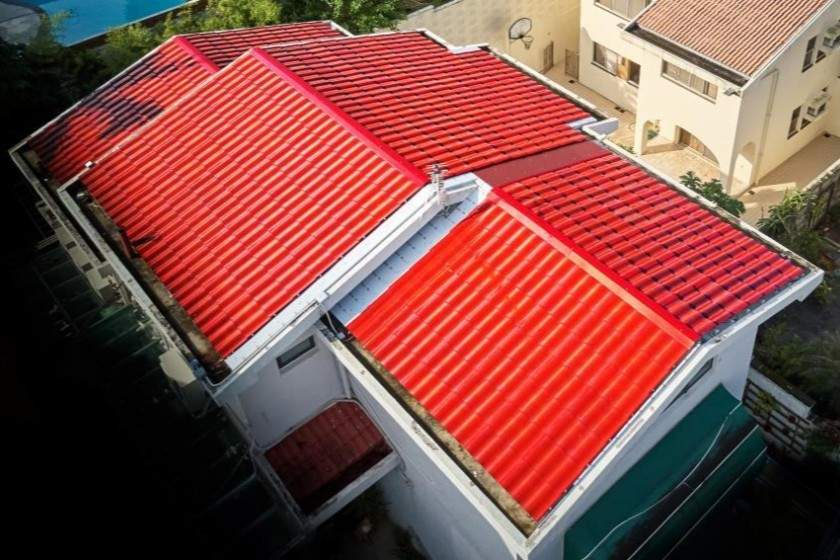
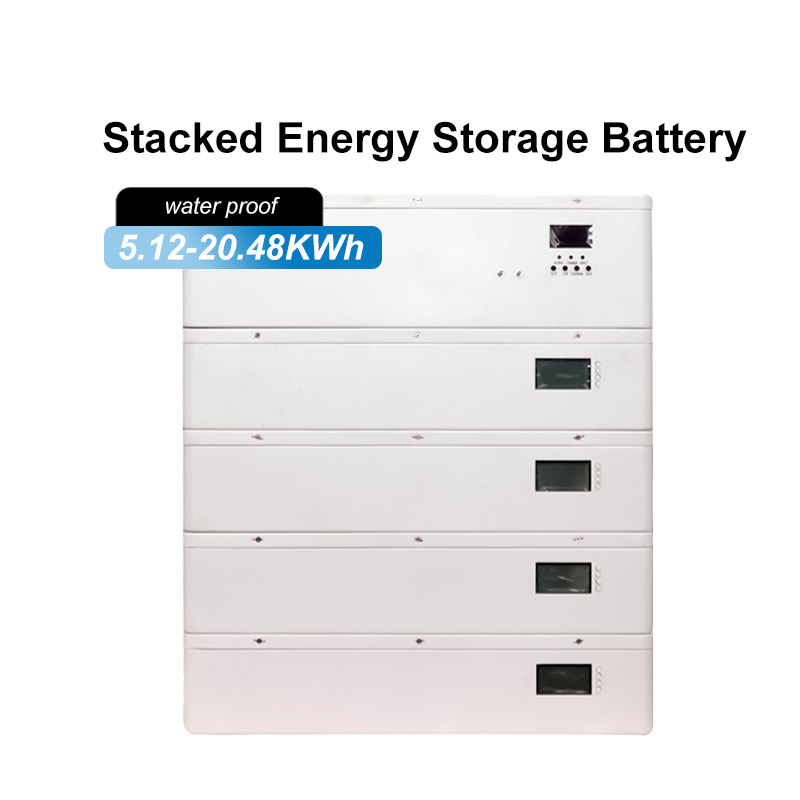
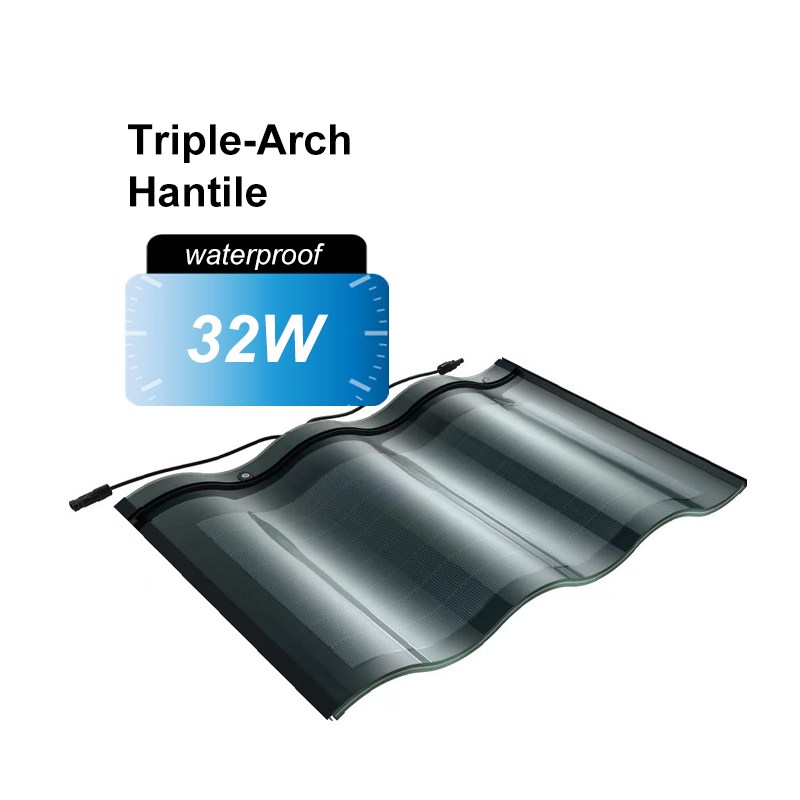
The roof is covered with triple-arch Hantile photovoltaic tiles, the 32 W red glazed profile that reproduces the wave of a Japanese kawara roof. Under it sit four 5.12 kWh wall batteries and two three-phase hybrids, a 15 kW and a 10 kW, both switching to backup in under 10 ms. Surplus goes to the battery first and to the grid second, which is the only sensible order in Japan once the export price drops to 8.3 yen.
A Japanese villa roof is a different structural object from a European one. The tile field has to carry snow in the north, wind in the typhoon belt, and freeze-thaw cycles in between, and it has to look like the roof the neighbours expect. That is the reason a 32 W tile with a 700 × 500 mm footprint exists at all: it is the size that fits the batten spacing of a traditional roof, and everything else follows from that decision.
The field is split across two units, and the split is arithmetic rather than redundancy. A 32 W tile sits at 8.9 V under load, so a string that stays inside the 850 V MPPT window on a cold morning holds 70 tiles and 2.24 kW, which makes 24.64 kWp eleven strings. Seven go to the 15 kW unit and four to the 10 kW unit, paralleled at the combiner so that no tracker sees more than 14.4 A against a 20 A limit. One 15 kW unit cannot absorb this roof: it has four string inputs and a 22.5 kWp DC ceiling, and eleven strings is not four.
| System Type | Grid-tied hybrid with battery backup, 25 kW AC on a 24.64 kWp BIPV tile field |
| Location | Japan, low-voltage interconnection |
| Array Capacity | 24.64 kWp, 770 × 32 W triple-arch tiles (GM-HW32L) |
| Tile Field | About 269 m² at 700 × 500 mm per tile |
| Roof Load | About 5.0 t of tiles at 6.5 kg each, or 18.6 kg/m² |
| Inverter | Two three-phase hybrids in parallel: GM-HW15K at 15 kW and 16.5 kVA with a 22.5 kWp DC ceiling, GM-HW10K at 10 kW and 11 kVA with a 15 kWp ceiling |
| String Layout | 11 strings of 70 tiles, 756 V open circuit at 25 °C and 848 V at minus 10 °C; seven strings on the 15 kW unit, four on the 10 kW unit |
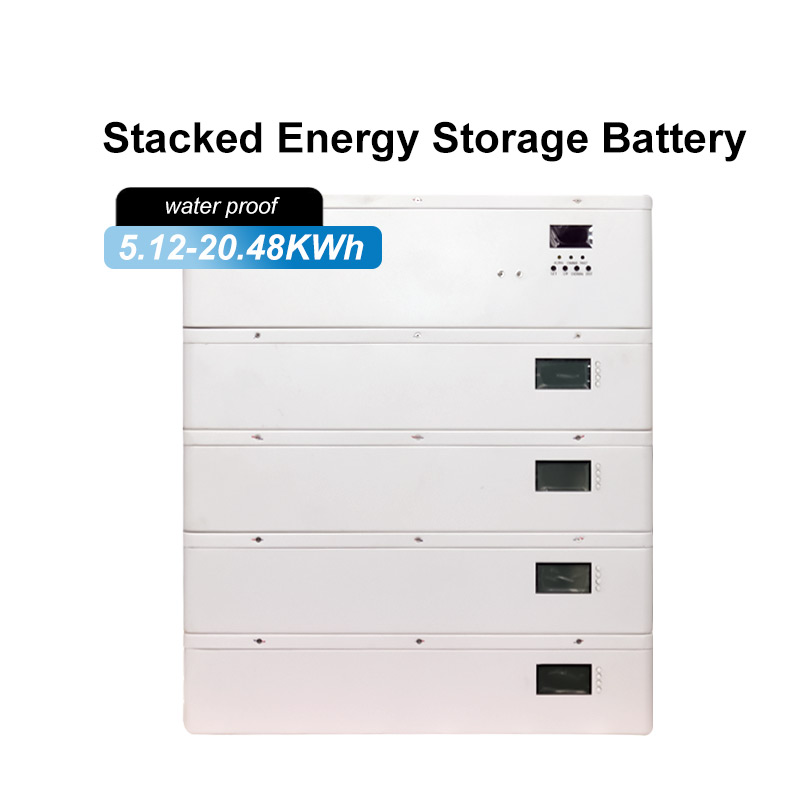
| Battery | 20.48 kWh LFP, four 5.12 kWh wall units in parallel, 16.38 kWh usable at 80% depth of discharge, 6,000+ cycles |
| Daily Generation | 76 kWh a day in Tokyo in the weakest month, 97 kWh in the strongest |
| Annual Generation | 31,600 kWh in Tokyo, 30,800 in Fukuoka, 33,200 in Sapporo, at optimal tilt with 14% system loss |
| Backup Duration | About 13 hours at a 1.2 kW base load, 7 hours with one inverter air conditioner running |
| Protection | IP65 inverter, IP54 battery enclosure, IP67 tile junction box |
| Certification | Tiles EN 14782 and CE, Class C fire rating, 5,400 Pa load; battery CE, IEC, UN38.3, MSDS |
| Warranty | Tiles 25 years linear power output; inverter and battery 3 years |
| Lead Time | 15 days for tiles, 20 days for battery and inverter |
Japan is 3,000 km long and the yield difference between the north and the south is smaller than most buyers expect, but the shape of the year is not. The table below is PVGIS 5.3 at 24.64 kWp with a 14% system loss, each site at its own optimal tilt.
| Site | Optimal tilt | Annual output, 24.64 kWp |
| Tokyo | 36° | 31,603 kWh |
| Osaka | 35° | 33,032 kWh |
| Sapporo | 41° | 33,185 kWh |
| Sendai | 39° | 32,628 kWh |
| Fukuoka | 32° | 30,808 kWh |
Tokyo returns 1,283 kWh for every installed kilowatt and Sapporo returns 1,347, because cold air and clear winter skies beat humid summer haze. Set that against 1,721 kWh in Tel Aviv and the practical consequence is blunt: the same 25 kW needs about a third more roof in Japan to make the same annual energy as a Middle Eastern site, and the roof is usually the constraint, not the budget.
The month that decides the battery is December in the north. Sapporo runs from 2,050 kWh in December to 3,720 kWh in March, a factor of 1.8, and the low month arrives exactly when the heat pump load is highest. Tokyo is flatter, 2,270 kWh in November to 3,008 in March, a factor of 1.33, and Fukuoka sits at 1.53. Any proposal that shows one monthly saving for all twelve months is hiding the north-south difference that the battery has to absorb.
Tilt is worth more here than in the tropics. Tokyo at 36° is the optimum, and a roof pitched at 20° gives up about 3% of the annual total while gaining 8% in June and July, which is often the better trade for a house that runs air conditioning in August. A roof at 10° or flatter is a different conversation, because the tiles will not self-clean in the rainy season and the yield loss compounds with soiling.
Japan’s residential feed-in tariff stops at 10 kW. Below that line a household gets the two-step rate introduced in October 2025 and continued through 2026 and 2027: 24 yen per kWh for the first four years and 8.3 yen for years five to ten, on a ten-year term, which averages 14.58 yen. Above 10 kW and below 50 kW, a rooftop system moves to the commercial category: 19 yen for the first five years, 8.3 yen for years six to twenty, on a twenty-year term, and with an obligation to self-consume at least 30% of generation.
That obligation is the reason this roof carries 20 kWh of battery rather than none. Thirty percent of 31,600 kWh is 9,480 kWh a year that has to be used on site, and a villa without storage cannot absorb that much during the hours it is producing. The battery turns midday surplus into evening consumption, which satisfies the condition and also captures the price gap between 27.45 yen, the value METI assigns to a self-consumed kilowatt-hour, and 8.3 yen of export.
Two more numbers belong in the same paragraph. The renewable energy levy for fiscal 2026 is 4.18 yen per kWh, up from 3.98 in 2025, and it is charged on every unit drawn from the grid, which raises the value of self-consumption without appearing in any quotation. And the post-FIT buyback price, once the ten or twenty years are over, is around 8.50 yen at the major utilities, so the long-run value of an exported kilowatt is roughly a third of a self-consumed one.
The 25 kW size also stays under the 50 kW low-voltage ceiling, which keeps the interconnection work in the ordinary category rather than the high-voltage one. That is worth saying out loud, because 50 kW is the number where a Japanese project stops being a big house job and becomes a substation conversation.
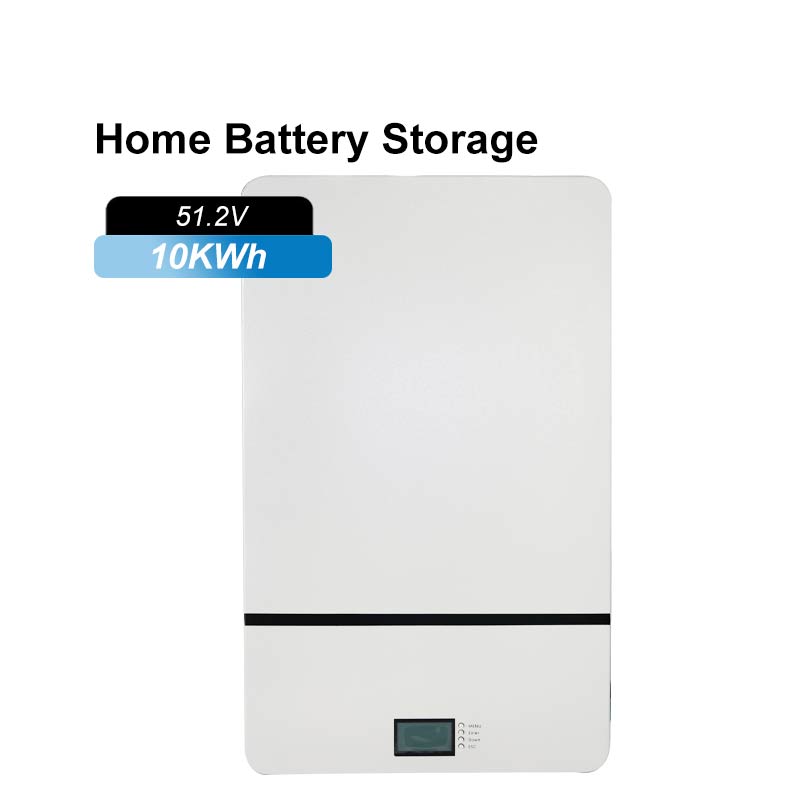
Four wall units make 20.48 kWh, and the inverter stops at 80% depth of discharge, so the usable figure is 16.38 kWh. The wall-mounted LFP battery is rated above 6,000 cycles at that depth, which is more than sixteen years of a full cycle a day, and the parallel architecture means one unit can be swapped without taking the array offline.
At METI’s 27.45 yen per kWh for self-consumed power, a full cycle is worth about 450 yen. Exported instead at 8.3 yen, the same 16.38 kWh earns 136 yen. The gap is 314 yen a night, and three hundred nights of it is roughly 94,000 yen a year, which is the number that has to justify the pack. A base load of 1.2 kW runs for thirteen hours on the pack; add one inverter air conditioner at 1.1 kW and the figure falls to seven hours. Three rooms cooled at once draw 3.3 kW and the pack is done in five.
The honest limit is the same as everywhere else: this battery carries a Japanese villa through the evening and the night, not through a three-day typhoon outage with the air conditioning on. A house that expects the second case needs either a second bank of units or a generator, and the quotation should say which one it is providing.
Tokyo runs the most generous residential storage grant in the country: 100,000 yen per kWh of capacity for a new system, capped at 1.2 million yen per household if the owner does not join the demand-response demonstration. The cap starts to bite at 12 kWh, which is exactly where a 20 kWh pack becomes interesting, because a household that does join the demonstration loses the cap and collects a flat 100,000 yen on top. On 20.48 kWh that is about 2.15 million yen against 1.2 million without it.
Three conditions matter more than the amount. The equipment has to be SII-registered, which is a registration step an imported pack has to clear before the application, not after. The application window opened on 29 May 2026 and closes when the budget is used up. And the requirements were tightened for applications filed from 1 October 2026, so a quotation built on the spring rules may not survive the autumn. Outside Tokyo the same logic applies at smaller amounts through prefectural and municipal programmes.
Japan is the one major market where the electrical interface is the hard part. A detached house is served at single-phase three-wire 100/200 V, a larger building at three-phase three-wire 200 V, and the country runs at 50 Hz east of the Fuji River and 60 Hz to the west. The GM-HW15K three-phase hybrid accepts both, 45 to 55 Hz and 55 to 65 Hz, so 50 or 60 Hz is a setting rather than an obstacle.
Voltage is the part that has to be settled before the order, not during commissioning. The GM-HW series leaves the factory as a 3L+N+PE machine rated 220/380 V or 230/400 V, and 200 V three-phase three-wire is not in that list. The platform is built to order, so a Japan-bound batch can be set up for 200 V three-phase three-wire output with the protection thresholds that go with it, and the neutral terminal is left out because a three-wire service has none. That is a configuration change on the production order, not a field modification.
The grid interface is a separate piece of the job. Low-voltage interconnection in Japan runs through the utility’s review and, in practice, through JET-certified protective equipment on the customer side, and that certificate belongs to the Japanese equipment rather than to the inverter. The hardware carries IEC 61000-6, EN 62109-1 and -2, EN 50549-1 and -10, VDE-AR-N 4105, CEI 0-21, G98/G99 and NRS 097 — the European, UK and South African codes a distributor needs. A Japanese project pairs it with a local interface; it does not claim a Japanese approval the unit does not hold, and a quotation that says otherwise is worth reading twice.
Two fallbacks exist and both cost money. A 400/200 V isolation transformer keeps the standard build and adds roughly 3% conversion loss plus a floor-standing box next to the inverter. A backup-only design keeps the hybrid on the EPS output and leaves the grid entirely to certified Japanese equipment, which suits a house that wants outage protection more than export revenue.
The GM-HW32L carries a 5,400 Pa front static load, a Class C fire rating and a hail rating of 25 mm at 23 m/s, and it is built as glass-glass with an aluminium frame. At 6.5 kg on 0.35 m² the field weighs 18.6 kg/m², which is roughly a third of a traditional clay tile roof at 45 to 55 kg/m². On a Japanese house that is a structural credit rather than a cost, and it is the argument that convinces a builder faster than any efficiency figure.
Snow is a design problem, not a datasheet problem. The Building Standards Law sets the design snow load by municipality and the 5,400 Pa rating is the tile’s own limit, so in snow country the roof structure and the fixing schedule decide the outcome. Snow guards are the detail that catches people out: they are standard on Japanese roofs to stop snow sliding onto the street, and every guard casts a shadow on the tiles below it. The string layout has to be drawn after the snow guard schedule, not before.
Wind follows the same logic in reverse. Design wind speed is set per municipality and the tile is mechanically fixed to the batten with hooks and screws, so the resistance comes from the fixing pattern rather than the glass. The triple-arch profile sheds water through the interlock, and the freeze-thaw question is answered by the glass-glass laminate rather than by a coating that can craze.
The tile is 700 × 500 × 33 mm at 32 W, with an open-circuit voltage of 10.8 V and a short-circuit current of 4.1 A. Those numbers look small until they meet a roof: 24.64 kWp is 770 tiles, 269 m² and about five tonnes. A roof of 150 m² holds about 13.7 kW of this tile, which is the figure to quote when a client asks whether their villa can carry 25 kW.
The voltage window sets the string length. Seventy tiles sit at 756 V open circuit at 25 °C and 848 V at minus 10 °C, inside the 850 V tracker ceiling with a few volts to spare; a seventy-first tile takes a cold morning over that line. Each string carries 2.24 kW, so 24.64 kWp is eleven strings, and the working voltage of 623 V keeps every string inside the 250 to 850 V full-load band rather than at its edge.
That string count is what fixes the inverter count, and it is the number most quotations leave out. Seven strings land on the 15 kW unit and four on the 10 kW unit, paralleled at the combiner: four strings on one tracker of the larger unit is 14.4 A against a 20 A limit, and two strings on each tracker of the smaller unit is 7.2 A against 18 A. In Hokkaido the design temperature drops to minus 15 °C, where the same string reaches 861 V, so snow-country roofs run 69 tiles per string and 759 tiles in total.
The reason to use this tile rather than a framed module on rails is the roof itself. The interlocked profile is the covering, the battens and the waterproofing are the ones a Japanese roofer already installs, and the finished roof reads as a red kawara roof from the street. GreenMore also makes the flatter stacked profile at 115 W for roofs where the wave is not wanted, and the full tile range covers the colour options.
The roof is the first limit, not the equipment. A 269 m² tile field means a main house plus an annex, a garage wing or a hall roof; a villa with 120 m² of tile surface holds 11 kW, and no string layout turns 120 m² into 25 kW. When a client asks for 25 kW on a 130 m² roof, the honest answer is a different tile, a ground mount or a smaller system, and the 10 kW home storage system is the one that keeps the residential tariff.
The service is the second. A single-phase 100/200 V house with a 60 A main cannot present a 25 kW three-phase load without an upgrade, and the distributor will say so before the inverter does. What the size does buy is headroom under the 50 kW low-voltage ceiling, which keeps the interconnection in the ordinary category instead of the high-voltage one.
Shading is the third, and it bites harder on a tiled roof than on a rail-mounted array. Eleven strings on four trackers means the layout has to keep chimneys, dormers, ridge caps and snow guards off the same string, because one shaded tile pulls its string down and a 2.24 kW string has no headroom to absorb the loss. The snow guard schedule has to be drawn before the string plan, not after it.
Where the roof is larger and the load is real, the 40 kW system with 30 kWh of storage is the next step; where the load is a normal household, 10 kW is the right size and the residential tariff still applies.
GM-HW32L, 700 × 500 × 33 mm, 6.5 kg, 32 W at 10.8 V and 4.1 A, glass-glass laminate with an aluminium frame, IP67 junction box and MC4 connectors, 5,400 Pa static load, Class C fire rating, EN 14782 and CE, 25-year linear power warranty. 770 units make the 24.64 kWp field. View the tile specification.
Four GM-ESS-B100S16 units in parallel, 5.12 kWh each at 51.2 V, 6,000+ cycles, IP54 enclosure with natural cooling, CAN and RS485 to the inverter, CE, IEC, MSDS and UN38.3, 3-year warranty. Expansion uses the same wall-mount format. View the battery specification.
15 kW rated and 16.5 kVA maximum on the larger unit, 10 kW and 11 kVA on the smaller, 21.7 A and 14.4 A of rated grid current, 97.9% peak efficiency, two MPPT trackers each with a 180 to 850 V range, 1,000 V maximum DC input, 22.5 and 15 kWp PV ceilings, 150 to 550 V battery window, backup switching under 10 ms with THDu below 2%, 100% unbalanced load support, IP65, and parallel operation across the range. The larger unit carries four string inputs and the smaller two, which is what makes the seven-four split work. View the inverter specification.
About 31,600 kWh a year in Tokyo, 30,800 in Fukuoka, 32,600 in Sendai, 33,000 in Osaka and 33,200 in Sapporo, at each site’s optimal tilt with a 14% system loss. Tokyo runs from 2,270 kWh in November to 3,008 kWh in March; Sapporo runs from 2,050 in December to 3,720 in March.
Japan’s residential feed-in tariff stops at 10 kW. A 25 kW rooftop moves to the commercial category: 19 yen per kWh for the first five years and 8.3 yen for years six to twenty on a twenty-year term, with an obligation to self-consume at least 30% of generation, which is 9,480 kWh a year on this array. That obligation is what the 20 kWh battery is for.
770 tiles at 700 × 500 mm, about 269 m² and five tonnes. A 150 m² roof holds about 13.7 kW of the same tile, and 120 m² holds about 11 kW.
Eleven strings of 70 tiles: seven on the 15 kW unit for 15.68 kWp and four on the 10 kW unit for 8.96 kWp, paralleled at the combiner so no tracker exceeds 14.4 A. A single 15 kW unit cannot take the whole field: it has four string inputs and a 22.5 kWp DC ceiling, and four inputs cannot take eleven strings.
The units accept 45 to 55 Hz and 55 to 65 Hz, so 50 or 60 Hz is a setting. Voltage is the issue: the standard build is 220/380 V or 230/400 V three-phase with a neutral, while a Japanese building is served at 200 V three-phase three-wire or single-phase 100/200 V. Japan-bound units are built to order for 200 V three-wire output, and the grid interface goes through the utility review and JET-certified protective equipment on the customer side.
Tokyo pays 100,000 yen per kWh with a 1.2 million yen cap for households outside the demand-response demonstration, which caps at 12 kWh. Joining the demonstration removes the cap and adds a flat 100,000 yen, taking a 20.48 kWh pack to about 2.15 million yen. Equipment must be SII-registered.
The pack gives 16.38 kWh of usable capacity, worth about 450 yen at METI’s 27.45 yen per kWh for self-consumed power. Exported at 8.3 yen the same energy earns 136 yen, so the nightly gap is about 314 yen, or roughly 94,000 yen over three hundred nights.
Planning a roof in Japan? Send the roof area, the pitch, the prefecture, the service type and the load list, and GreenMore will return the tile count, the string layout, the inverter configuration and the battery size for that site. Talk to our team →
Stay up to date with GreenMore. We share new BIPV solar tile releases, product and certification updates, and field notes from our projects — no fluff, just the things that matter to installers, distributors, and system integrators. If there's something you'd like to see covered, drop us a line — we read every reply.




Copyright @ 2026 GreenMore All Rights Reserved.  Network Supported
Sitemap / Blog / Xml / Privacy Policy