Welcome to GreenMore
Welcome to GreenMore
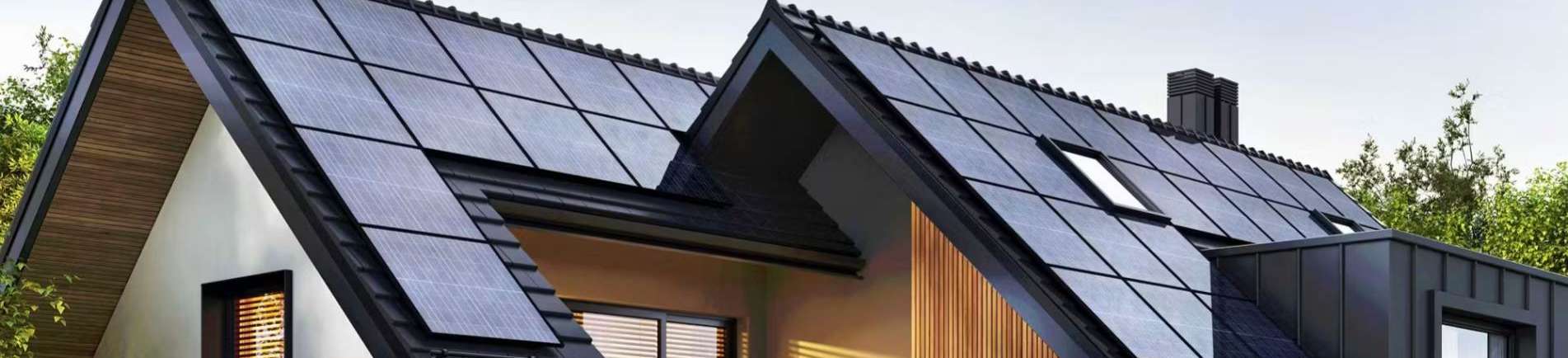
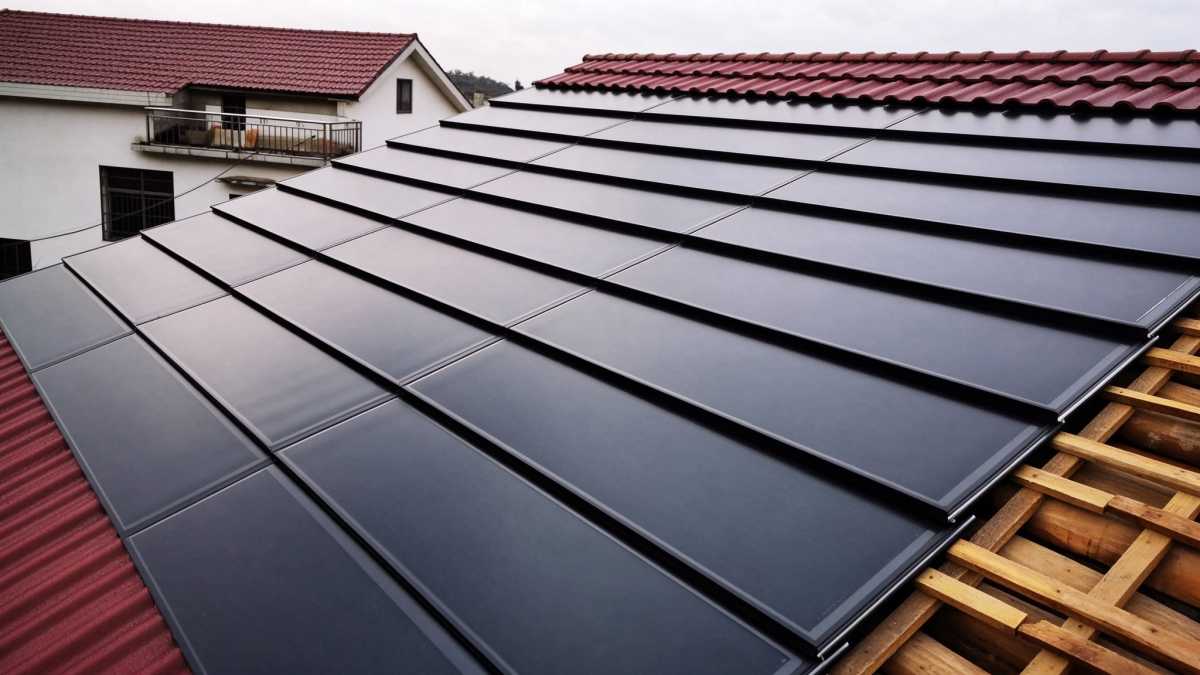
A 15 kWp roof in Vietnam, covered in 134 GreenMore stacked photovoltaic tiles, with two 8 kW GM-LW802 inverters and a 10.24 kWh battery in the plant room. The tiles are the roof — lapping like shingles, no racking, no membrane above them. In a climate of monsoon rain, coastal humidity and 40 °C April afternoons, that detail matters more than the spec sheet. So does the tariff: Vietnam's household rates step up with consumption, so a self-consumed kilowatt-hour is worth twice as much to a large user as to a small one.
| System Type | Residential BIPV roof with battery storage |
| Location | Vietnam |
| System Capacity | 15 kWp / 10.24 kWh storage |
| Solar Roof | 134 × GM-LDM112 stacked tile, about 97 m² |
| DC Configuration | 3 runs of 44–45 tiles, 373 V open circuit each |
| Inverter | 2 × GM-LW802, 8 kW each, parallel — 16 kW combined |
| Battery Storage | GM-ESS-B200S16, 10.24 kWh LiFePO4, IP54 |
| Roof Construction | Overlapping tile — waterproof by geometry, no membrane |
| Fire Rating | Class C |
| Warranty | 25-year linear power output on tiles, 3 years on inverter and battery |
The GM-LDM112 measures 1,817 × 420 mm overall, with the exposed area per course at about 0.73 m² once the lap is taken out. Fifteen kilowatts is 134 tiles, covering roughly 97 m² of roof at 154 W/m². The same capacity in 550 W conventional panels needs about 70 m², so the tile roof asks for roughly 40% more area.
Weight is the other number a structural engineer will ask for. Each tile is 9.6 kg, so the array adds 1,286 kg across the 97 m², or about 13.2 kg/m². A clay tile roof of the kind this replaces typically runs 40 to 60 kg/m², which means the solar tile is usually a net weight reduction rather than an addition — but that comparison only holds if the old covering comes off, which on this roof it did.
The area figure is what usually decides whether a tile roof is viable at all. On a small urban plot, 97 m² of roof is a villa, not a townhouse. GreenMore's smaller 32 W triple-arch tile covers the same 13.8 kWp in 151 m², which is the trade: the large-format tile buys density, the small tile buys the traditional roof profile.
This is where tile roofs stop behaving like panel roofs. The GM-LDM112 runs 8.30 V open circuit and 18.30 A short circuit — a fifth of a panel's voltage and three times its current. Every string calculation you would use on a 550 W module is wrong by a factor of five.
Two ceilings set the run length. At the bottom, the GM-LW802's MPPT starts at 90 V and needs Vmpp above that to track at all, which means at least 14 tiles per run. At the top, the 450 V MPPT limit allows about 54 tiles at standard test conditions, and closer to 51 once the open-circuit voltage rise on a cold morning is allowed for. Forty-five tiles is the practical run: 373 V open circuit, 295 V at maximum power, 5,040 W, 17.1 A.
A 134-tile roof is three runs of 44 to 45 tiles, and the two GM-LW802s offer two MPPT inputs between them, so one input takes two runs in parallel. That pair presents 34.2 A at maximum power against a 27 A ceiling. When irradiance is high enough for both runs to push past 27 A, the tracker moves up the I–V curve to hold the limit and gives up roughly a tenth of that pair’s output for an hour or two either side of noon. It is a real loss, it stays on one input, and it is what covering a 15 kWp roof with two inverters costs instead of three.
The GM-LDM series comes in 109 W, 112 W and 115 W versions, all built on 210 mm monocrystalline cells between two sheets of tempered glass with a black aluminium frame. The electrical termination is a PV-SY02 connector rated IP68 with an IP67 junction box carrying two bypass diodes — worth being precise about, because it is the connectors that are IP68, not the box.
The overlap is the point. Water runs off tile onto tile the way it does on a clay roof, so the assembly stays watertight by geometry rather than by a membrane underneath. Upper and lower hooks align each course and the units are screwed down, which is what lets a two-person crew cover a large area quickly. Certification is EN 14782 and CE, fire rating Class C, and a 25-year linear power warranty. Full tile specification · How the tiles are installed
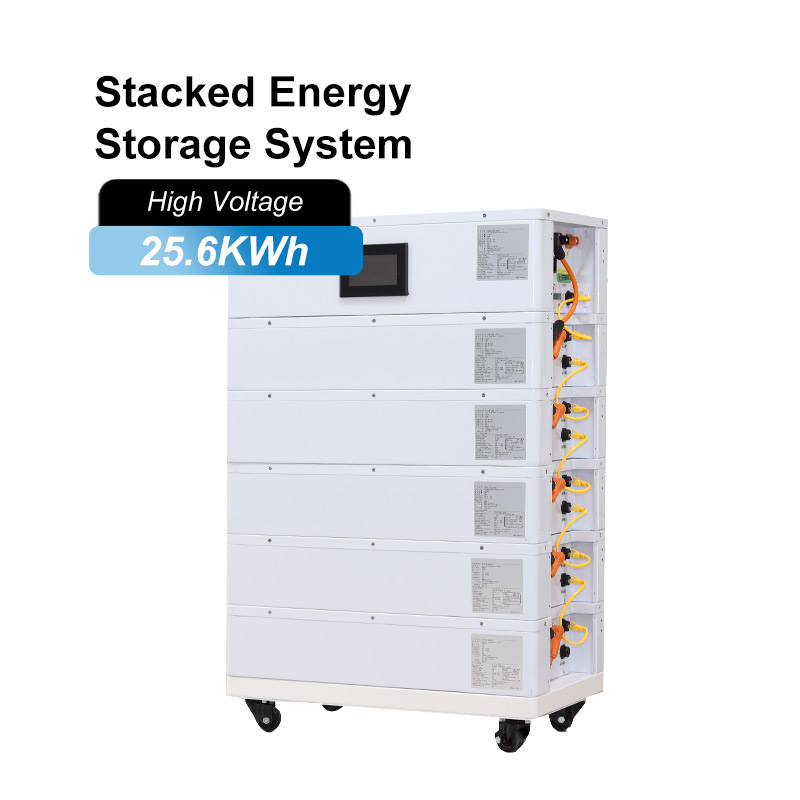
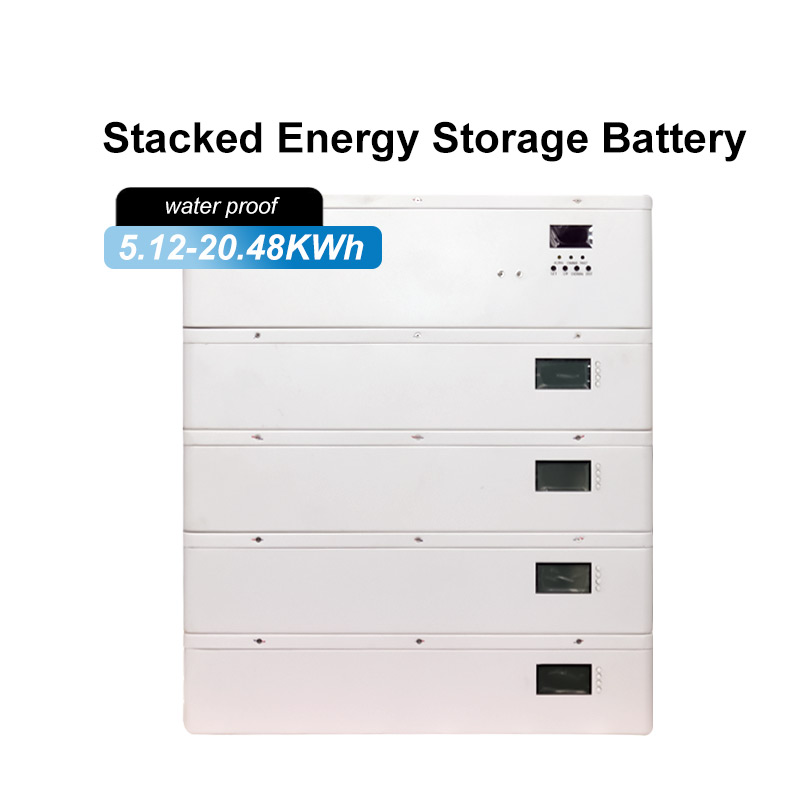
The GM-ESS-B200S16 holds 10.24 kWh in LiFePO4 cells at 51.2 V and 200 Ah, two 5.12 kWh modules stacked, 84 kg, sealed to IP54 for a humid indoor plant room. Up to ten units run in parallel for 102.4 kWh, so capacity is not fixed at handover. Cycle life is rated 6,000 cycles at 80% depth of discharge; certification is CE, IEC 62619, MSDS and UN38.3, with a 3-year warranty.
Ten kilowatt-hours against a 15 kWp array looks like a shortfall on paper and is not one in practice, because the load this roof serves runs in daylight. Four air conditioners at 1.2 kW through eight afternoon hours draw 38 kWh before the house uses anything else, and that load absorbs the array directly with no round trip. The battery's job is the evening block, and 10.24 kWh carries about 9 kWh of it after depth-of-discharge. What 10 kWh actually covers · Battery platform
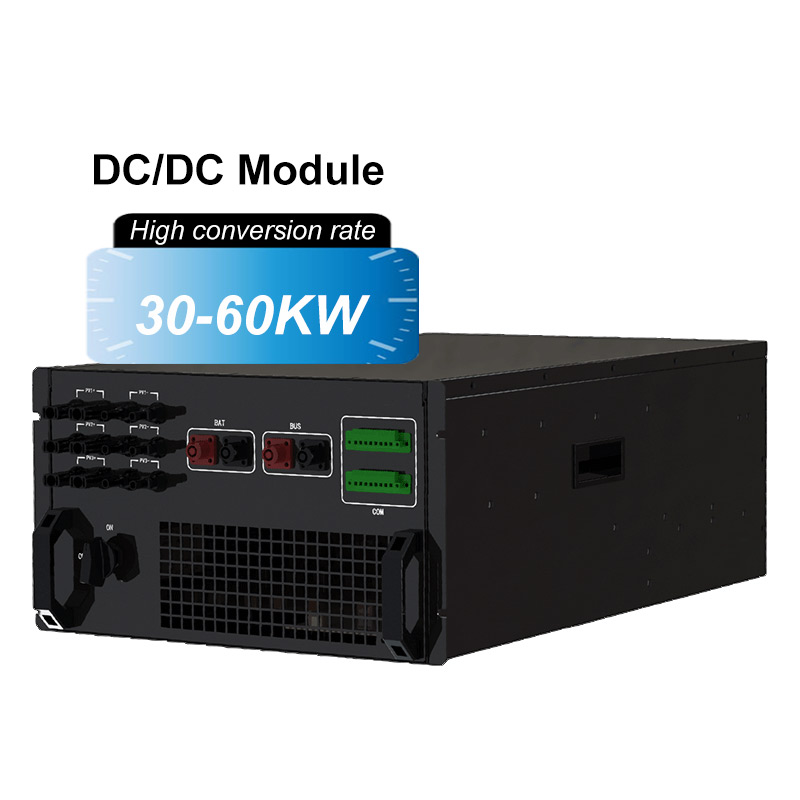
The GM-LW802 is the 8 kW model in the GM-LW series: 8,200 W rated, 16,400 W surge, 230 V pure sine wave, 98% peak efficiency, 48 V battery bus, MPPT across 90–450 V with one tracker and a 27 A input ceiling, maximum PV input 8,200 W, charge current 160 A, −10 to +50 °C, 14.2 kg. Two in parallel give 16 kW of AC capacity against a 15 kWp array.
That margin is not waste. Inverter output derates as ambient temperature climbs, and a Vietnamese plant room in April runs hot, so 16 kW of conversion against 15 kW of DC keeps the system inside its rated envelope on the days it produces most. The second benefit is redundancy: if one unit fails, the other keeps 8 kW running while a replacement is arranged, where a single 15 kW unit would take the whole house dark. Inverter platform details
Vietnam's household tariff is an increasing block, and the steps are steep. Under the five-tier structure effective 1 November 2026, the first 100 kWh a month costs 1,901 VND per kWh and anything above 700 kWh costs 3,844 VND — roughly double, before VAT. A villa running air conditioning through a Vietnamese summer sits in the top tiers for most of the year.
That has a consequence most system designs ignore: the same solar kilowatt-hour is worth twice as much to a household in tier five as to one in tier one, because it displaces the most expensive block first. Solar pays back fastest where consumption is highest, which is the opposite of how it is usually sold.
Export is the weaker half of the equation. Decree 243/2026, issued 26 June 2026, raised the share of rooftop output that can be sold into the grid from 20% to 50%, and allows more where the local network can accept it, through to the end of 2030. The price for that surplus is set well below retail. So the design rule in Vietnam is the same as in Ireland for opposite reasons: use every kilowatt-hour on site first, because the meter pays badly for what it takes.
Vietnam is not one solar resource. At a 10° tilt, PVGIS puts Hà Nội at about 1,044 kWh per kWp per year, Đà Nẵng at 1,255, Quy Nhơn at 1,325 and Ho Chi Minh City at roughly 1,426. The best provinces in Nam Trung Bộ reach 1,720 to 1,780. On 15 kWp that is a range from about 15,700 kWh a year in the north to 21,000 to 22,000 in the south — a 40% spread on identical hardware.
The seasonal shape differs too. In the south the weakest month delivers about 6.6% of annual output against 9.5% in the strongest, a shallow curve. In the north, January can fall to 57 kWh per kWp against 110 in May, so a 15 kWp roof produces about 855 kWh in the worst month and 1,650 in the best. Northern roofs need more storage per kilowatt, or more willingness to buy from the grid in January.
Overlap. Flat tiles butt against each other and depend on a frame or a seal; stacked tiles lap like shingles, so water is shed by the geometry of the roof itself. For monsoon climates that is the difference between a roof and a roof plus a waterproofing problem.
Because the voltage is low and the current high. At 8.30 V open circuit, reaching a 90 V MPPT floor takes 14 tiles, and a 450 V ceiling stops a run at about 51. A 550 W panel does the same job in a single unit. It is also why three runs on a 134-tile roof have to be paired deliberately: two in parallel reach 34.2 A against a 27 A input, so one of the two inputs runs clipped.
Yes. The GM-ESS-B200S16 supports up to ten units in parallel — 102.4 kWh total — added without replacing what is already installed. The practical upgrade path is a second unit at 20.48 kWh if the household adds cooling.
Derating and redundancy. Two units in parallel give 16 kW of AC capacity, which absorbs high-temperature output loss, and they keep half the system running if one fails. On a tile roof they also supply the two MPPT inputs that three strings have to fit into, at the cost of some clipping on the paired one.
About 9 kWh is usable after depth of discharge. That covers lighting, refrigeration, fans and electronics through an evening comfortably. Two air conditioners running six hours draw 14.4 kWh and will take the bank to its floor before morning; three will exhaust it in a few hours.
Under Decree 243/2026, up to 50% of rooftop output may be sold, up from 20% under the previous decree, with more permitted where the connecting network has capacity, through 31 December 2030. The price sits well below the retail tariff, so export is a residual use of a kilowatt-hour rather than the main one.
Yes — technical documentation, system design and remote commissioning support for distributors and installers across Southeast Asia. Custom labelling and OEM packaging are available on volume orders.
The tile replaces the existing covering rather than sitting above it, so the work is a re-roof with generation built in. That also means the structural check is against the old covering's weight, which a solar tile roof usually beats.
Planning a BIPV roof in Southeast Asia? GreenMore supplies tiles, inverters and storage as one package, with layout drawings and string configuration for your installer. Talk to our team →
More residential and commercial installations are listed under GreenMore rooftop PV projects. Two background reads: solar tiles with energy storage, and 10,000 days of outdoor exposure.
Stay up to date with GreenMore. We share new BIPV solar tile releases, product and certification updates, and field notes from our projects — no fluff, just the things that matter to installers, distributors, and system integrators. If there's something you'd like to see covered, drop us a line — we read every reply.




Copyright @ 2026 GreenMore All Rights Reserved.  Network Supported
Sitemap / Blog / Xml / Privacy Policy