Welcome to GreenMore
Welcome to GreenMore
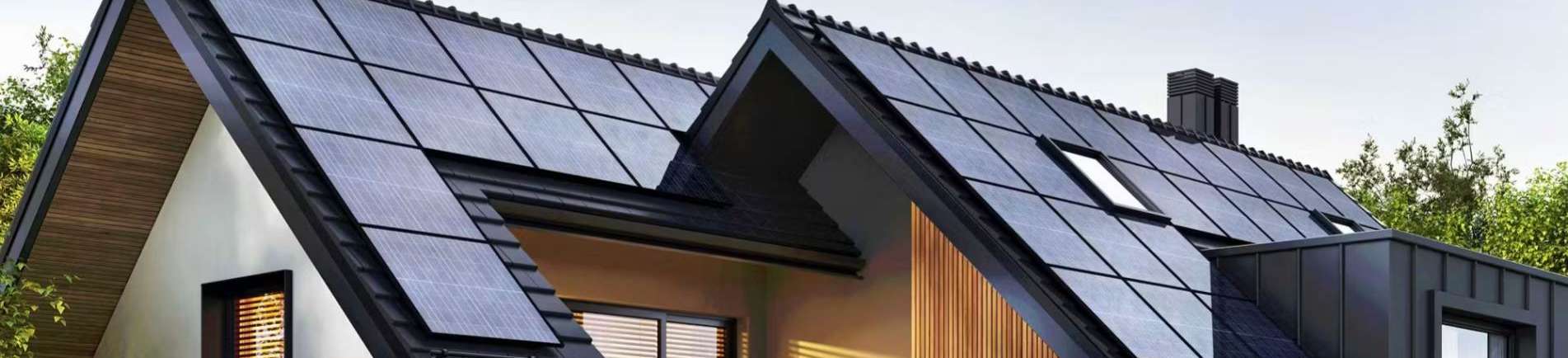
Spain is the easiest solar market in Europe to install in and one of the harder ones to size correctly. Grid connection is routine, most municipalities do not require a building permit for roof-mounted work, and the 2026 income tax deduction returns part of the cost in the following filing. What catches people out is the compensation mechanism: surplus power is credited against the energy line of the bill and never against the capacity line, so a system producing twice what the house consumes is not twice as good. This 10.4 kWp package with 10.24 kWh of storage is built for a villa that actually uses the output, and the numbers below show where that line falls.
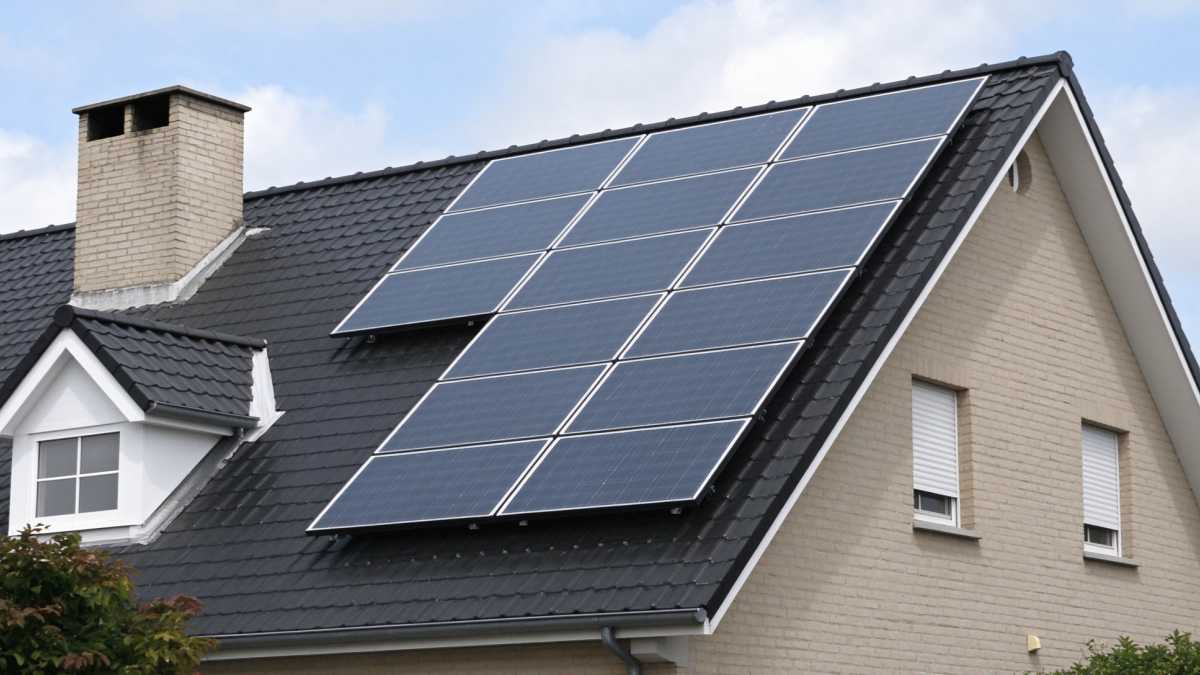
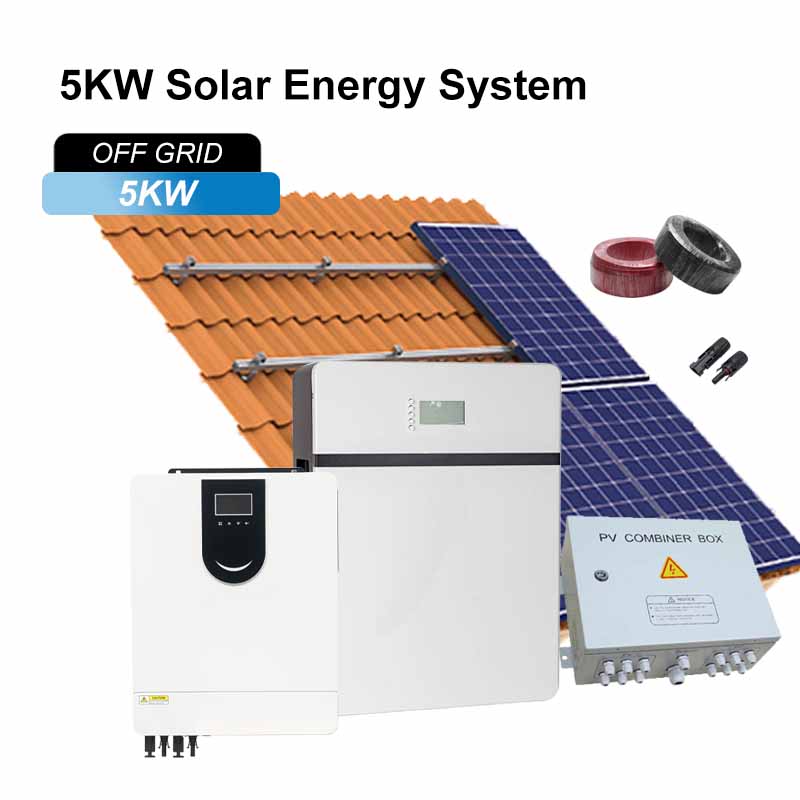
The array is sixteen JA Solar JAM72D42 LB 650 W bifacial modules, 10.4 kWp on about 44.7 m² of roof and 554 kg of glass and aluminium. Sixteen is not an arbitrary count: at 650 W per module it is the smallest count that clears 10 kWp without crossing the 15 kWp DC ceiling of the inverter, and it divides into two equal strings of eight.
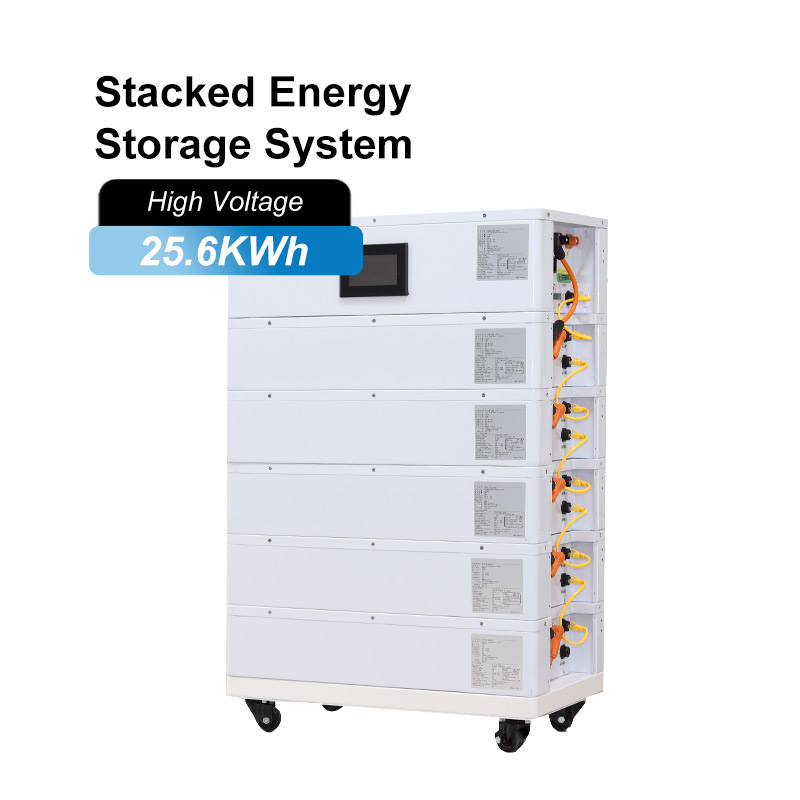
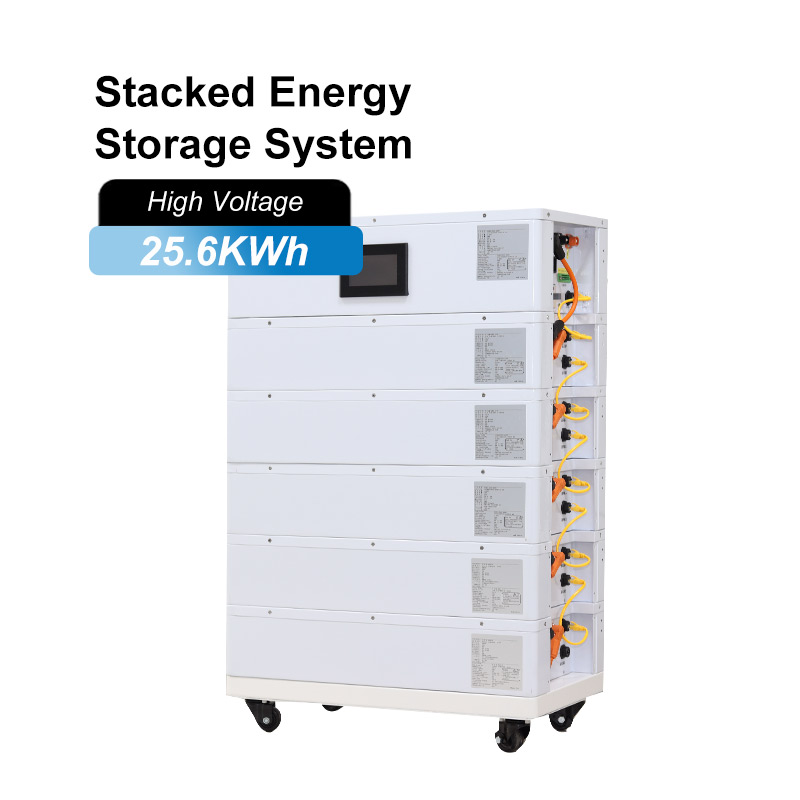
Behind the modules sits a GM-HW10K three-phase hybrid, 10 kW rated and 11 kVA maximum, with two MPPT trackers and a 15 kWp DC input limit. Storage is a GM-ESS-B200S16-MP stack at 10.24 kWh, 200 Ah, built from two 5.12 kWh modules on a wheeled base. The unit is IP54, rated for 6,000 cycles at 80% depth of discharge, and carries CE, IEC 62619, MSDS and UN38.3 documentation.
The three components are sized to each other rather than to a marketing number. A 10.4 kWp array on a 10 kW inverter runs at a DC/AC ratio of 1.04, which is where a Spanish roof should sit: the array clips for a few hours in June and produces full output through the winter months when the house needs it most.
| System Type | Grid-tied three-phase hybrid with battery backup, self-consumption without export contract |
| Array Capacity | 10.4 kWp, 16 × 650 W bifacial modules (JA Solar JAM72D42 LB) |
| Array Area | About 44.7 m² at 2,465 × 1,134 mm per module |
| Array Weight | About 554 kg at 34.6 kg per module, or 12.4 kg/m² |
| Inverter | GM-HW10K, 10 kW rated, 11 kVA maximum, three-phase 400 V, two MPPT, 15 kWp DC ceiling |
| String Layout | 2 strings of 8 modules, 357 V at maximum power, 478 V open circuit at minus 10 °C, 15.41 A short circuit |
| Battery | GM-ESS-B200S16-MP, 10.24 kWh, 200 Ah at 51.2 V, IP54, 6,000 cycles at 80% depth |
| Usable Storage | 8.19 kWh at 80% depth of discharge |
| Annual Generation | 16,841 kWh in Madrid, 17,336 in Seville, 16,935 in Valencia, 16,808 in Zaragoza, 16,216 in Barcelona, 12,155 in Bilbao |
| Typical Self-Consumption | 30 to 35% without storage, 55 to 65% with the battery, on a villa load profile |
| Grid Interface | UNE 217001 and UNE 217002 compliant, CIE certificate and regional registration required |
Spain is not one solar climate. The Meseta and the Guadalquivir valley run near 1,650 kWh for every installed kilowatt, the Cantabrian coast runs at 1,169, and the difference is not a matter of latitude but of cloud. The table is PVGIS 5.3 at 10.4 kWp with a 14% system loss, each site at its own optimal tilt.
| City | Optimal tilt | Annual output | kWh per kWp |
| Madrid | 35° | 16,841 kWh | 1,619 |
| Seville | 30° | 17,336 kWh | 1,667 |
| Valencia | 33° | 16,935 kWh | 1,628 |
| Zaragoza | 35° | 16,808 kWh | 1,616 |
| Barcelona | 35° | 16,216 kWh | 1,559 |
| Bilbao | 33° | 12,155 kWh | 1,169 |
The shape of the year matters more than the annual figure. Madrid runs from 1,051 kWh in December to 1,758 kWh in July, a factor of 1.67, and the low month lands on the same weeks as the heating load. Bilbao swings by a factor of two, 642 kWh in December against 1,291 kWh in July, which is why a Cantabrian installation leans on storage and on the compensation mechanism rather than on winter output.
A south roof in Madrid at 35° sits at the optimum. Tilting to 15° costs about 6% over the year and gains 8% in June and July, which matters when the compensation cap is already being hit in high summer.
Spanish self-consumption is governed by RD 244/2019, and the mechanism that shapes every system design is compensación simplificada: surplus power is valued at the hourly market price and credited against the energy term of the monthly bill. On a free-market contract that price runs between 0.03 and 0.08 €/kWh depending on the retailer, with the large suppliers clustered near 0.06. On a PVPC contract it follows the hourly pool price, which in the middle of a sunny February or April day sits between 0.013 and 0.045 €/kWh and is often at zero.
The credit has three hard limits that no installer can design around. It cannot exceed the energy term of that month’s bill, it cannot touch the capacity term or the network tolls, and it cannot produce a negative bill or a cash payment. A system that exports 14,000 kWh a year into a house that buys 3,000 kWh will be credited for the energy term of those 3,000 kWh and nothing more. The rest is a gift to the retailer.
This is why the array size in Spain is set by consumption, not by roof area. The arithmetic is simple enough to do before the quotation: take the annual consumption in kWh, subtract the share that happens during daylight hours, and size the array so that annual output lands close to consumption plus the battery’s annual throughput. Anything beyond that produces kWh with no buyer.
The Spanish pool makes the point sharper every year. April 2026 recorded 138 hours of negative prices, February 148, and midday prices in the shoulder months now sit at or below zero on a regular basis. A surplus kilowatt-hour exported at 13:00 in April is worth nothing, and no amount of inverter efficiency changes that.
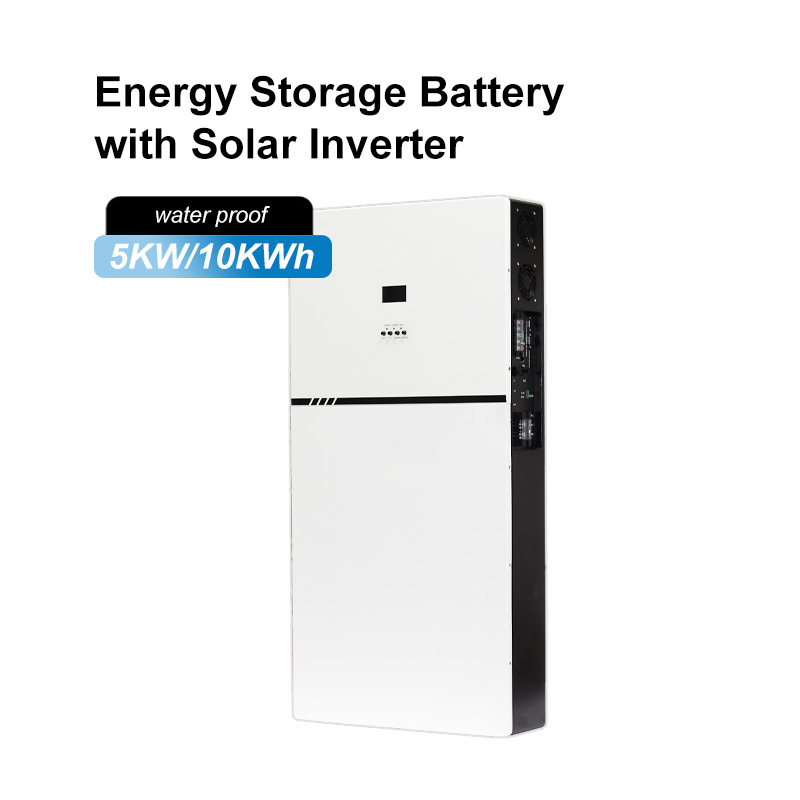
The GM-ESS-B200S16-MP holds 10.24 kWh and delivers 8.19 kWh at 80% depth of discharge, which covers one evening and night in a house that runs a heat pump or an air conditioner after sunset. It is a two-module stack on castors, 650 × 370 × 310 mm per module, 84 kg for the pair, and it communicates with the inverter over CAN or RS485. Up to eight units can be paralleled if the load profile later justifies 40 kWh.
What it is worth depends entirely on the consumption figure, and the difference between the two cases below is the most useful thing on this page. Take a villa in Madrid at 16,841 kWh of annual output and two load profiles.
| Load profile | Without battery | With 10.24 kWh |
| 12,000 kWh a year, 40% in daylight | 344 € of energy left to pay | 80 € of energy left to pay |
| 5,000 kWh a year, 40% in daylight | 0 € of energy left to pay | 0 € of energy left to pay |
On the larger load the battery saves about 264 € a year before tax, roughly 335 € once the 5.11% electricity tax and 21% VAT are added back, because it moves 2,989 kWh from a capped export credit to a avoided purchase at 0.148 €/kWh. On the smaller load it saves nothing at all: the array already produces three times the annual consumption, the credit cap is reached in every month, and the battery only displaces energy that was going to be free anyway.
That is not an argument against storage in Spain, it is an argument for matching it to the load. Where the battery earns its place is a house with an evening-heavy profile, a heat pump running to midnight, an electric car charged overnight, or a client who wants the lights to stay on. The last of those has a price that does not appear in any payback calculation: on 28 April 2025 the Iberian peninsula lost its supply for most of a day, and a hybrid with a 10 ms transfer and THDu under 2% is the difference between an inconvenience and a ruined freezer.
The PVPC for a 2.0TD household averaged about 0.148 €/kWh over the first ten months of 2026, tolls included and taxes excluded, with October settling near 0.198. The 2026 network tolls are 0.097553 €/kWh in peak P1, 0.029267 in flat P2 and 0.003292 in valley P3, and the time bands are 10:00 to 14:00 and 18:00 to 22:00 for peak, 08:00 to 10:00, 14:00 to 18:00 and 22:00 to 24:00 for flat, and everything else plus weekends and public holidays for valley.
Those bands are what a battery is really trading against. A kilowatt-hour shifted from the 19:00 peak to a 13:00 surplus is worth the difference between roughly 0.22 and 0.06 €/kWh, not the average tariff. On top of the energy price sit the electricity tax at 5.11269632% and VAT back at 21% since the temporary reductions ended, so a saving calculated on the untaxed PVPC has to be multiplied by about 1.27 to match what actually leaves the bank account.
The 2026 deduction is new and worth planning around. Royal Decree-Law 7/2026, in force since 21 March 2026, allows 10% of the installation cost against personal income tax for self-consumption on an owned home, and 20% where the property is a dwelling inside a residential building. The base is capped at 5,000 € a year, the work has to be completed and paid for during 2026, storage counts towards it, the installation needs its CIE certificate, payment must be by card or transfer rather than cash, and the amount cannot overlap with the energy-rehabilitation deduction or with any public subsidy received. On a 14,000 € installation that is 500 to 1,000 € back in the following filing.
Municipal relief sits on top and varies by town: up to 50% off IBI for the years the installation is in service, and up to 95% off ICIO on the construction tax, both only where the town has voted the ordinance. The Next Generation self-consumption grants that funded much of the 2022 to 2023 wave have largely closed. In late 2026 what remains open is the Balearic battery line through 28 February 2027 and the Gran Canaria scheme up to 4,000 € through 31 December 2026; the Basque programme closed at the end of September.
The JAM72D42 LB is a 144-half-cell n-type module at 2,465 × 1,134 × 30 mm, 34.6 kg, 23.3% efficiency, with an open-circuit voltage of 53.27 V, a maximum-power voltage of 44.67 V, a short-circuit current of 15.41 A and a maximum-power current of 14.55 A. Those five numbers decide the string layout, and they are the ones a Spanish installer checks first because the roof is usually the easy part.
The GM-HW10K tracks between 180 and 850 V and needs 250 to 850 V to reach full load. At 53.27 V open circuit and a conservative −0.35%/°C coefficient, a module reaches 59.79 V at minus 10 °C, so the ceiling is fourteen modules per string. Fourteen would give 837 V cold and 625 V at maximum power, comfortably inside the window, but two strings of fourteen is 18.2 kWp against a 15 kWp DC limit, which the inverter will clip and the warranty will question.
Eight modules resolve both constraints at once. Two strings of eight give 10.4 kWp, 357 V at maximum power and 478 V at minus 10 °C, with the tracker sitting in the middle of its range rather than at an edge. Short-circuit current is 15.41 A against an 18 A limit per tracker, so there is no risk of the inverter derating on a cold, bright morning. If the roof is split across two orientations, the two strings can go to separate trackers and each will track independently.
These are double-glass bifacial modules with a bifaciality around 80%, and on a pitched roof the rear face sees whatever the tiles reflect. On a dark bitumen roof that is 2 to 4%; on a white membrane, a light concrete terrace or a reflective gravel surface it can reach 8 to 10%. PVGIS does not model it, and the 14% system loss used above already absorbs the wiring, soiling and mismatch that would otherwise eat the gain. Treat the bifacial contribution as margin rather than as a number to promise in a quotation.
A 10.4 kWp array with a 10 kW hybrid and 10.24 kWh of storage lands between 12,000 and 16,000 € installed and VAT included in most of Spain in 2026, depending on roof access, scaffolding and the distance to the consumer unit. For reference, the market range for a 3 to 7 kWp system without storage is 4,000 to 8,500 €, which is the comparison a client will make whether or not it is the right one.
On the 12,000 kWh villa profile above, the annual saving is 1,432 € before tax and about 1,819 € after tax, made up of 710 € of avoided purchase on the daylight share and 722 € of export credit that still fits under the cap. Against a 14,000 € installed cost that is a payback near 7.7 years, and the 2026 deduction shortens it by another half year. On the 5,000 kWh profile the same system saves about 940 € a year once tax is added back and needs close to fifteen years, which is the clearest possible signal that the array is more than three times the size it should be.
The modules carry a 25-year product warranty with annual degradation capped at 0.55%, the inverter and battery carry three years, and the battery is rated for 6,000 cycles, which is more than sixteen years of a full cycle a day. Those are the numbers to put against the payback, not an assumed electricity price rise.
Sixteen modules need 44.7 m² of glass, and a real roof needs 50 to 55 m² once edge setbacks, chimney clearances and walkways are counted. A south orientation within 30° of due south costs under 5% of annual yield; an east-west split roof costs 12 to 15% but spreads production across the day, which suits a house that is occupied in the morning and the evening rather than at midday.
Shading is the usual reason a Spanish quotation comes back smaller than the client expected. A chimney, a dormer, a satellite dish or the parapet of a roof terrace takes out a whole module, and on a two-string array losing one module is losing 6.3% of the field. Where the roof is broken up, the honest answer is often to keep the array on the best plane and leave the rest tiled.
The paperwork is lighter than in most of Europe but it is not optional. The installation needs a CIE certificate from a registered installer, registration in the regional self-consumption register, a signed self-consumption agreement with the distributor, and an inverter that meets UNE 217001 and UNE 217002 so that the anti-islanding and zero-export functions pass review. The GM-HW series carries both standards, which is the part of the datasheet that matters most in Spain and the part most quotations omit.
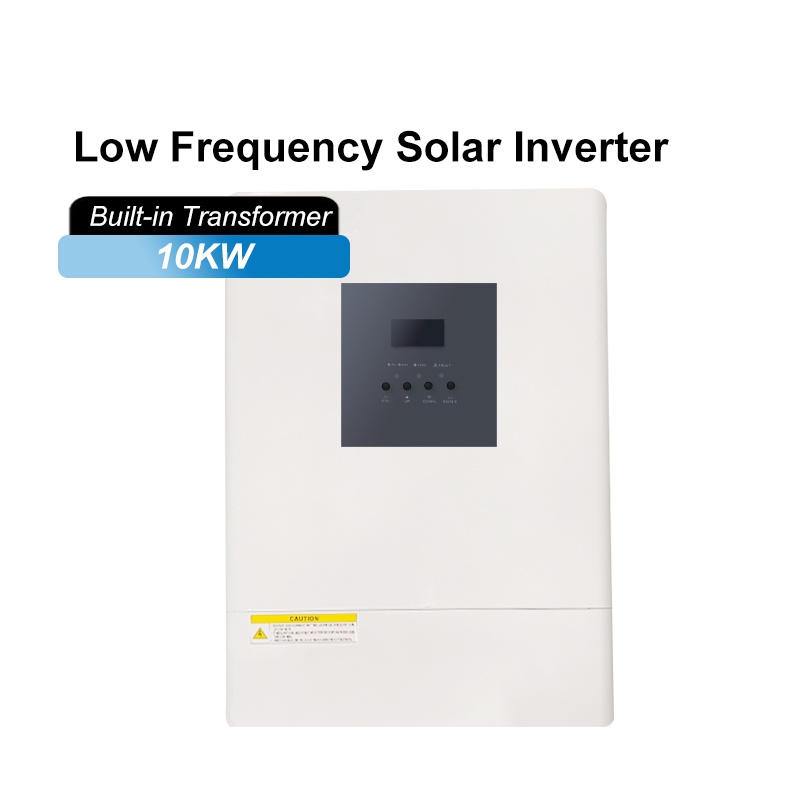
A single-phase 230 V house is the one case that needs a different answer. Spanish single-phase contracts are generally capped around 10 kW, so a 10.4 kWp array on a single-phase supply either needs a three-phase upgrade or a different architecture. Where the client wants backup rather than export, a low-frequency inverter with a toroidal transformer on the essential circuits is the simpler route and keeps the grid interface in certified hands.
A household consuming 3,500 to 5,000 kWh a year is the clearest mismatch. The array produces three times the consumption, the compensation cap is reached in every month, and two thirds of the output has no buyer. A 3 to 5 kWp system with no battery will save almost as much for half the money, and the 5 kWh wall-mounted battery covers the evening load without overbuilding the roof.
A single-phase supply capped at 10 kW is the second. Three-phase conversion is a distributor decision with its own cost, and it only makes sense when the house already has a heat pump, a pool and an EV charger pulling on three phases.
A roof under 45 m² of usable plane, a north-facing pitch, or a plane shaded after 16:00 in summer will all cut the yield below what the quotation promised. And a client expecting to sell power should be told plainly that Spanish self-consumption does not allow it: the surplus is a bill credit, not income, and it cannot be withdrawn.
Where the roof is larger and the load is genuinely there, the 20 kW system with 15 kWh of storage is the next step; where the priority is the roof rather than the payback, photovoltaic roof tiles replace the modules without changing the look of the house.
144 half-cells of n-type TOPCon, 2,465 × 1,134 × 30 mm, 34.6 kg, 23.3% module efficiency, double 2.0 mm glass, IP68 junction box, operating range from minus 40 to plus 85 °C, and a 25-year product warranty with degradation capped at 0.55% a year. The 650 W rating on a 2.8 m² footprint is what makes a 10.4 kWp array fit on a roof that would otherwise take 8 kWp of older modules.
10 kW rated, 11 kVA maximum, 14.4 A of rated grid current, 97.9% peak efficiency, two MPPT trackers over 180 to 850 V, 1,000 V maximum DC input, 15 kWp PV ceiling, 285 to 550 V battery window at full load, backup transfer under 10 ms with THDu below 2%, 100% unbalanced load support, IP65, and parallel capability across the 6 to 15 kW range. The certificate list includes UNE 217001 and UNE 217002 alongside EN 62109, EN 50549, VDE-AR-N 4105, CEI 0-21, G98/G99 and NRS 097. View the inverter specification.
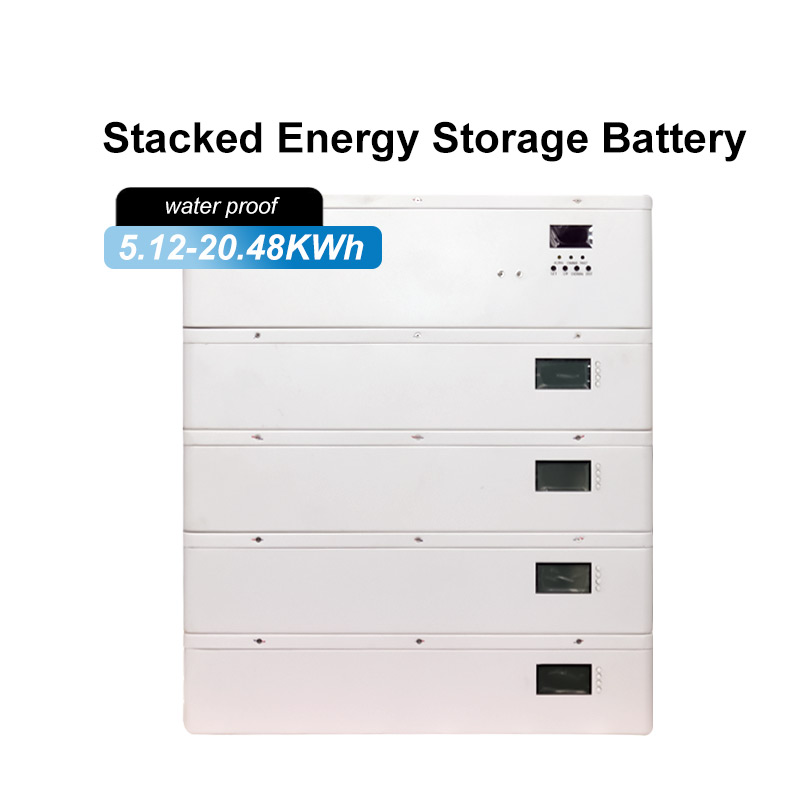
10.24 kWh from two 5.12 kWh modules, 200 Ah at 51.2 V, 84 kg, 650 × 370 × 310 mm per module, IP54, natural cooling, CAN and RS485, 6,000 cycles at 80% depth of discharge, CE, IEC 62619, MSDS and UN38.3, three-year warranty, and up to eight units in parallel for 40 kWh where the load grows. For a larger evening load the 20.48 kWh stackable system doubles the throughput without a second inverter.
About 16,841 kWh a year in Madrid, 17,336 in Seville, 16,935 in Valencia, 16,808 in Zaragoza, 16,216 in Barcelona and 12,155 in Bilbao, at each site’s optimal tilt with a 14% system loss. Madrid runs from 1,051 kWh in December to 1,758 kWh in July.
Between 30 and 35% directly without storage on a typical villa profile, rising to 55 to 65% with the 10.24 kWh battery. The rest is exported and credited at the hourly market price, subject to the monthly cap.
Under RD 244/2019 the surplus is valued at the hourly market price, which on a free-market contract runs 0.03 to 0.08 €/kWh and on PVPC follows a pool price that is near zero at midday in spring. The credit is capped at the energy term of the monthly bill, cannot touch the capacity term or tolls, and cannot be paid out in cash.
On a 12,000 kWh villa load it saves about 264 € a year before tax and 335 € after tax, because it moves 2,989 kWh from a capped export credit to an avoided purchase. On a 5,000 kWh load it saves nothing, because the array already overproduces. Its stronger case is a night-heavy load or backup during an outage.
Royal Decree-Law 7/2026 allows 10% of the installation cost for self-consumption on an owned home and 20% where the property is a dwelling inside a residential building, with a base capped at 5,000 € a year. The work must be completed and paid for during 2026, storage qualifies, a CIE certificate is required, payment must be non-cash, and it cannot be combined with the rehabilitation deduction or a public subsidy.
The GM-HW10K is a three-phase 400 V machine. Spanish single-phase contracts are generally capped around 10 kW, so a 10.4 kWp array on a single-phase supply needs either a three-phase upgrade or a backup-focused design with a low-frequency inverter on the essential circuits.
A CIE certificate from a registered installer, registration in the regional self-consumption register, a self-consumption agreement with the distributor, and an inverter compliant with UNE 217001 and UNE 217002 for anti-islanding and zero-export. Most municipalities do not require a building permit for roof-mounted work outside protected areas.
Sizing a system for a Spanish roof starts with the bill, not the roof. Send us twelve months of consumption, the contract power and the roof planes, and we will come back with the array size the compensation cap actually supports, the string layout for the module you choose, and a bill of materials with the UNE compliance paperwork.
Write to export@gmsolarkit.com or use the contact form, and we will reply within one working day.
Stay up to date with GreenMore. We share new BIPV solar tile releases, product and certification updates, and field notes from our projects — no fluff, just the things that matter to installers, distributors, and system integrators. If there's something you'd like to see covered, drop us a line — we read every reply.




Copyright @ 2026 GreenMore All Rights Reserved.  Network Supported
Sitemap / Blog / Xml / Privacy Policy