Is the Powerwall Overrated? A Practical Look from GreenMore’s Perspective
Mar 26, 2026
P
Peter Lu
Energy Storage Product Manager, GreenMore · Energy storage systems
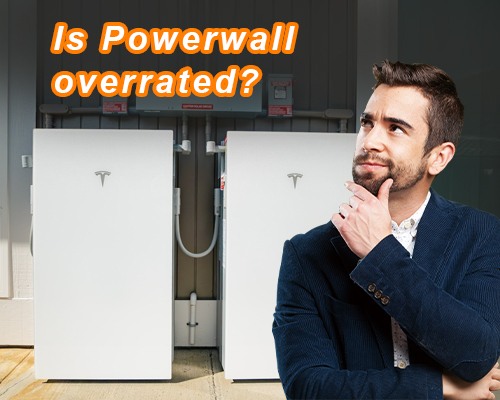
The Tesla Powerwall is the most recognized name in home energy storage. For many homeowners, "battery storage" is almost synonymous with "Powerwall." But brand awareness does not automatically make a product the best fit for every home, climate or budget.
As a manufacturer of residential and commercial energy storage systems, GreenMore is often asked whether the Powerwall is worth the price or whether there are better alternatives. Here is an engineering-based view, including the parts the Powerwall does well.
Why the Powerwall Became So Popular
To be fair, the Powerwall has real strengths:
Strong brand recognition and a clean, wall-mounted design.
A well-integrated app and a single-vendor ecosystem.
The current Powerwall 3 is an all-in-one unit with a built-in solar inverter, which simplifies installation.
Wide availability and a mature certified-installer network in North America.
Solid performance for typical whole-home backup.
These make it a safe, familiar choice. The useful question is narrower: does it deliver the best value and flexibility for every market and installation?
A Note on Chemistry: Powerwall 3 Already Uses LFP
One comparison needs updating. The older Powerwall 2 used NMC cells, but Tesla moved the Powerwall 3 to LFP (LiFePO₄) chemistry. So chemistry itself is no longer a point of difference between a Powerwall 3 and a GreenMore system; both use LFP for the same good reasons: thermal stability, long cycle life and lower degradation. A competitor that still claims an LFP advantage over a Powerwall 3 is comparing against a product Tesla no longer sells.
The honest differences sit elsewhere: price, flexibility of design, and how the system behaves outside a stable grid and a single-vendor ecosystem.
Where Buyers Should Look Beyond the Brand
Cost per usable kWh
In many markets homeowners pay a premium for the brand. Installed pricing varies, so compare quotes on a cost-per-usable-kWh basis rather than on the headline unit price. A modular LFP system often lets you buy only the capacity you need now.
Ecosystem lock-in and inverter choice
The Powerwall 3 is a tightly integrated, single-vendor system. That is convenient, but installers sometimes want to pair storage with a specific third-party inverter, retain an existing solar setup, or build a custom hybrid configuration. Open modular LFP platforms are designed to integrate with major inverter brands rather than requiring one vendor's stack.
Off-grid and high-power flexibility
Large off-grid systems, heavy startup loads and non-standard hybrid designs are easier to engineer with modular components that can be sized and combined for the specific load, instead of working within the limits of a fixed all-in-one unit.
Weak-grid regions
Across parts of Europe, Africa, Southeast Asia and remote Australia, voltage fluctuations and outages are routine. Many installers in these markets prefer a hybrid inverter paired with a modular LFP battery, configured specifically for the local grid conditions rather than for a standard North American installation.
Best Home Energy Storage Battery Product Line in 2026
What Homeowners Actually Prioritize in 2026
Feedback from installers points to a consistent shortlist: safety, long cycle life, scalability, lower cost per kWh, compatibility with the solar system, and dependable backup. As these expectations spread, decisions are increasingly made on performance and total cost rather than on brand alone.
Consideration
Integrated brand-name unit
Modular LFP system
Chemistry
LFP (Powerwall 3)
LFP
Inverter choice
Built-in, single vendor
Compatible with major brands
Expansion
Within the vendor's range
5 kWh up to 30 kWh and beyond
Best fit
Stable grid, single-vendor convenience
Weak grids, off-grid and custom builds
So, Is the Powerwall Overrated?
It is not overrated as a product; it is a well-engineered system. It is overrated only if you assume the brand alone makes it the best choice everywhere. In markets where your priorities are competitive cost per kWh, freedom to choose an inverter, or a system tuned for weak-grid and off-grid conditions, a modular LFP alternative often offers a more practical and cost-effective answer.
The market now has real choices, and the right question is not which brand is most famous but which system matches your home, climate and budget. If you share your load profile, solar setup and grid conditions with GreenMore, we will help you compare options on the merits. Contact the GreenMore team or email export@gmsolarkit.com.
P
Peter Lu
Energy Storage Product Manager, GreenMore
Peter helps homeowners and installers compare home batteries on cost per usable kWh, inverter compatibility and real grid conditions rather than on brand. He reviews backup loads, off-grid and weak-grid requirements before recommending a configuration, and works with the engineering team to make sure an LFP system is sized correctly, expandable and matched to the solar installation.





 Network Supported

