
Welcome to GreenMore
Welcome to GreenMore
Solar batteries are now a core part of modern energy systems, letting homeowners and businesses store excess solar power, reduce electricity bills and keep backup power during outages. One question comes up more than any other: How big should my solar battery be?
As a manufacturer of LFP home battery systems, commercial energy storage systems and solar-plus-battery systems, GreenMore sees correct sizing as the key to performance, safety and long-term return. This guide explains how to choose battery capacity from real energy needs, solar production and backup requirements.
Battery size is measured in kilowatt-hours (kWh), which indicates how much energy the battery can store and deliver. The tiers below cover most situations:
| Capacity | Typical application |
|---|---|
| 5–10 kWh | Small homes, essential loads |
| 10–20 kWh | Typical homes with solar |
| 20–40 kWh | Large homes or partial off-grid |
| 50 kWh+ | Small businesses |
| 100 kWh–5 MWh | Industrial and containerized BESS solutions |
GreenMore designs modular systems that scale from 5 kWh residential energy storage to multi-MWh industrial LFP energy storage for factories and warehouses.
Battery sizing comes down to three factors: how much energy you use, how much your solar array produces and what you need to keep running.
Check your electricity bill for daily kWh usage. Typical ranges:
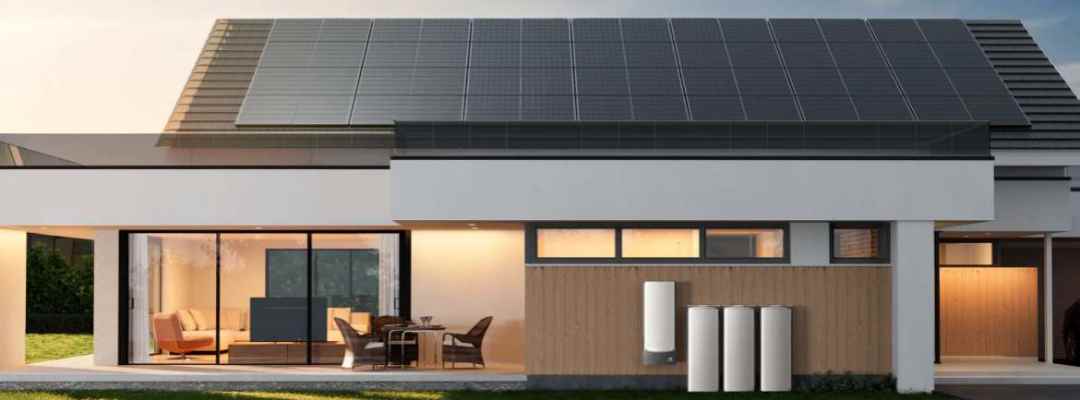
Solar panels set the upper limit on how much energy you can store. As a rough guide, depending on local sunlight:
If the solar system is small, an oversized battery will not charge fully. A solar energy storage integration approach keeps PV and battery in balance.
Different users have different backup priorities:
| Backup priority | Typical loads | Battery size |
|---|---|---|
| Essential loads | Refrigerator, lights, Wi-Fi | 5–10 kWh LFP home battery |
| Whole-home backup | Air conditioning, pumps, kitchen appliances | 15–30 kWh residential storage |
| Partial off-grid / rural | Frequent outages or weak grid | 20–40 kWh modular residential ESS |
| Commercial backup | Shops, offices, small factories | 50–200 kWh commercial ESS |
| Industrial | Warehouses, manufacturing, logistics | 1–5 MWh containerized BESS |
| Scenario | Daily use | Recommended battery |
|---|---|---|
| Home with 5 kW solar | 12–18 kWh | 10–15 kWh home battery |
| Home with 10 kW solar | 20–30 kWh | 15–25 kWh LFP home battery |
| Home with frequent outages | 15–25 kWh | 20–30 kWh residential storage |
| Small business | 50–150 kWh | 50–200 kWh commercial ESS |
| Factory or warehouse | 300–2,000 kWh | 500 kWh–5 MWh industrial LFP storage |
GreenMore uses LFP (LiFePO₄) chemistry across residential and commercial systems because it offers:
This makes LFP the preferred choice for solar-plus-battery installations. You can read more about how the systems are protected in our article on energy storage safety.
GreenMore provides solutions across LFP home battery systems (5–30 kWh), commercial energy storage systems (50–500 kWh), containerized BESS solutions (1–5 MWh) and hybrid solar storage for homes and businesses.
Our engineering team supports installers and distributors with:
Before choosing a battery, work through five questions: How much energy do I use per day? How much solar do I have? Do I want essential-load or whole-home backup? How long do outages last in my area? Do I plan to expand later? A modular residential or commercial system lets you add capacity as needs grow.
There is no single best battery size. The right capacity follows your energy use, solar production and backup needs. If you share your load profile, solar size and outage expectations with the GreenMore team, we will help you size the system rather than sell you the biggest one. Contact GreenMore or email export@gmsolarkit.com.
Battery size depends on daily consumption, solar output and backup requirements. Most homes need 10–20 kWh, while larger homes or off-grid systems may need 20–40 kWh.
A 5 kW system typically pairs with a 10–15 kWh battery, depending on whether you want essential-load or whole-home backup.
Most homes with 10 kW of solar choose a 15–25 kWh battery to maximize self-consumption and reduce bills.
LFP (LiFePO₄) is preferred for its high safety, long cycle life and strong performance in hot climates.
Yes. GreenMore's modular LFP systems let you start smaller and add capacity as energy needs grow.
Small businesses often need 50–200 kWh, while factories and warehouses may need 500 kWh to multi-MWh containerized BESS.
Peter helps homeowners, installers and distributors size solar batteries to actual loads rather than to a price list. He reviews daily consumption, solar production and backup priorities, and works with the engineering team to confirm that PV, battery and backup configuration are matched so the system charges fully, carries the right loads and can be expanded later without redesign.
Stay up to date with GreenMore. We share new BIPV solar tile releases, product and certification updates, and field notes from our projects — no fluff, just the things that matter to installers, distributors, and system integrators. If there's something you'd like to see covered, drop us a line — we read every reply.




Copyright @ 2026 GreenMore All Rights Reserved.  Network Supported
Sitemap / Blog / Xml / Privacy Policy


