Large-area BIPV curved solar tile roof array for commercial buildings by GreenMore
Home

home energy storage battery

home energy storage battery

  • How GreenMore’s Solar Tile Projects Are Supporting Residential Clean Energy Adoption in Greece
    How GreenMore’s Solar Tile Projects Are Supporting Residential Clean Energy Adoption in Greece Mar 17, 2026
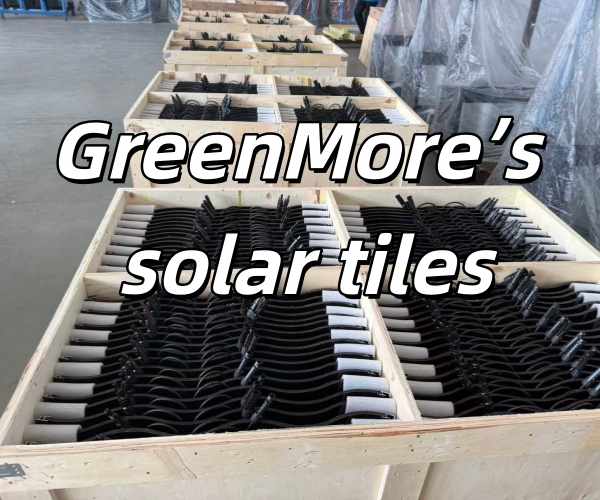
    L Luke Product Manager, GreenMore · Photovoltaic building materials As more households across Europe explore ways to reduce electricity costs and increase energy independence, rooftop solar and home energy storage have become practical solutions for everyday living. In Greece, this trend is especially visible. With abundant sunlight and rising interest in distributed solar, homeowners are looking for systems that combine performance, durability, and architectural integration. GreenMore recently completed 20 residential rooftop solar tile projects in Greece, each paired with a home energy storage system. This article takes a closer look at how these systems work, why solar tiles are gaining attention, and what this means for the future of residential clean energy. Why Solar Tiles Are Becoming a Practical Choice for Greek Homes Traditional solar panels remain widely used, but solar tiles offer a different approach. Instead of mounting panels on top of the roof, solar tiles replace the roofing material itself, creating a clean and integrated appearance. For homeowners in Greece — where many houses feature pitched roofs and coastal weather conditions — solar tiles provide several advantages: Architectural integration without altering the roof's visual style Durability suitable for Mediterranean climates — tempered glass construction rated for 5400 Pa wind load Efficient power generation through CIGS thin-film technology with reliable output in diffused light Compatibility with common clay, concrete, and metal roof structures via hook-based mounting Pairing Solar Tiles with Home Energy Storage Each of the 20 completed homes includes a GreenMore residential energy storage system. These systems use lithium iron phosphate (LFP) batteries, known for their thermal stability and long cycle life. When combined with rooftop solar tiles, the storage system helps households: Use more of their self-generated solar energy Reduce reliance on the grid during peak hours Maintain power during outages Improve overall energy independence The system is coordinated by GreenMore's energy management system (EMS), which automatically manages charging, discharging, and grid interaction based on real-time conditions. Local Collaboration Makes Deployment More Efficient A key part of this project was GreenMore's cooperation with local installation partners in Greece. Their experience with local roof structures, building requirements, and installation practices ensured that each system was installed safely and efficiently. The collaboration covered: On-site roof evaluation and structural assessment System design and tile layout planning Mechanical installation with hook-based mounting Electrical integration with hybrid inverter and battery Final commissioning, testing and user handover This model supports consistent project delivery and creates a foundation for future deployments in Greece and surrounding Mediterranean markets. GreenMore wooden crates for shockproof packaging and factory export shipping GreenMore's Expanding International Presence GreenMore is a photovoltaic tile manufacturer focused on BIPV building-integrated solutions. Our core product line — three-curve solar tiles, photovoltaic bricks, and photovoltaic curtain walls — is produced in-house using CIGS thin-film and BC back-contact technologies. Solar power systems and energy storage systems are provided as supporting components for complete BIPV projects. The Greece project is one example of how we work with local partners to support residential and commercial clean energy adoption across Europe and other target markets. Our product portfolio includes: Solar tiles — CIGS thin-film and BC back-contact three-curve tiles BIPV roofing systems — complete integrated rooftop solutions Solar power systems — hybrid inverters and balance-of-system components Energy storage systems — residential and commercial LFP battery solutions What This Means for Residential Solar in Greece The completion of these 20 projects highlights several trends in the Mediterranean residential solar market: Homeowners are increasingly interested in integrated solar solutions that blend with building architecture Energy storage is becoming a standard component of residential solar installations Local partnerships play a key role in ensuring quality deployment Distributed solar continues to grow across Southern Europe As more households look for reliable and visually integrated solar options, solar tiles paired with energy storage are well positioned to become a mainstream choice in the region. FAQ What core materials are used in GreenMore's solar tiles? GreenMore's solar tiles use laminated tempered glass (front and rear), composite backsheet materials, aluminum structural components, and high-performance polymer sealing layers. Tempered glass provides impact resistance; the composite backsheet improves moisture protection; aluminum components enhance mechanical strength; and polymer seals maintain long-term waterproofing. This material system ensures stable performance under high UV exposure, coastal humidity, and temperature fluctuations common in Mediterranean climates. How does the overlapping tile structure achieve true BIPV integration? The solar tiles use a mechanical interlocking and overlapping layout, similar to traditional roofing tiles. Each tile overlaps the next to form a continuous surface, creating a natural drainage path. This design allows the solar tiles to function as both a roofing material and a power-generating module, achieving architectural integration without additional mounting frames. How is waterproofing achieved? Does it require extra sealing layers? The solar tile system incorporates multi-layer waterproofing: overlapping tile geometry for natural water shedding, integrated sealing gaskets at connection points, mechanical locking structures that prevent water ingress, and IP67-rated DC connectors for electrical interfaces. Under standard installation conditions, no additional waterproof membrane is required. For coastal or high-rainfall regions, installers may apply localized reinforcement based on roof structure. How does the BIPV tile system meet wind-load and structural requirements? GreenMore's three-curve solar tiles are rated for 5400 Pa wind pressure and use a hook-based mounting system that connects directly to the roof's structural battens. The mechanical fastening ensures compliance with typical requirements for pitched roofs in Southern Europe. Before installation, local teams conduct a structural assessment to confirm that the roof can support the system under regional wind conditions. Work With GreenMore GreenMore is a photovoltaic tile manufacturer specializing in BIPV roofing solutions for residential and commercial projects. Our three-curve solar tiles, photovoltaic bricks, and photovoltaic curtain walls are produced in-house, with CIGS thin-film and BC back-contact technology options available. Solar power systems and energy storage systems are provided as supporting components of the complete BIPV solution. If you're exploring solar tile solutions for a project in Greece or elsewhere in Europe, reach out through our contact page or email export@gmsolarkit.com. L Luke · Product Manager, GreenMore Luke manages GreenMore's photovoltaic building-material range, from the CIGS thin-film triple-arch tile to the newer back-contact line. In the solar industry since 2017, he focuses on designs that are genuinely buildable, with honest specs and warranty terms that match the products actually shipped.

  • Power Your Home with Reliability: The Ultimate Guide to Home Energy Storage Batteries
    Power Your Home with Reliability: The Ultimate Guide to Home Energy Storage Batteries Jul 03, 2025
    P Peter Lu Energy Storage Product Manager, GreenMore A home energy storage battery stores electricity for use when you need it — at night, during a grid outage, or when the grid tariff is high. The system can be paired with rooftop solar or charged directly from the grid during off-peak hours. The right setup depends on your goal (backup, bill reduction, or both), your daily load profile, and whether you already have solar panels. Two reasons to add a home battery Most installations fall into one of two categories, and the choice shapes every downstream decision. Goal What the battery does Sizing driver Self-consumption (solar + storage) Stores excess solar generated during the day for evening use, reducing grid imports Evening load profile after the sun goes down; typically 5 kWh to 15 kWh for a single-family home Backup power (with or without solar) Keeps essential loads running during a grid outage; can be charged from solar or from the grid during off-peak hours Critical load wattage × required hours of autonomy; typically 5 kWh to 20 kWh Many systems combine both goals. A battery sized for evening self-consumption often provides a useful amount of backup as well, and a backup-sized battery can be set to charge from solar on normal days. The key is to decide which goal drives the minimum size, then check that the other goal is also reasonably met. Chemistry: why LiFePO4 is the default for home storage Lithium iron phosphate (LiFePO4, or LFP) has become the standard chemistry for home energy storage in most markets. The main reasons are thermal stability and cycle life. LFP cells tolerate higher temperatures and deeper discharge cycles than NMC (nickel manganese cobalt) cells, and they are less prone to thermal runaway under abuse conditions. The trade-off is lower energy density — an LFP pack of a given capacity is larger and heavier than an equivalent NMC pack. For a fixed installation in a garage, basement or utility room, that trade-off almost always favors LFP. NMC still appears in some space-constrained or portable products, and in higher-end residential units where weight and volume are tighter constraints. When comparing datasheets, look at the cycle life at the DoD you will actually use, not just the headline "cycles" number. Key specs that matter on the datasheet Spec Why it matters Usable capacity (kWh) This is the energy you can actually draw, after the BMS reserves. Do not compare products by nameplate capacity alone. Depth of discharge (DoD) The fraction of nameplate capacity the manufacturer allows you to use. Higher DoD means more usable energy from the same pack, but it usually shortens cycle life at that DoD. Cycle life at a given DoD Cycle curves should show how many cycles the pack delivers at different DoD and C-rate. A single "6,000 cycles" number without conditions is not comparable. Continuous and peak power (kW) Continuous power is what the battery can sustain; peak power is for short surges such as motor starting. Size continuous power against your typical load, peak against your largest single load. Round-trip efficiency The fraction of energy you get back after one charge-discharge cycle. Higher is better for self-consumption economics; for backup-only use it matters less. Operating temperature range LFP cells charge slowly or not at all below 0°C unless the pack has low-temperature charging protection. If you live in a cold climate, check this spec carefully. With solar vs without solar Adding a battery to an existing solar system is the most common use case. The battery stores excess solar that would otherwise be exported at a low feed-in tariff, and releases it when the household load exceeds solar generation. The result is higher self-consumption and lower grid imports. A battery without solar is a standalone backup or time-of-use arbitrage device. It charges from the grid during off-peak hours (or when tariffs are low) and discharges during peak hours or outages. The economics depend on the spread between off-peak and peak tariffs, or on the frequency and duration of outages in your area. In regions with unreliable grids, a without-solar battery is often the primary use case. How to size a home battery A simple starting point for backup sizing: Usable capacity (kWh) ≈ Critical load (kW) × Hours of autonomy ÷ DoD Inverter efficiency For self-consumption sizing, look at your evening load (typically 6 pm to 10 pm) and size the usable capacity to cover that window. In most single-family homes this is in the 5 kWh to 15 kWh range, but it depends on the number and type of loads. In both cases, the inverter or hybrid inverter power rating must cover your peak simultaneous load, not just the battery capacity. A 10 kWh battery paired with a 3 kW inverter can only deliver 3 kW at any moment, which may not be enough to start a well pump or an air conditioner. If you are specifying a system, see our residential range on the all-in-one home energy storage system page and the full residential lineup on the home energy storage category page. For project-specific questions, use the contact page. FAQ Can I use a home battery without solar panels? Yes. A standalone home battery charges from the grid during off-peak hours and discharges during peak hours or outages. The economics depend on your local tariff structure and the frequency of grid outages. How long will a home battery last? Cycle life depends on chemistry, DoD and C-rate. A typical LFP home battery delivers several thousand cycles at 80% DoD before capacity drops below 80% of initial. In daily cycling that translates to roughly 10 to 15 years of service, but the actual number depends on usage patterns and operating temperature. What size battery do I need for backup? List your critical loads (refrigerator, lights, internet, a few outlets) and estimate their combined wattage. Multiply by the number of hours you want backup. Then divide by the battery DoD and inverter efficiency to get the required nameplate capacity. For most homes, 5 kWh to 10 kWh covers essential loads for 4 to 8 hours. Is LiFePO4 safer than other lithium chemistries? LFP has higher thermal stability than NMC and NCA — the onset temperature for thermal runaway is higher and the energy released is lower. That said, no lithium battery is "zero risk." Proper BMS, enclosure, installation and certification all contribute to a safe system. Check for IEC 62619, UN 38.3 and relevant regional marks. P Written by Peter Lu — Energy Storage Product Manager, GreenMore Peter works with distributors, installers and system integrators to size residential and commercial storage around real load profiles. He focuses on LiFePO4 systems that match the inverter, grid rules and backup needs of each destination market.
  • How to Choose a Home Backup Power System?
    How to Choose a Home Backup Power System? Jun 03, 2025
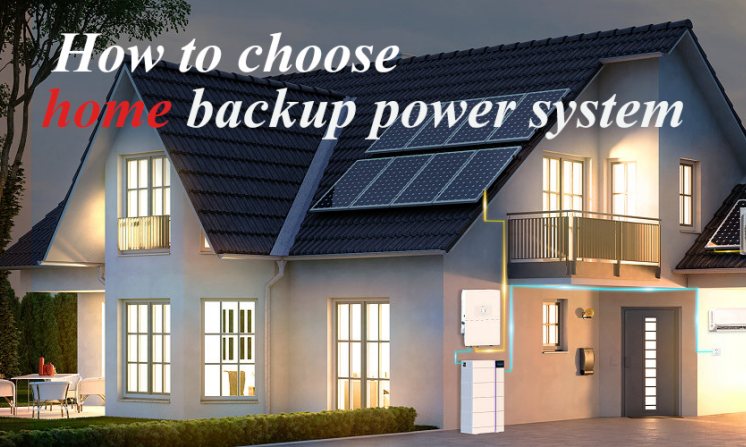
    P Peter Lu Energy Storage Product Manager, GreenMore Backup power is no longer just for off-grid homes. Storms, grid maintenance and peak-demand strain make outages common enough that many households want automatic power for the fridge, lights, internet and heating controls. Choosing the right system is mainly two decisions: what must keep running, and for how long. Step 1: List your essential loads Start with the devices you cannot do without during an outage, and note both their running watts and starting watts. Motor-driven appliances draw several times their running power at startup. Load Typical running power Notes LED lighting 100–400 W Depends on how many rooms are lit Refrigerator 100–250 W Compressor cycles; startup surge of 2–3x Router and networking 20–50 W Low draw but essential for home office Heating or cooling controls and fans 300–1,000 W Furnace blowers and well pumps often surprise buyers Medical equipment Device-specific Must be treated as non-negotiable and sized conservatively Figures vary by model; check the nameplate ratings of your own appliances rather than using generic numbers. The total of simultaneous running watts sets the inverter size, and the largest startup surge sets the peak power requirement. Step 2: Decide between essential-loads and whole-home backup There are two architectures, and they differ substantially in cost. Essential-loads backup. Selected circuits run through a subpanel (often called a critical load panel). This covers the fridge, lights, internet and heating controls at a fraction of the cost of full backup. Whole-home backup. The entire electrical panel is backed up. This needs a much larger inverter and battery bank, and may require coordination with the service entrance and an interlock or transfer switch. Most households are well served by essential-loads backup. Whole-home makes sense if you regularly run high-power loads during outages — electric cooking, EV charging, central air conditioning — or simply want no change in daily life when the grid is down. Step 3: Estimate capacity and runtime Battery capacity determines how long the loads run. A simple estimate: Required usable kWh = (total running W × hours of runtime) ÷ 1,000 ÷ DoD ÷ inverter efficiency Example: 700 W of essential loads for 12 hours = 8.4 kWh of energy. At 90% DoD and 94% inverter efficiency, installed usable capacity of about 10 kWh is needed. As rough guidance, a 5–10 kWh battery handles short outages and a few essential circuits; 15–20 kWh or more suits longer outages or whole-home coverage. These are starting points — the load calculation above is the real basis. If you have solar, a backup battery can recharge from the panels during the day, extending runtime well past the nameplate capacity. Confirm the inverter supports off-grid solar charging; some systems can only charge from the grid. Integrated residential photovoltaic, energy storage, and charging system Step 4: Battery backup vs generator Generators still have a place, especially for very long outages, but battery systems suit most modern homes. Attribute Battery system Fuel generator Startup Automatic, usually under a second 10–30 seconds for auto-start units; manual start otherwise Noise and emissions Silent, no exhaust Noisy; exhaust requires outdoor placement and ventilation Maintenance Minimal; periodic inspection Oil, filters, fuel treatment and exercise runs Runtime Limited by capacity; extends with solar Runs as long as fuel is available Everyday value Also does self-consumption and time-of-use savings Backup only; sits idle between outages A hybrid approach is increasingly common: a battery handles typical outages silently and automatically, while an optional generator connects for rare multi-day events. Many battery inverters support a generator input for exactly this setup. Step 5: Choose the battery form factor Wall-mounted battery — fits garages and utility rooms, uses no floor space, fixed capacity. Stacked modular battery — add modules later as needs grow; useful when future expansion is expected. Integrated battery and inverter — one unit, simpler commissioning and single-point support. LiFePO4 is the standard chemistry for stationary backup, with long cycle life and good thermal stability. Compare warranties with their DoD and cycle conditions — headline numbers without test conditions are not directly comparable. Step 6: Plan installation and transfer switching An automatic transfer switch (or the built-in transfer function of a backup inverter) disconnects from the grid before powering the house, which protects utility workers. A critical-load subpanel keeps the backed-up circuits separate from the rest. Check local permits, electrical code requirements and utility interconnection rules before purchase. Installation involves high-voltage wiring and panel work; use a licensed installer and keep the commissioning report for the warranty. Browse the full range on the home energy storage category page. For sizing help with your own load list, reach out through the contact page, and see how runtime plays out in the related article on how long a 10 kWh battery lasts. FAQ How big of a backup system does a typical home need? For essential circuits, a 5–10 kWh battery with a 3–5 kW inverter covers most short outages. Whole-home backup typically requires 15–20 kWh or more and a larger inverter. Do the load calculation with your own appliances before buying; these ranges are starting points, not specifications. Can a home battery run an air conditioner or electric heating? Yes if the inverter can handle both the running power and startup surge. Central air conditioning, electric furnaces and water heaters are high-power loads and will drain the battery quickly, which is why they are often excluded from essential-load panels. Check peak power ratings carefully. Do I need a generator if I have a battery? Not for short outages, especially with solar to recharge. For regions that see multi-day outages in winter, when solar generation is limited, a generator as a backup charging source is worth considering. Many systems accept both. Does the system switch on automatically during an outage? Backup-capable battery inverters with a transfer function switch automatically, usually in well under a second. Some basic storage systems are not backup-certified and shut down when the grid fails, so confirm backup capability before purchase — it is not automatic for every battery. P Written by Peter Lu — Energy Storage Product Manager, GreenMore Peter helps households and installers size backup systems around actual load lists and outage durations, from single-circuit essentials to whole-home coverage with solar and optional generator support.

Subscribe To Our Newsletter

Stay up to date with GreenMore. We share new BIPV solar tile releases, product and certification updates, and field notes from our projects — no fluff, just the things that matter to installers, distributors, and system integrators. If there's something you'd like to see covered, drop us a line — we read every reply.

Copyright @ 2026 GreenMore All Rights Reserved. Network Supported

Sitemap / Blog / Xml / Privacy Policy

leave a message

leave a message
If you are interested in our products and want to know more details,please leave a message here,we will reply you as soon as we can.
submit

Home

Products

WhatsApp

contact