Welcome to GreenMore
Welcome to GreenMore
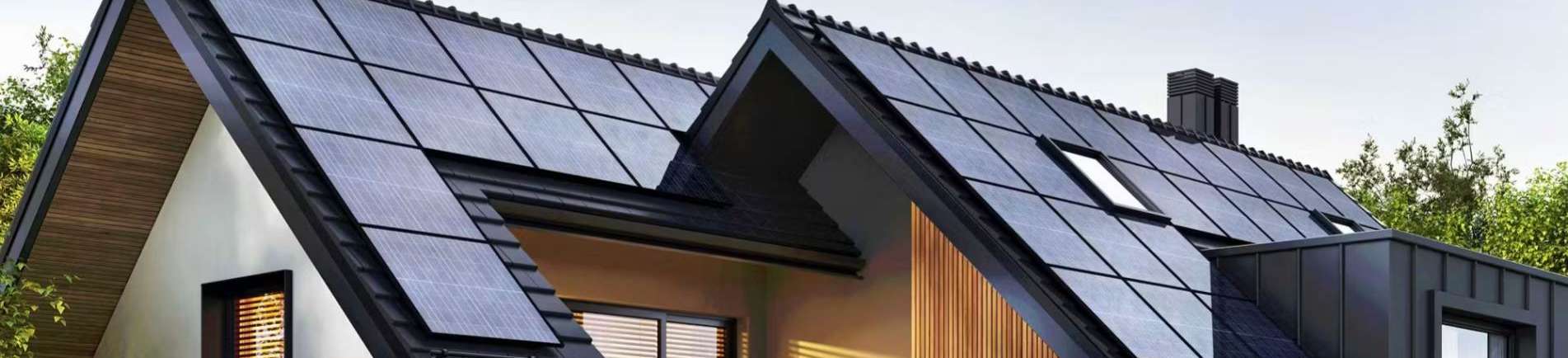
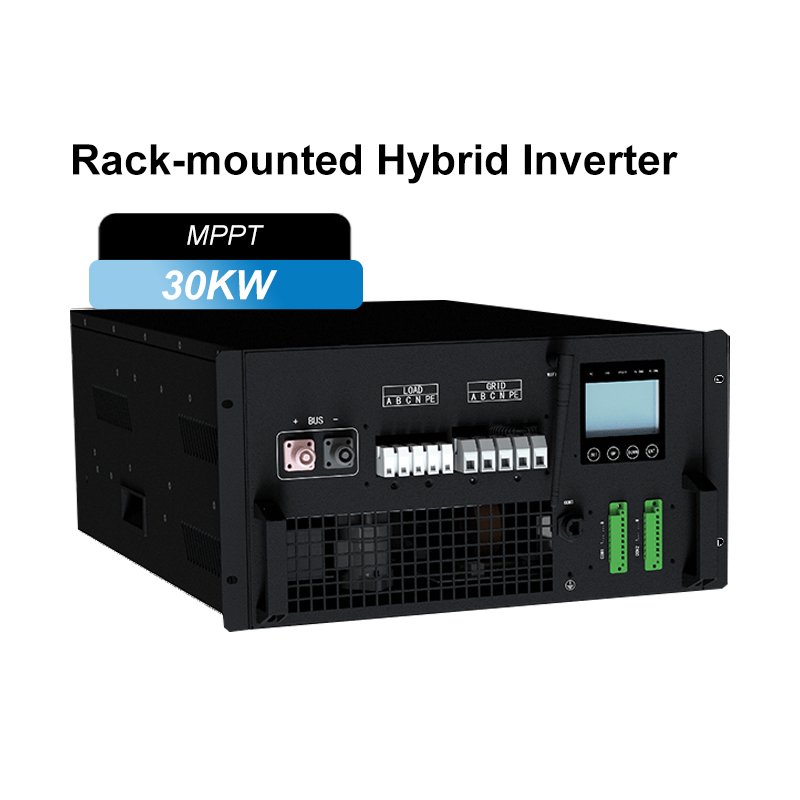
A 30 kW array on a private house is unusual, and this one is not made of panels. It is 936 three-curved Hantile tiles forming the covering itself, with 30 kWh of LFP storage and a 30 kW rack-mounted hybrid inverter behind them. No rack, no clamp, no second trade waiting to put holes in a waterproof layer.
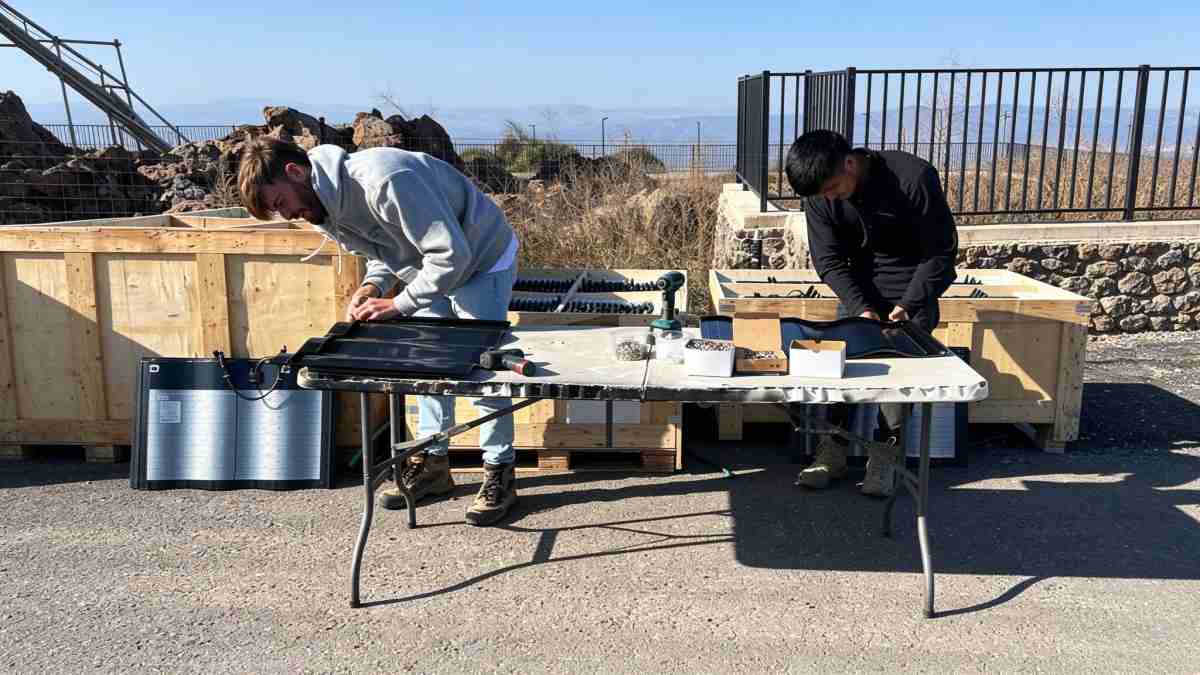
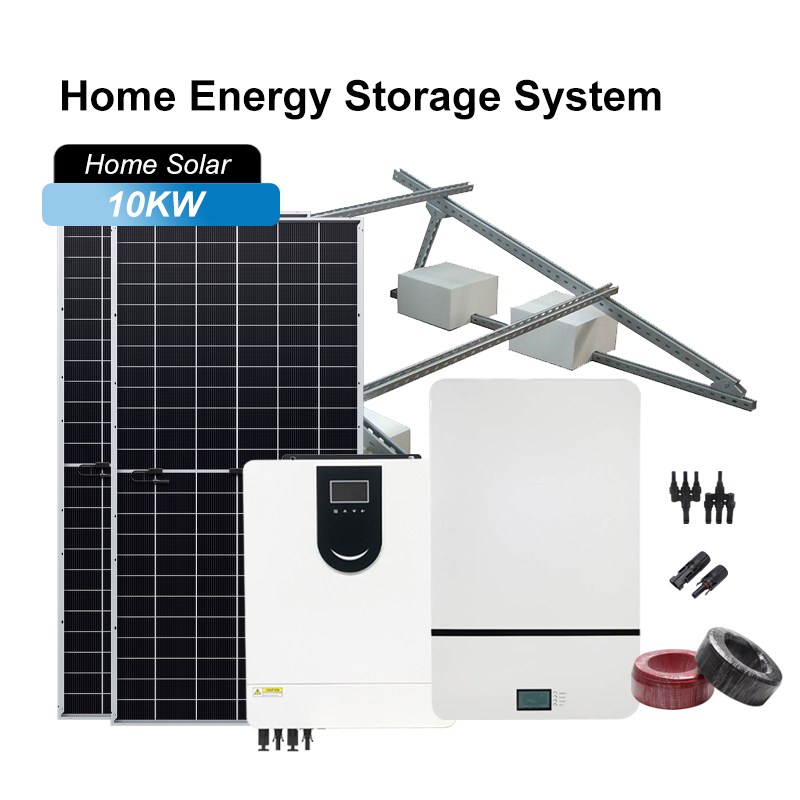
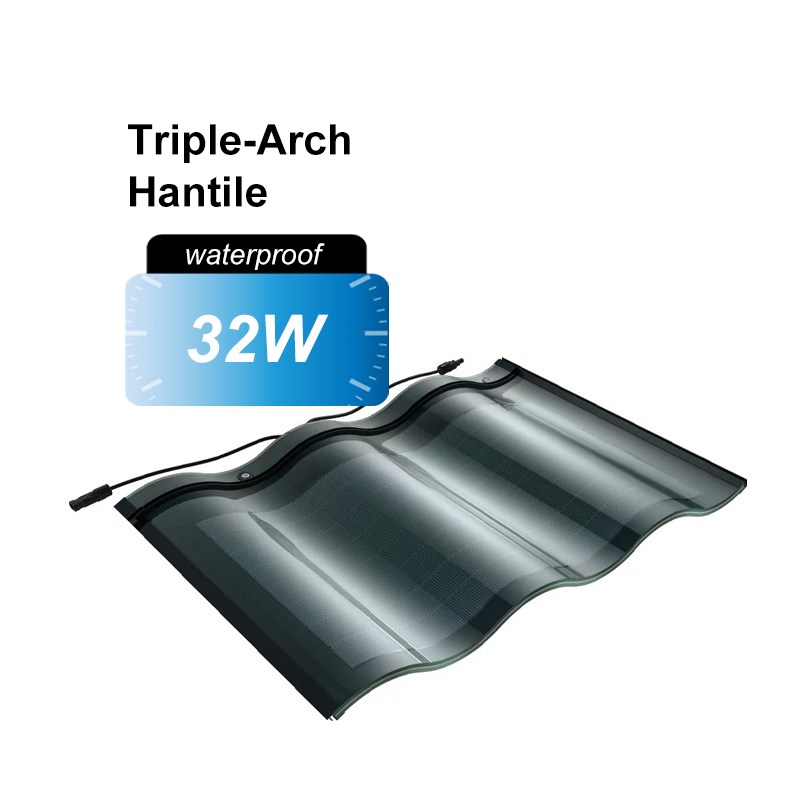
The field is 936 tiles at 32 W each, which comes to 29.95 kWp spread over about 328 m² of roof. The tiles went on as the roof covering, course by course, with the leads pulled as each course went down. Behind them sit 30 kWh of lithium iron phosphate and a three-phase rack-mounted hybrid inverter rated at 30 kW, so the house can run its evening load from the pack and keep running through an outage.
At this size the roof is not a decoration on the building. It is the building envelope doing two jobs, and the numbers are correspondingly large: 6.1 tonnes of glass and aluminium on the structure, eighteen strings of 52 tiles, and a DC field that is deliberately kept just under the 30 kW line that separates one regulatory category from the next in Israel. That last detail shaped the whole design, and it is worth understanding before reading the rest.
The installation ran through a local partner in 2026, which matters for a reason that has nothing to do with the tile: systems commissioned before the tariff reform takes effect keep the current export rate for 25 years. The same roof built in 2027 is a different asset. What follows separates the parts of this project that are engineering from the parts that are a calendar.
GreenMore supplied the tile, the string layout and the storage sizing. The partner handled the roof survey, the grid application, the three-phase connection and the commissioning. A second Israel roof at 20 kW with 20 kWh of storage shows the same tile on a smaller house.
| System Type | Residential roof, tile-for-tile BIPV with battery storage |
| Location | Israel |
| Array Capacity | 29.95 kWp, 936 GM-HW32L three-curved solar tiles at 32 W |
| Roof Area | About 328 m² of finished roof |
| Tile Weight | 6.5 kg per tile; 6.1 t and about 18.6 kg/m² for the 936-tile field |
| String Layout | 18 strings of 52 tiles, six strings per MPPT input, 21.6 A against a 25 A limit |
| Inverter | 30 kW three-phase rack-mounted hybrid, 3 MPPT, 250–900 V, on-grid and off-grid |
| Storage | 30 kWh LFP, about 24 kWh usable at 80% depth of discharge, 6,000+ cycles |
| Fire Rating | Class C |
| Ingress Protection | IP67 junction box with MC4 connectors |
| Certification | Tile EN 14782, EN 1090-1, CE; storage CE, IEC, MSDS, UN38.3 |
| Warranty | Tile 25 years linear power output; storage and inverter 3 years |
The tile itself, its profiles and the colours available for OEM work, is set out on the Hantile solar roof system page.
Nobody measures a house and arrives at 30 kW. It is a boundary. Israel values rooftop generation in bands, and the first band runs up to 30 kW, which covers every ordinary house. Systems inside that band are paid a fixed price for what they export, set for the life of the contract. Above it, the rules change: the reform under consultation in 2026 puts 30 to 100 kW on a split day and night price and pushes 100 to 630 kW onto the competitive market.
So a designer who lands at 29.95 kWp has not run out of roof. The design has run out of tier. At 29.95 kWp there are 50 W of headroom under the line, and one more tile at 32 W would cross it. This is the same arithmetic that puts Greek household systems at 10 kWp under a 10.8 kW ceiling, and it is the single most useful thing to understand when a quotation arrives with an odd capacity on it.
There is a second layer to it. The reform proposes cutting the fixed rate for the residential band from the current 0.48 to 0.54 shekels per kWh toward roughly 0.35, with a further one percent reduction each quarter. Systems already commissioned keep the old rate for 25 years. That is why the Ministry ran a campaign through 2026 telling homeowners not to wait: the difference between this year and next is not a percentage, it is a different contract.
The policy direction is not in doubt either. The Ministry of Energy has a target of one million solar roofs by 2030 and, since July 2026, a plan to compress household installation to 30 days from first application to grid connection, with a single digital platform replacing the current chain. Its own mapping exercise puts the urban rooftop potential at 17 GW, more than half of it residential. A 30 kW roof in 2026 sits at the front of a programme that is about to become routine.
A 32 W tile covering 0.35 m² is 91 W per square metre of roof. A 650 W framed panel covering 2.6 m² is about 250. That is the trade in one line: a solar tile needs roughly two and a half times the area of a panel for the same capacity, and at 30 kW the difference is between a large roof and an impossible one.
On this house the roof was large enough. 936 tiles at 700 by 500 mm lay out at about 328 m², and the count was fixed by the roof geometry before the inverter was chosen. Eighteen strings of 52 tiles put each string at 463 V at maximum power, well inside the 250 to 900 V window, and 601 V at the coldest morning the tile is rated for. Six strings per MPPT input draws 21.6 A against a 25 A limit, which leaves the headroom a commissioning engineer wants rather than the margin a catalogue promises.
The structural conversation is shorter than people expect. At 18.6 kg/m² the finished field is lighter than the clay or concrete covering it replaced, which usually runs 45 to 60 kg/m² once battens and mortar are counted. What the engineer is actually checking is whether the battens are still sound, whether fixings land on timber rather than in the gap between, and whether the roof is tied down at the eaves. How the load ratings are read is the ten-minute version.
If area is the constraint rather than the tier, the same 30 kWp can be had from the back-contact curved tile at 50 W: 600 tiles over about 216 m² instead of 936 over 328, the same capacity on two-thirds of the roof. It costs more per watt, and that is the whole trade. On a house with a small roof and a large ambition, that is the version to price.
PVGIS 5.3 for Tel Aviv at a 30° tilt with 14% system losses gives 1,718 kWh per kWp per year. Scaled to 29.95 kWp that is about 51,500 kWh a year, or 141 kWh on an average day.
The monthly shape is the part that surprises people who work in Europe. December still produces about 107 kWh a day and July about 164. The array swings by a factor of 1.5 across the year, where a Greek roof swings by more than three and a Dutch roof by ten. There is no winter to survive here. There is a flat, high plateau and a household underneath it that uses a fraction of what lands on the roof.
A 30 kW inverter against 29.95 kWp is a DC-to-AC ratio of one to one, which is right for a climate where the array spends the middle of the day hot and de-rated rather than cold and over-producing. The clipping that a 1.3 ratio would cause in a northern country almost never happens here, because the roof is never at full output when the air is at 38 °C.
The pack holds 24 kWh at 80% depth of discharge. An Israeli villa running air conditioning through the evening draws somewhere between 15 and 25 kWh between sunset and sunrise, so the pack covers a normal night and falls short on the hottest ones. It is not sized to carry the house for two days. It is sized to move one evening.
The retail price from 1 July 2026 is 63.52 agorot per kWh including VAT on the flat household tariff, which is what the stored kilowatt-hour displaces. On the time-of-use tariff the spread is far wider: the summer peak band runs 17:00 to 23:00 at 172.23 agorot, against 50.42 off-peak. A kilowatt-hour generated at noon, held in the pack and released into that peak is worth 1.72 shekels of avoided purchase rather than 0.63, and the export it displaces was only earning about 0.50.
That is the whole economic case for storage in Israel, and it is why the pack is worth more here than the same pack on a flat tariff. The ceiling is not the battery, it is the load inside the peak window: six hours of an evening draw of 2.5 kW is 15 kWh, which is what a realistic night of discharge looks like. At 1.22 shekels of net gain per kilowatt-hour across 300 evenings, that is the order of 5,500 shekels a year, and the exact figure depends on how the house actually behaves rather than on the datasheet.
What is left over is exported, and at this capacity it is most of the generation. If the house consumes 20,000 kWh a year and the pack moves 4,500 of it into the evening, roughly 35,000 kWh a year leaves for the grid. At the current 0.48 to 0.54 shekel rate that is a substantial income line, and it is the line that the 2027 reform is aimed at. Anyone reading this as a self-consumption project has the proportions wrong.
NOCT is 45 °C. On a still August afternoon at 35 °C ambient with the field in full sun, cell temperature sits around 65 °C, and at 0.40% of rated power lost per degree above 25 °C that is 16% off: 30 kWp behaving like 25.2 kW. Push the ambient to 40 °C on a Negev roof and the cell reaches 72 °C, the loss is 19%, and the array delivers about 24.3 kW at the moment the air conditioning is at full load. This is normal, it is priced into the yield figures above, and it is the reason a one-to-one DC ratio is not conservative here but correct.
The tile is tested to resist hail up to 25 mm diameter at 23 m/s, which covers the storms that cross the coastal plain in winter. What makes the difference in service is that both faces are tempered glass: a hail strike that would mark a polymer backsheet leaves nothing behind on a glass-glass laminate, and the front face is the part taking the hits.
On Mediterranean sites the failures that show up in year eight are rarely the cell. They are the edge seal, the lap joint where water stands, a fixing over-torqued on an uneven batten, and foot traffic across finished courses during commissioning. The junction box is IP67 with MC4 connectors and the mated pair sits under the lap rather than out on the field, so the electrical interfaces are not the exposed part. The field assessment of BIPV tile failures sets out the five modes and the inspection schedule that catches them early.
Nine hundred tiles is a roofing job before it is an electrical one. Six tonnes of glass goes up a scaffold by hand, and the sequence that keeps it sane is the sequence of an ordinary tile roof with the wiring folded in: strip, inspect and level the battens, lay from the eave up, pull the leads as each course goes down, then combine and commission.
Two things scale badly and have to be planned. The first is delivery: tile lead time runs about 15 days and the roof is open to the weather from the moment the old covering comes off, so on a 328 m² field the order goes in before the strip, in the right course sequence, not after it. The second is string discipline. Eighteen strings is eighteen opportunities to cross a polarity or leave a lead pinched under a lap, and the only reliable defence is pulling and labelling each string as it is built rather than fishing cable through a finished field.
The regulatory clock is now shorter than the build. Since July 2026 the Ministry of Energy target is 30 days from application to connection for household systems, with a single digital platform in place of the previous chain of approvals. That is a target rather than a guarantee, but it changes the planning assumption: the grid application goes in before the scaffold, not after the commissioning.
Under the current arrangement a rooftop system commissioned before the reform keeps its export rate for 25 years, at 0.48 to 0.54 shekels per kWh depending on size. That is a long, government-backed income line on an asset that cost a roof to build. It is also the reason this project was commissioned in 2026 rather than in 2027.
The proposal on the table from the Ministry of Energy, discussed by the Electricity Authority through the summer of 2026, splits low-voltage rooftops into three bands. Up to 30 kW stays on a fixed price, but a lower one, around 0.35 shekels and falling one percent a quarter. From 30 to 100 kW the price splits into day and night, with the daytime rate deliberately low to reflect the midday surplus and the night rate high enough to make storage worth installing. Above 100 kW the roof competes on the market like a small solar farm. Anyone who has priced a commercial roof in southern Europe in the last three years will recognise the direction.
For a 30 kW house the practical reading is narrow. The rate is locked, the lock is contractual, and the reform cannot reach back into it. What the reform does change is the resale argument: a roof built under the old rate is worth more than an identical roof built after it, and that difference will show up in property valuations before it shows up in any policy document.
Large roof, high summer load, time-of-use tariff and a household that is home in the evening. The 24 kWh of usable storage lands directly on the peak band, the array carries the daytime cooling load, and the 30 kW tier keeps the export contract simple. This is the case the system was drawn for.
The roof also matters aesthetically in a way it does not on an industrial shed. A villa in Herzliya or Caesarea with a tiled roof keeps a tiled roof, and the covering is the thing neighbours see rather than a bank of panels sitting above it.
Here the numbers shift. Ambient reaches 40 °C and beyond, dust settles faster, and the grid is thinner, so the off-grid capability of the inverter stops being a feature and becomes the reason for the purchase. Derating is heavier, the annual yield is higher than the coast, and a spring wash matters more than any mounting detail. The same tile, a different operating regime.
Daytime load is the whole point here. A clinic running cooling and equipment from eight in the morning is consuming exactly when the roof is producing, so self-consumption is high without any storage at all, and the pack becomes an outage measure rather than an economic one. Thirty kilowatts sits comfortably under the tier line and above the load of a small business.
936 of the 32 W three-curved tile, covering about 328 m². The same capacity in the 50 W back-contact curved tile takes 600 tiles and about 216 m², because it produces 139 W per square metre against 91. Area, not power, is usually what decides which one a roof can take.
Usually not, and the direction of the load matters. The finished field lands at about 18.6 kg/m², against 45 to 60 kg/m² for the clay or concrete covering it replaces. The check is on batten condition, on whether fixings land on timber, and on wind uplift at the eaves and ridge of a large field.
Nothing, for systems already commissioned. The contract fixes the rate for 25 years, at 0.48 to 0.54 shekels per kWh depending on size. The reform applies to new systems, and its proposal is a lower fixed rate for rooftops up to 30 kW, a day and night split from 30 to 100 kW, and market pricing above that.
It holds about 24 kWh at 80% depth of discharge, which covers a normal villa night and falls short on the hottest ones. The limit is not the pack, it is the load inside the evening peak window: six hours of 2.5 kW is 15 kWh, and that is the realistic nightly discharge.
Yes, to 25 mm at 23 m/s. Both faces are tempered glass, so a strike that would scar a polymer backsheet leaves the laminate intact, and the front face is the part taking the hits.
Yes. The inverter is a three-phase hybrid rated for on-grid and off-grid operation with 110% overload capacity and full unbalanced load capability, so a single-phase air conditioner on a three-phase supply is not a problem. The difference between a storage inverter and an off-grid inverter is mostly about changeover time and which circuits sit behind the backup.
They are cheaper per kilowatt and they need a third of the area, and on an industrial shed that settles it. On a house the covering is the thing being bought, so the comparison is between this roof and that roof rather than between tiles and panels. What the tile removes is the second trade, the penetrations and the split warranty.
If you are sizing a tile roof in Israel, the Gulf or anywhere with a tariff band worth designing to, send the roof dimensions and the household consumption profile and the engineering team will come back with a tile count, a string layout and a storage size rather than a catalogue page.
Stay up to date with GreenMore. We share new BIPV solar tile releases, product and certification updates, and field notes from our projects — no fluff, just the things that matter to installers, distributors, and system integrators. If there's something you'd like to see covered, drop us a line — we read every reply.




Copyright @ 2026 GreenMore All Rights Reserved.  Network Supported
Sitemap / Blog / Xml / Privacy Policy