
Welcome to GreenMore
Welcome to GreenMore
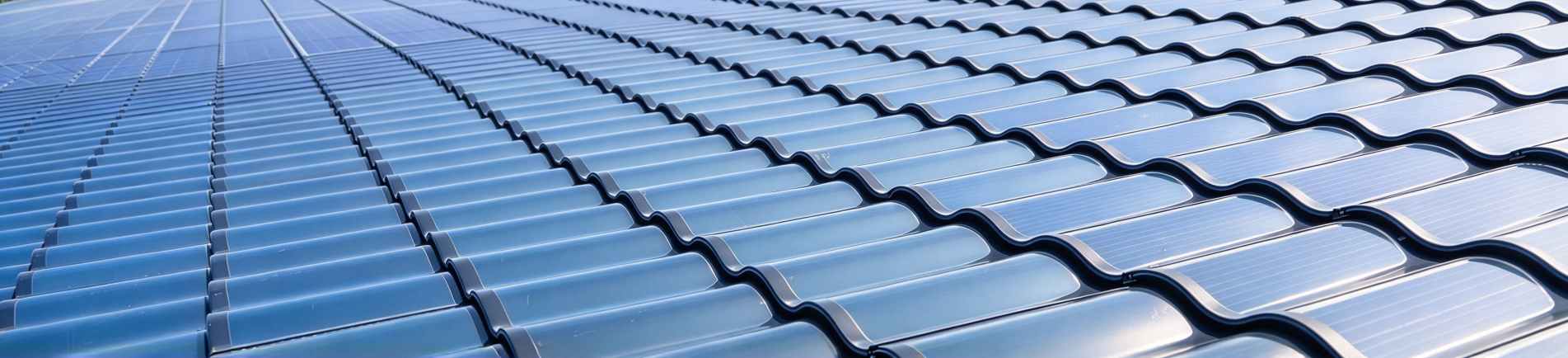
Solar roof tiles are one of the defining products of modern BIPV — building-integrated photovoltaics. The idea sounds simple, but the engineering behind it is not: a solar tile has to be a genuine roof covering and a genuine power generator at the same time, and it has to connect into the building’s electrical system safely.
This article explains how that integration actually works — structurally, electrically, and as part of a wider system with an inverter and, where required, a battery.
A conventional panel is added to a roof that is already finished and weatherproof. A BIPV tile changes that order: it replaces part of the outer covering and becomes the weather line itself. That is why the structural details are the starting point, not an afterthought.
A solar tile therefore works as both a roofing material and a photovoltaic module, with the following features built in:
Because the tile is part of the envelope, the roof build-up underneath still matters: a waterproof underlay provides a second line of defence, and a ventilated gap behind the tiles lets heat and moisture escape. You can find the practical sequence in our guide to installing solar tiles on a roof.
Structural integration is only half of BIPV. The tiles also have to deliver their power into the building in a controlled, safe way. The electrical architecture follows a clear path from tile to grid.
Each tile is fitted with weatherproof plugs and sockets, so neighbouring tiles connect quickly on the roof. Factory-made connectors keep polarity consistent and reduce the amount of exposed wiring, which both speeds installation and lowers the chance of a faulty joint.
Tiles are wired in series into strings so the voltage reaches the inverter’s working range. The strings are brought together and protected (with fuses or isolation as the design requires) before the power moves on. String length is calculated for the local temperature range, since tile voltage rises in cold weather and falls in heat.
The inverter converts the tiles’ direct current into alternating current that matches the grid and the building’s appliances. A grid-tied inverter exports surplus and imports when generation is short; a hybrid inverter adds the connections needed for a battery. On shaded or complex roofs, microinverters or optimizers can work at the individual tile instead. We cover these options across our BIPV roof system guides.
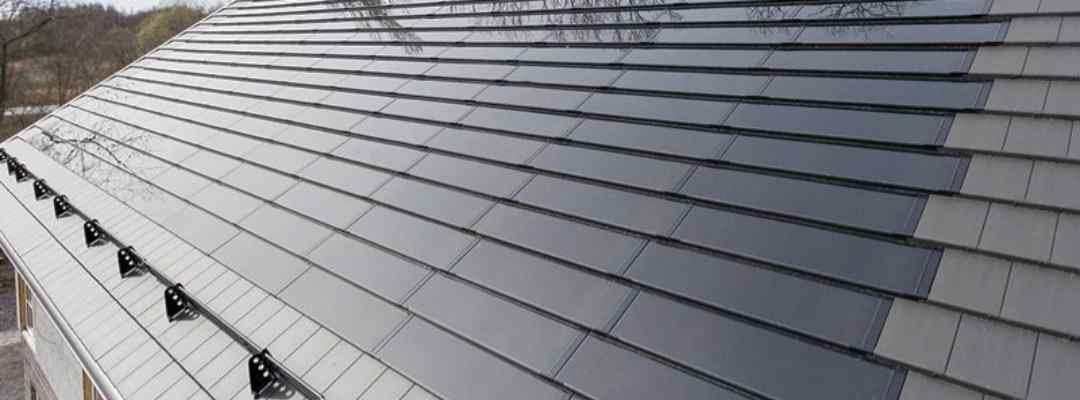
Real-life photos of residential flat-plate photovoltaic tile installation on pitched roofs
Because the tiles are the building envelope, they contribute to several ordinary building functions at once. It is worth separating these, because each does a different job.
Water is managed by the overlapping courses, gaskets at the compressed joints, and the waterproof underlay below — a roofing system rather than a single seal. Correct detailing at eaves, verges, ridges, and any roof penetration completes it.
Tiles and their fasteners are designed as a system for the building’s wind region, with the fixing rail or batten and its screws sized to resist uplift. Our tiles are verified for a 5400 Pa downward and 2400 Pa upward static load.
The ventilated cavity behind the tiles carries heat away in summer and helps prevent condensation in winter. This keeps the cells closer to their efficient temperature; the exact benefit depends on the cavity and climate, so we describe it as cooler running rather than quoting a fixed extra percentage.
With no rails or clamps over the covering, the roof reads as a single, uniform surface. This is the main reason architects and premium residential and commercial projects choose tiles over an add-on array.
Many BIPV systems include a battery. The tiles often generate most around the middle of the day, when a building may be using relatively little, while demand returns in the evening. Storage shifts that energy to where it is useful.
A battery is sized from the loads it needs to cover and how long they must run — not simply matched to the array size. Browse our home energy storage category and the home solar battery system for supported capacities.
Put together, an integrated solar-tile BIPV system consists of:
The result is a building that generates its own power, uses more of it on site, and relies less on the grid. It is worth being precise about that last point: a grid-connected roof with a battery meaningfully reduces dependence, but true off-grid independence requires a larger array, enough storage for poor-weather stretches, and often a backup generator. The two should not be confused.
Solar tiles are chosen for BIPV work because they offer a combination that add-on panels do not: architectural consistency, a durable glass outer skin, low routine maintenance, and compatibility with modern inverters and storage. They fit residential villas, commercial and industrial buildings, and premium architectural projects alike — the profile and power density are selected to suit the building rather than the other way round.
The trade-off is honest: tiles cost more per watt than standard panels and, for curved profiles, generate less per square metre, so a plain existing roof whose only goal is the cheapest generation is often better served by conventional panels. Tiles are strongest on new builds and re-roofs, where they replace the covering, and on projects where appearance or planning requirements matter.
They replace the outer weatherproof covering and sit over the normal roof build-up, including a waterproof underlay. They are not fitted over an existing covering; the roof is built (or rebuilt) with the tiles as its outer layer.
Tiles plug together on the roof, are grouped into strings, and feed an inverter that converts the DC output to AC for the building and the grid. A hybrid inverter also connects a battery, with metering and the required safety and earthing included.
No. A grid-tied system works without a battery, exporting surplus and importing when generation is low. A battery is added when you want to use more of your own generation in the evening, keep circuits running during outages, or manage commercial peak demand.
Yes, through standard roofing design: overlapping and interlocking tiles, gaskets at the joints, a waterproof underlay beneath, and correct edge and ridge detailing. This is separate from the electrical IP ratings of the connectors.
The tiles carry a 25-year linear power warranty. The inverter, battery, and other non-tile parts carry a 3-year warranty, which is stated separately so the terms match the products supplied.
GreenMore is a photovoltaic tile manufacturer. Our solar tiles, photovoltaic bricks, and photovoltaic curtain walls are produced in-house, and we supply the inverter and battery as the supporting parts that complete the system. If you tell us the building type, roof area, location, and target output, we will put together a buildable proposal matched to the local code.
Reach us through our contact page or email export@gmsolarkit.com. You can also browse the full range on our website, www.gmsolarkit.com.
Luke manages GreenMore’s photovoltaic building-material range, from the curved triple-arch tile to flat tiles and PV curtain walls. In the solar industry since 2017, he focuses on systems that are genuinely buildable, with correct electrical sizing and warranty terms that match the products shipped.
Stay up to date with GreenMore. We share new BIPV solar tile releases, product and certification updates, and field notes from our projects — no fluff, just the things that matter to installers, distributors, and system integrators. If there's something you'd like to see covered, drop us a line — we read every reply.




Copyright @ 2026 GreenMore All Rights Reserved.  Network Supported
Sitemap / Blog / Xml / Privacy Policy


