Welcome to GreenMore
Welcome to GreenMore
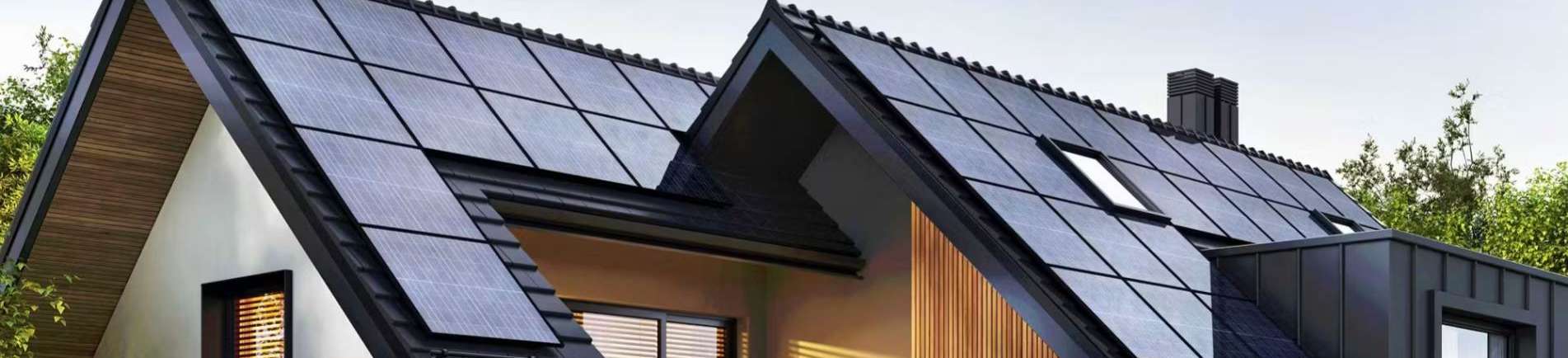
A 15 kWp roof in Denmark, built from 469 GreenMore triple-arch Hantile tiles at 32 W each, feeding two GM-ESS-BP200S16 all-in-one units carrying 20.48 kWh of LFP between them. The tiles are the roof, not a covering laid on top of one, which is what makes the system work on a Danish pitched roof without racking or flashing. The design question here is not whether the roof can generate. It is what a Nordic winter does to the arithmetic, and what happened to that arithmetic when Denmark cut its electricity tax on 1 January 2026.
| System Type | Residential BIPV roof, off-grid with battery storage |
| Location | Denmark |
| Array Capacity | 15.0 kWp / 20.48 kWh storage |
| Solar Roof | 469 × GM-HW32L triple-arch tile, 32 W each, about 160 m² of roof |
| Tile Weight | 6.5 kg each, 3.0 t on the roof, 18.6 kg/m² |
| DC Configuration | About 16 strings of 29–30 tiles, 324 V open circuit per string |
| Storage | 2 × GM-ESS-BP200S16, 10.24 kWh each, 51.2 V LFP |
| Conversion | 5 kW AC per unit in parallel, 10 kW combined |
| PV Input | MPPT 120–450 V, 5,000 W per unit, 10 kW combined |
| Warranty | 10-year product and 25-year linear power on tiles, 3 years on storage |
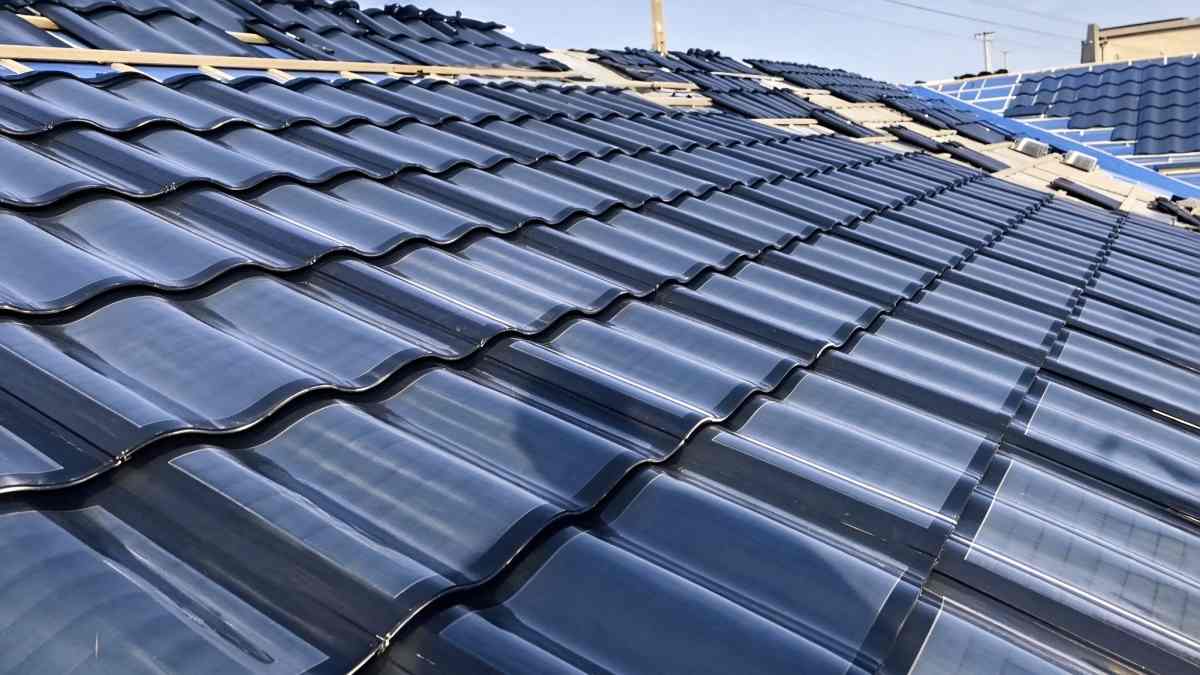
The Hantile is a 32 W tile at 700 × 500 mm, which is 0.35 m² of gross area for 32 W, or 91 W per square metre. A 550 W panel delivers 213 W/m², so the same 15 kWp needs about 70 m² of panel and about 160 m² of tile. Comparing the two on price per kilowatt without comparing the roof they need is comparing the wrong number.
What the tile gives back is the roof itself: no second layer, no rails, no penetration at every mounting foot, nothing proud of the plane of the covering. A tile roof can also replace the existing covering rather than sit above it, so re-roofing and generating become one project. The structure gains too. At 6.5 kg per tile the array weighs 3.0 t, or 18.6 kg/m², against 40 to 50 kg/m² for the concrete pantiles it displaces.
On 1 January 2026 Denmark cut its electricity tax from 72.7 øre to 0.8 øre per kWh, the EU minimum, for 2026 and 2027. Eurostat puts the Danish household price at 23.8 ct/kWh in the first half of 2026, down 31.9% from 34.9 ct/kWh a year earlier, the sharpest fall in the EU. Statistics Denmark records 1.8 DKK per kWh over the same period.
Self-consumption is priced at the avoided retail rate, so when a third of the bill was tax, every self-consumed kilowatt-hour avoided that tax as well. It no longer does. The value of the same kilowatt-hour has fallen by roughly a third while the hardware cost has not, and a business case copied from a 2024 Danish quote will not survive a 2026 bill. Denmark still added 1,548 MW of solar in 2025 to reach 6.3 GW, but much of that momentum was built on the old arithmetic.
An off-grid house never sees that retail rate, so the cut does not change its bill directly. What it changes is the benchmark. A house with no connection is comparing the cost of standing alone against the cost of connecting, and connecting just became about a third cheaper to run. The export rules do not apply either: with no connection there is nothing to sell, no hourly settlement, and no use for the DKK 7,000 tax-free sales allowance that grid-connected owners work with. What is left on the support side is the green craftsman deduction of up to DKK 9,000 of labour per person, since there are no capital grants for new private solar. The case for this system rests on what it displaces, not on what it sells.
The GM-HW32L runs 10.8 V open circuit and 4.1 A short circuit, with 8.9 V and 3.6 A at maximum power. Every string calculation a designer would use on a 550 W module has to be rebuilt from scratch.
The BP200S16 gives an MPPT window of 120 to 450 V. At the bottom, 120 V divided by a hot-day Vmp of about 7.4 V puts the floor at 16 tiles. At the top, 450 V has to hold on a cold morning: with a Voc coefficient of −0.35%/°C, a tile rated 10.8 V at 25 °C reads 12.1 V at −10 °C, capping a string at 37 tiles. Thirty is the practical length: 324 V open circuit, 364 V at −10 °C, 267 V at maximum power, 960 W, 3.6 A.
That is about sixteen strings for 469 tiles, and here the tile roof parts company with the panel roof. Sixteen strings have to be combined down to two PV inputs, so combiner boxes, fusing and a proper DC drawing are part of the job, because at 3.6 A per string it is the string count that drives the balance of system. The same 15 kWp in panels is 28 modules and two strings. How the strings are laid out on a tile roof is worth reading before the array drawing is signed off.
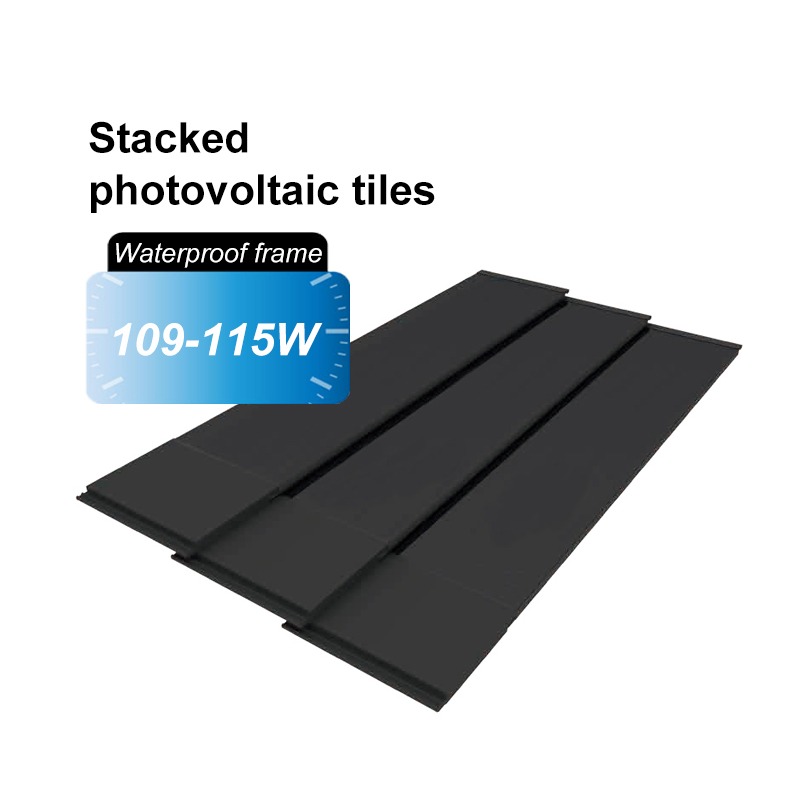
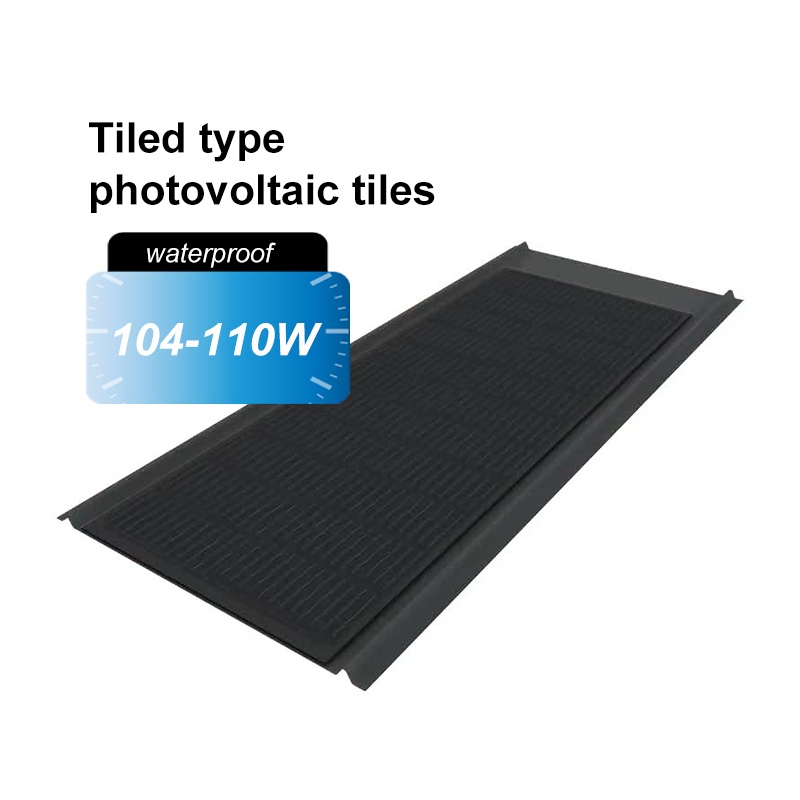
The tile is 700 × 500 × 33 mm and 6.5 kg, tempered glass front and back around an aluminium alloy frame, with an IP67 junction box and MC4 connectors. The three-curve profile lets courses interlock and shed water by geometry, and the windproof hooks are cast into the profile rather than added on site. What matters in Denmark: 5,400 Pa front static load, Class C fire resistance, hail to 25 mm at 23 m/s, and an operating range of −40 to +85 °C. Certification is EN 14782, EN 1090-1 and CE. Black, red, green and grey are all available, which on a street of red pantiles is not a decorative detail.
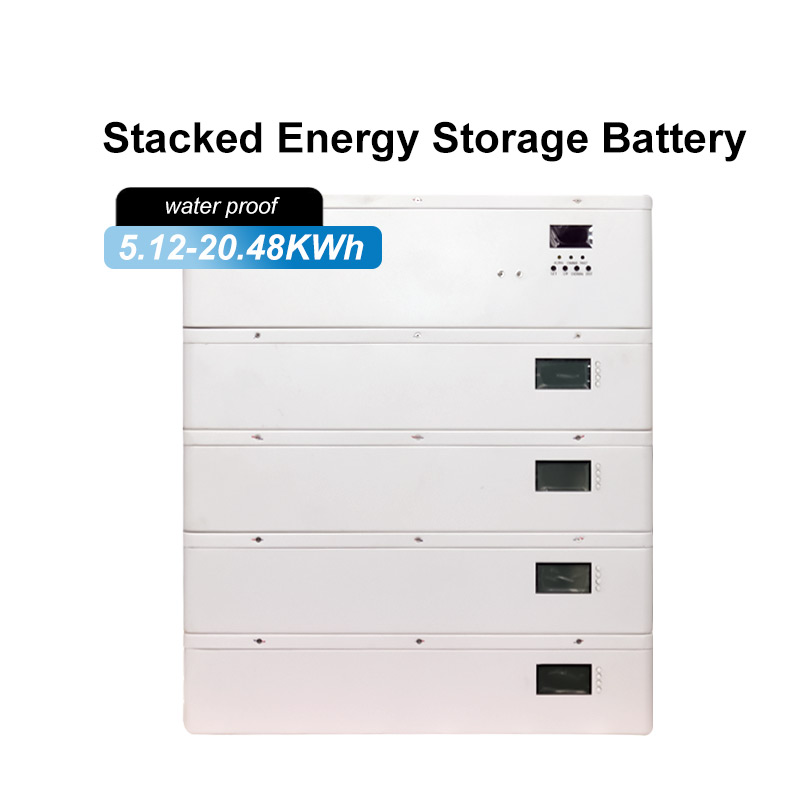
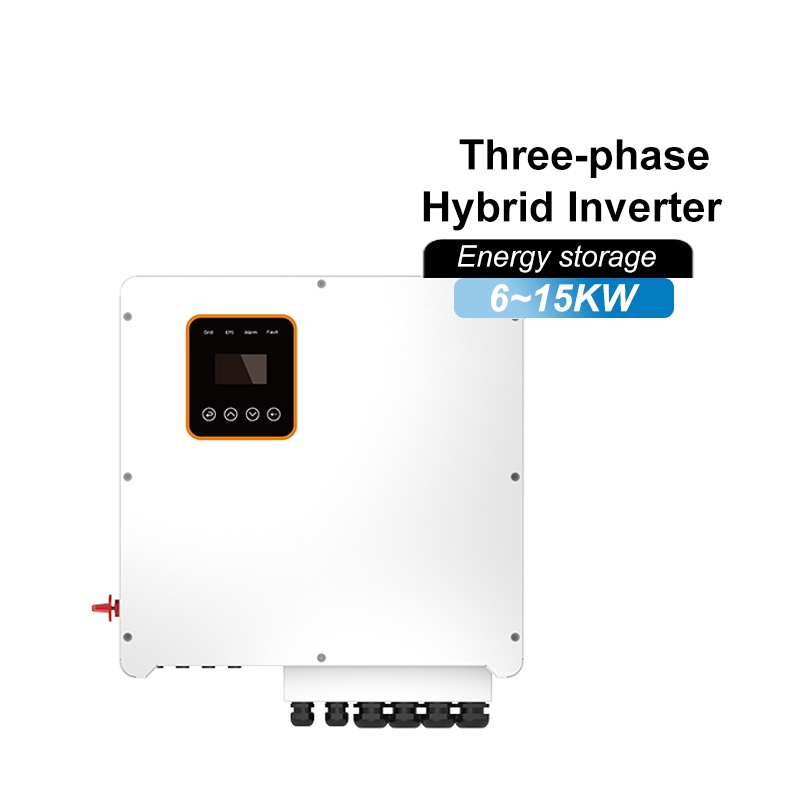
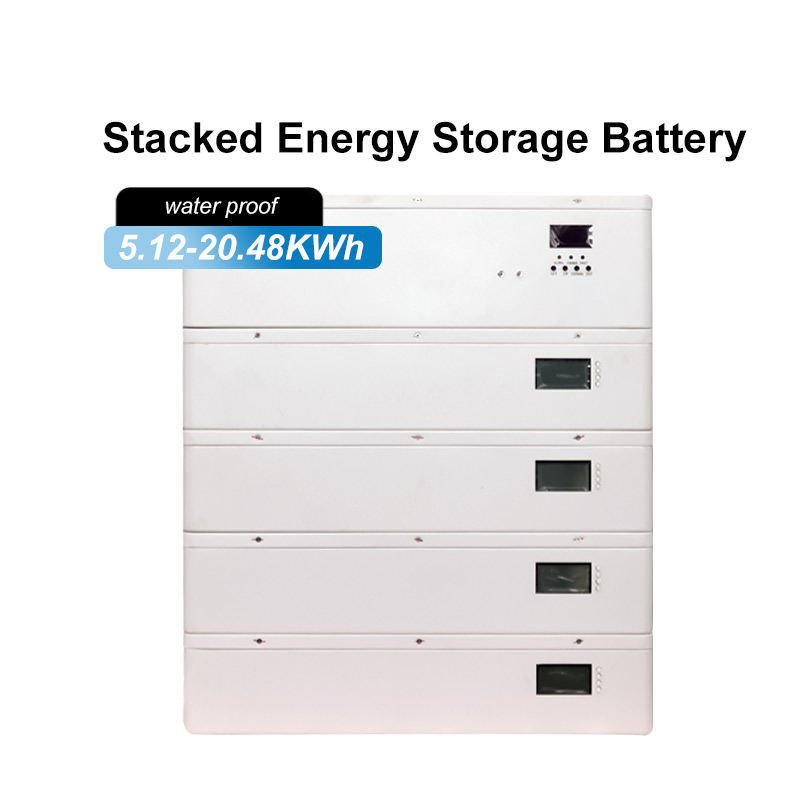
Each unit holds 10.24 kWh in 3.2 V 200 Ah LFP square cells at 51.2 V, operating between 40 and 58.4 V, and carries its own 5 kW inverter, 5 kW PV input and MPPT across 120 to 450 V. Two in parallel give 20.48 kWh and 10 kW of AC. Each is 90 kg and 1100 × 540 × 160 mm, wall-mounted or floor-standing, IP54, forced-air cooled, with CAN, RS485 and RS232 monitoring. Certification is CE, IEC 62619, MSDS and UN38.3, with a 3-year warranty. What 10 kWh covers in a household runs through the load side.
The pair weighs 180 kg and needs 1.1 m of wall height per unit. IP54 and forced-air cooling suit a utility room, a garage or a plant cupboard, not an exposed outbuilding. The number to design around is the operating window: charging is rated 0 to 55 °C, discharging −20 to 60 °C. LFP does not accept charge below freezing, so the room has to stay frost-free in January. That is a building decision, not a battery one.
Fifteen kilowatts of tile into ten kilowatts of conversion reads as a mismatch until you look at when the roof produces. A well-angled Danish array returns roughly 950 kWh per kWp over a year, but June delivers more than five times what December does. A system sized for December would be absurd in June; one sized for June produces almost nothing when it is needed most.
So the array is oversized on purpose, 1.5 to the AC rating. Two BP200S16 units accept 10 kW of PV between them, which means everything above two-thirds of standard irradiance is clipped, and on a clear Danish June noon that is a third of the roof. The energy given up is the energy the house has nowhere to put. The figure to quote for this system is 10 kW of AC output and 20.48 kWh of storage, not 15 kW. Fifteen is what the roof makes on a good day, not what the plant room can pass through.
At 950 kWh/kWp the array is worth about 14,250 kWh a year before clipping, and the 10 kW ceiling takes 2 to 3% of that, all of it in June middays. Three and a half times what a typical Danish house without a heat pump consumes. Spread across the calendar, June contributes around 1,900 kWh and December around 210 kWh, or 7 kWh a day against a winter load usually two to three times higher.
The 20.48 kWh battery carries a household for a bit over a day at winter consumption, enough to ride out a short grey spell and not enough to ride out a week of it. This is the honest limit of any PV system at this latitude, and it is why the sizing conversation in Denmark starts with the winter load profile rather than the annual total. A house occupied through January and February needs a second source for those two months, generator or connection. A summer house used from April to October needs nothing of the sort.
Danish roof snow loads sit around 1.0 kN/m² in the national annex to EN 1991-1-3, against 5,400 Pa of rated front static load, so the covering has margin. The interlocking profile also presents snow with a continuous plane rather than a field of module gaps, with no rail for drift to pack against. Hail to 25 mm at 23 m/s and a −40 to +85 °C range cover the rest of the weather file.
Freeze-thaw is the slower test. Glass on both faces with an aluminium frame means no backsheet to embrittle and no polymer layer taking the thermal cycling. Ten thousand days of rain, heat, frost and UV is the long version of that argument. What the roof cannot solve is the plant room: keep it above zero in winter, or the batteries sit idle exactly when the array is weakest.
The array keeps working, but output is a fraction of summer. December produces around 210 kWh for this roof, about 7 kWh a day, while a winter household load runs two to three times that. The 20.48 kWh battery bridges short grey spells, not the season. Treat December and January as needing a second source and the system behaves predictably.
Because the tile is the roof. At 91 W/m² against 213 W/m² for a 550 W panel, the same capacity needs about 160 m² instead of 70. What you get back is one assembly with no racking and no roof penetrations, a lighter load on the structure than the pantiles it replaces, and an appearance that fits a Danish street.
No. The BP200S16 is rated for charging from 0 to 55 °C and discharging from −20 to 60 °C, which is normal for LFP and has to be designed around. Keep the units in a frost-free utility room or garage; IP54 covers dust and splashing water, not an unheated outbuilding in February.
No. With no grid connection there is nothing to export, so net metering, hourly settlement and the DKK 7,000 tax-free sales allowance do not come into it. What an off-grid house needs instead is a winter plan: December delivers about 7 kWh a day here, and the second source for January and February has to be decided before the plant room is laid out.
There is no capital grant for new private solar. Support is tax-side: the green craftsman deduction of up to DKK 9,000 of labour per person, worth roughly 26% in tax value, plus the reduced electricity tax of 0.8 øre per kWh through 2027, which lowers the retail rate self-consumption displaces.
Yes. The BP200S16 is a parallel-capable all-in-one, so a third or fourth unit adds 10.24 kWh and 5 kW each without replacing what is installed. For households adding a heat pump or an EV that is the usual path, and it is also how a system moves from short-spell backup toward genuine winter autonomy.
Yes. Tiles come in black, red, green and grey with custom labelling and packaging, and electrical specifications can be adapted to the documentation a Nordic installer needs. The pack covers EN 14782, EN 1090-1 and CE for the tiles, and CE, IEC 62619, MSDS and UN38.3 for the storage.
The tile is rated 5,400 Pa of front static load against Danish roof snow loads of roughly 1.0 kN/m², and the interlocking profile gives snow a continuous plane rather than a field of module gaps. At 18.6 kg/m² the assembly is also lighter than the pantiles it replaces, so the structural question is usually about the existing roof, not about adding solar.
Planning a BIPV roof in a Nordic market? GreenMore supplies tiles, storage and conversion as one package, with layout drawings, string configuration and the certification pack your installer will be asked for. Talk to our team →
More installations are listed under GreenMore rooftop PV projects, including a 432-tile BIPV villa in the Middle East and a 15 kWp stacked tile roof in Vietnam. On the storage side, see an Irish household system and an off-grid installation in Ethiopia.
Stay up to date with GreenMore. We share new BIPV solar tile releases, product and certification updates, and field notes from our projects — no fluff, just the things that matter to installers, distributors, and system integrators. If there's something you'd like to see covered, drop us a line — we read every reply.




Copyright @ 2026 GreenMore All Rights Reserved.  Network Supported
Sitemap / Blog / Xml / Privacy Policy