What is a BIPV system?
Sep 27, 2026
L
Luke
Product Manager, GreenMore · BIPV solar tiles, facades & roof systems
If you have looked into solar for a building, you have probably run into the term BIPV and the equally common BAPV. The two are easy to mix up, but they describe genuinely different ways of putting photovoltaics on a building. This guide explains what a BIPV system is, how it is built, where it makes sense and how energy storage fits in — without the marketing noise.
Buildings are worth focusing on because they use a lot of energy. The International Energy Agency estimates that buildings account for roughly a third of global final energy consumption and more than a quarter of energy-related CO₂ emissions when construction is included. Generating some of that energy on the building itself, rather than importing all of it from the grid, is one of the more direct ways to close the gap (see the IEA).
What Is a BIPV System?
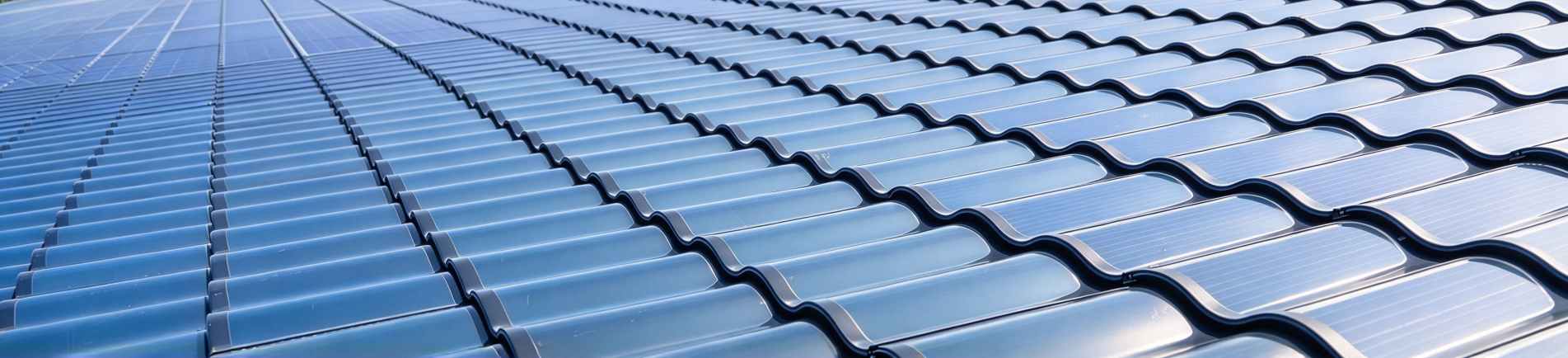
BIPV stands for building-integrated photovoltaics. In a BIPV system the photovoltaic product is part of the building envelope itself — the roof covering, the facade, a skylight or a canopy — so it works as a construction material and a power generator at the same time. It replaces a conventional tile, cladding panel or glass unit rather than being added on top of one.
BAPV, or building-applied photovoltaics, is the familiar approach where standard framed panels are fixed to an existing roof or facade with rails and clamps. The panels and the building are two separate layers, and removing the panels leaves the roof underneath intact. Both are valid technologies; BAPV is usually the cheaper retrofit on a sound roof, while BIPV gives a cleaner, more integrated finish and avoids paying twice for the roof covering and the solar array.
Schematic diagram of multi-story photovoltaic roof structure for industrial and commercial plants
How a BIPV System Is Built
A complete BIPV installation is more than the photovoltaic surface. The main parts are:
Photovoltaic elements — solar tiles, PV glass or panels that form the finished roof or facade surface.
Waterproofing and drainage — membranes, overlaps, gaskets and flashing that keep rain out and direct water off the roof.
Mounting structure — battens, rails or concealed fixings that hold the elements and often create an air gap behind them.
DC wiring and protection — strings, combiner boxes, isolators, surge protection and earthing.
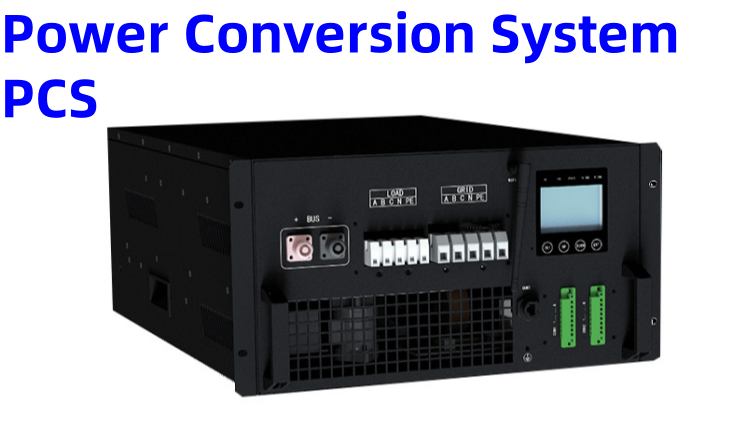
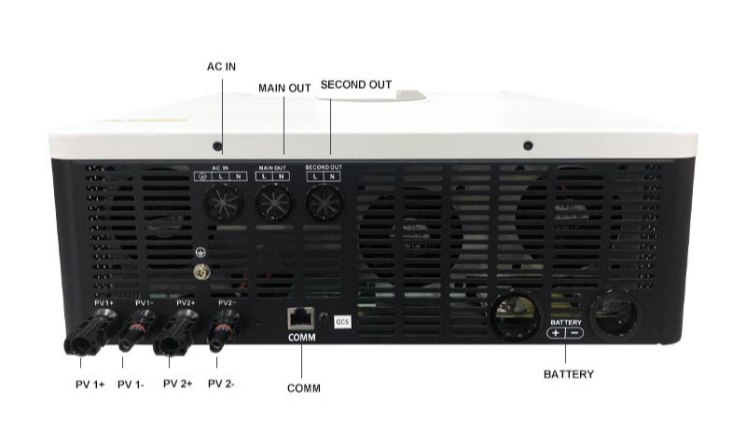
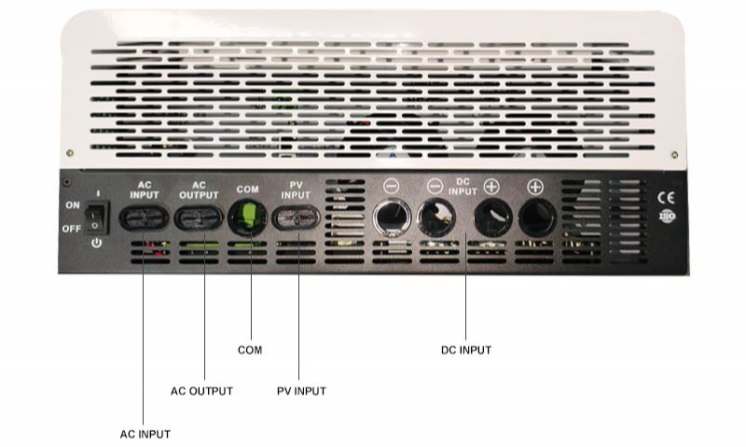
Inverter — converts the DC output to AC and handles grid connection; string, micro and hybrid (battery-ready) inverters are all used.
Metering and monitoring — a smart meter and online portal to track generation, export and self-consumption.
Optional battery — stores surplus generation for use later.
Most integrated roofs are designed with a ventilated cavity behind the photovoltaic layer. Hot air rises and escapes, which keeps the cells cooler; because PV output falls as temperature rises, even modest cooling helps production. We describe it as a useful design feature rather than a fixed percentage gain, since the real benefit depends on the cavity depth, airflow and local climate.
The practical steps for putting one together are covered in our guide on how to install solar tiles on a roof, and you can see the range of projects on our BIPV systems overview. For larger loads we also supply complete kits such as a 15 kW solar power system configured for the destination grid.
Choosing the Photovoltaic Material
BIPV products are built around the same cell technologies as ordinary modules, packaged to act as a building material:
Crystalline silicon — monocrystalline cells offer the highest efficiency, so they give the most power from a limited roof area. Production modules commonly sit in the 20%–22% range, with leading research cells higher still (NREL tracks the records). Our back-contact solar tiles reach up to 24.1% module efficiency on the current datasheet.
Thin film (CIGS and CdTe) — slightly lower efficiency but a uniform appearance, better appearance under partial shade and diffused light, and flexibility for curved and colored surfaces. We have worked with CIGS thin-film tiles since 2019.
For facades, skylights and canopies where some daylight is wanted, the transparency is set by spacing the cells apart and by choosing laminated or double-glazed PV glass — from nearly opaque power-focused units to semi-transparent ones that still let light through. Colored and patterned versions are used where the look has to match a traditional or branded building.
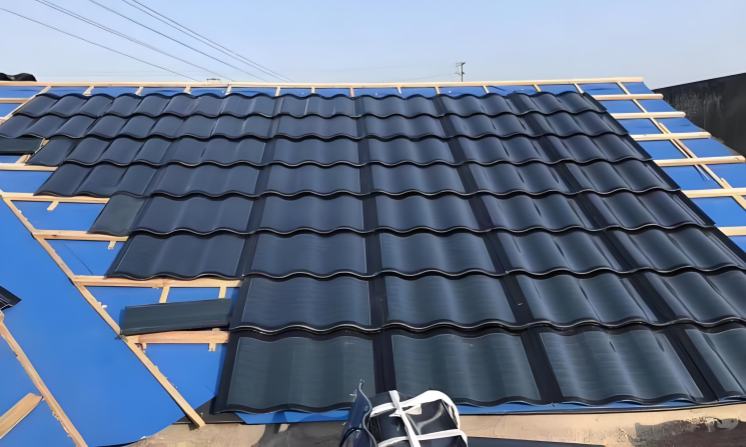
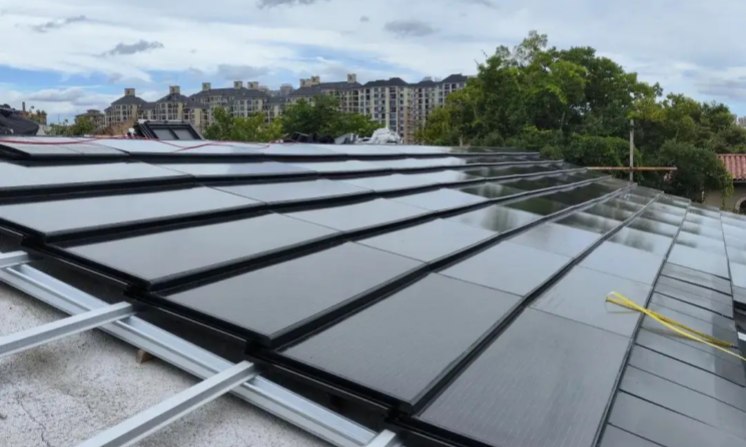
Real-life photos of residential building-integrated photovoltaic rooftop installation
Why Use BIPV
The advantages follow directly from the fact that the solar layer and the building layer are the same product:
One element, several jobs — weather protection, shading, daylight control and power generation in a single surface.
No extra land — generation sits on surfaces the building already has, which suits dense cities and sites where ground space is scarce.
A cleaner appearance — no racking above the roofline, so the building keeps its intended form.
Lower lifecycle carbon — photovoltaics are among the lowest-carbon electricity sources over their operating life, which supports low-carbon building targets (IPCC).
The main trade-off is planning: because the photovoltaic surface is structural, the design, waterproofing and electrical work have to be coordinated with the building rather than bolted on afterward. It works best when it is considered from the design stage, and it fits wider resource-efficiency goals promoted by bodies such as UNEP.
Where BIPV Is Used
Homes and villas — solar tile roofs, including curved and heritage-style profiles where conventional panels would spoil the look.
Commercial and public buildings — photovoltaic facades and curtain walls, entrance canopies and skylights.
Outdoor structures — parking canopies, walkways, bus shelters and solar paving for plazas and paths.
Industrial facilities — large integrated metal roofs, often paired with storage to use more of the daytime output on site.
The Role of Energy Storage
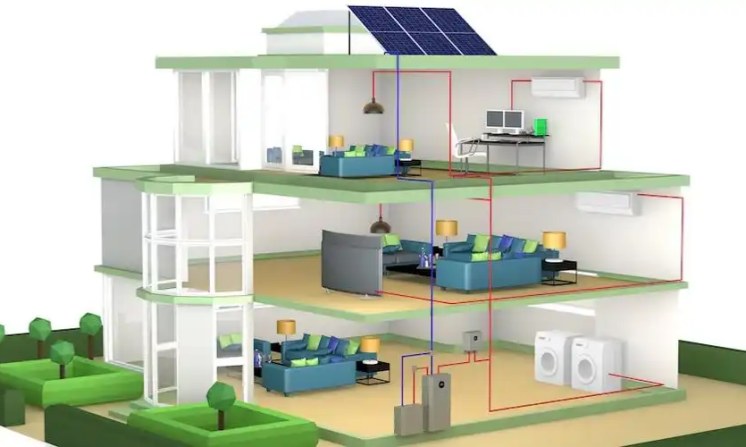
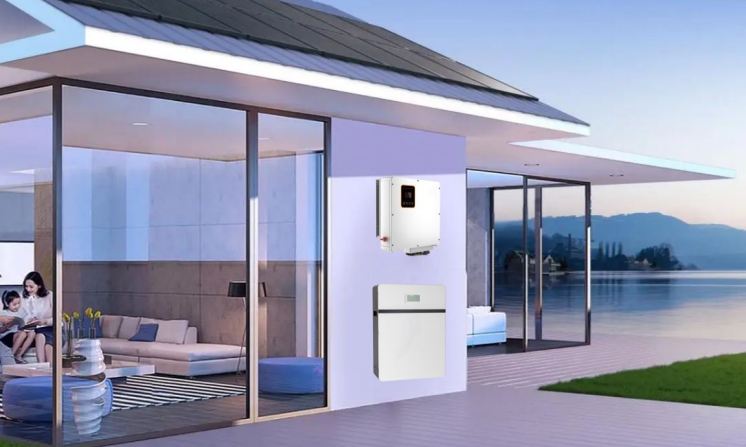
A grid-connected BIPV system does not need a battery to work — surplus power is simply exported. Adding one changes how the energy is used, which is why interest in solar-plus-storage keeps growing:
Higher self-consumption — store midday generation and use it in the evening instead of buying it back.
Backup and off-grid use — keep essential loads running during outages or on sites with a weak or absent grid.
Peak shaving — commercial sites can avoid importing at expensive peak periods and reduce demand charges.
Smarter control — an energy management system coordinates generation, battery and loads, and can respond to time-of-use tariffs.
How the two work together is explained in our article on how solar roof tiles work with energy storage, and the hardware options are collected under our home energy storage category. To keep expectations clear, the photovoltaic tiles carry a 25-year power warranty, while the battery, inverter and other non-tile components carry a 3-year warranty — the two are specified separately.
Frequently Asked Questions
Is BIPV the same as solar panels?
No. Solar panels (BAPV) are added on top of an existing roof or wall. BIPV replaces part of the roof or wall itself, so the photovoltaic product is also the weathering surface.
Can BIPV be used on an existing building?
Yes, most naturally when the roof covering is already due for replacement, since the new tiles do both jobs. Retrofitting a sound roof with BIPV is possible but usually means re-covering it, so a BAPV panel array is often the more economical choice there.
Does a BIPV system work during a power cut?
A standard grid-tied system shuts down during an outage for safety. One with a hybrid inverter and a battery can keep backed-up loads running, provided it is designed for island operation.
How long does a BIPV roof last?
A properly installed integrated roof is designed to last in step with the building. Our photovoltaic tiles are rated for a 5,400 Pa mechanical load and carry a 25-year power warranty; electrical and storage components have their own, shorter warranties.
Does BIPV need much maintenance?
About the same as a normal roof, plus occasional cleaning in dusty areas and routine checks of the electrical connections. Most issues can be spotted remotely through the monitoring portal.
Plan your BIPV project with us
Send us the building type, roof or facade area, orientation, country and target capacity, and we will recommend the right photovoltaic product, lay out the system and give an indicative quote with or without storage. Reach us through the contact page or email export@gmsolarkit.com.
L
Written by Luke — Product Manager, GreenMore
Luke manages GreenMore's BIPV product line, from curved and flat solar tiles to photovoltaic facades. He has worked on photovoltaic systems since 2017 and spends most of his time matching the right solar building material and storage setup to each overseas project.









 Network Supported

